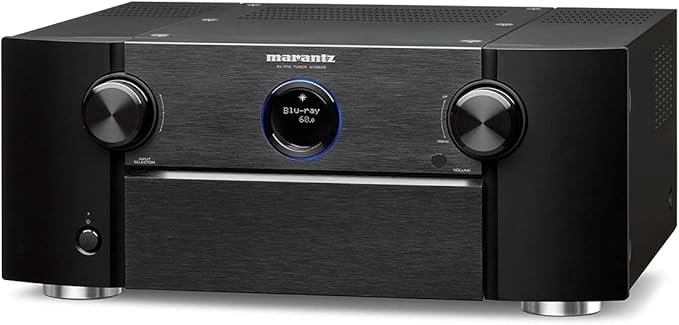
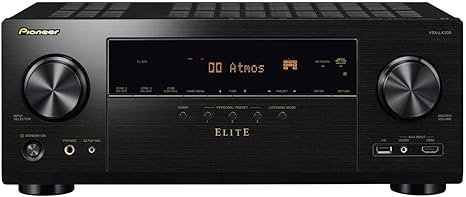
This 9-channel flagship aims at home theater fans who want refined power and modern style. It packs a 9 x 110W rating and offers flexible layouts such as 5.1.4 or 7.1.2 to build immersive cinema sound at home. The refreshed design sports a porthole display, tactile knobs, and a slim backlit remote that fits living spaces.
The unit combines receiver and amplifier duties, with six HDMI 2.1 inputs and three outputs, plus wide format support: Dolby Atmos, DTS:X, Auro‑3D, and Sony 360 Reality Audio. Connectivity is comprehensive, from 11.4 pre‑outs and four subwoofer outputs to HEOS, AirPlay 2, Bluetooth, and voice assistant options.
Room tuning uses Audyssey MultEQ XT32, with an optional MultEQ X app and planned Dirac Live firmware. Expect quick transients, deep bass, and warm musical character thanks to HDAM amplification. Early impressions in reviews note excellent connectivity and smooth dynamics, balanced against a premium price and no front HDMI input.
Marantz Cinema 50 Review: Key takeaways, target user, and present-day relevance
This flagship AV unit brings nine robust channels and modern video support to a single chassis. It delivers 9 x 110W into 8 ohms and handles 5.1.4 or 7.1.2 speaker layouts for flexible home theater setups.

Main highlights at a glance
The receiver pairs strong power with full HDMI 2.1 capability across six inputs and three outputs. It includes eARC for simplified TV return and native support for Dolby Atmos and other advanced formats.
Pros and cons
Pros include a refined design, comprehensive I/O, HEOS multiroom streaming, and a clear on-screen UI. The main cons are a missing front HDMI input and premium pricing for buyers who want quick-plug access.
Who should buy
This unit fits movie fans who want immersive surround, music lovers who value warm yet detailed sound, and gamers who need low-latency 4K/120 video. It suits mid-to-large room layouts and users planning to expand their speaker configuration over time.
Design, build quality, and user interface refinements
A modern chassis and tactile controls give this model a refined, theater-friendly feel.
Fresh aesthetic and front ergonomics
The design follows a squared, symmetrical look in Black or Silver Gold with a textured fascia and the signature porthole display.
The front panel places large volume and source knobs within easy reach, while a pull-down flap hides Zone 2 controls, HDMI output selection, Status and sound modes, a USB‑A port, and a mic jack.
Remote, GUI, and everyday control
The slim backlit remote has a side light button that helps during lights-down viewing. That small control change makes a real difference for users.
The HEOS-powered HD on-screen GUI reduces menu clutter and speeds navigation. The Info overlay shows codec, active channels, HDR/resolution and color-space details — a helpful bit of UX polish.
Build quality and cable management
All core inputs, including the six hdmi inputs, sit at the rear for neat cable runs. The amp feels substantial and well laid out, matching the premium model positioning for home cinema.
Features and connectivity for home theater now and next
Next-gen video support sits alongside extensive audio outputs to serve both gamers and serious home theater owners. All six HDMI 2.1 inputs accept 4K/120 and 8K, so you do not need to sort which port handles a given source.
The unit has three HDMI outputs: one with eARC for TV audio return, a second for a projector, and a third dedicated to Zone 2. HDR formats such as Dolby Vision and HDR10+ are supported, and ALLM passthrough helps reduce latency for games.
Format and audio I/O breadth
Audio format support includes Dolby Atmos, DTS:X, Auro‑3D, and 360 Reality Audio. Note: published sources conflict on IMAX Enhanced status — verify current firmware or spec sheet before purchase.
The rear panel supplies four digital inputs (2 optical / 2 coax), five analog inputs plus an MM phono stage, and a bank of 11.4 pre‑outs. There are four independent subwoofer outputs for flexible bass placement and a dedicated Zone 2 output.
Wireless, streaming, and control
Wireless features include Wi‑Fi, Bluetooth, and AirPlay 2, while HEOS enables whole‑home streaming and grouped playback. Voice assistant integration and native app control make everyday use simple.
Integration options extend to a 12V trigger and RS‑232 for custom automation. On‑screen Info overlays report signal format, active channels, and video parameters to remove guesswork during setup.
| Feature | Count/Type | Uses | Notes |
|---|---|---|---|
| HDMI inputs | 6 x HDMI 2.1 | 4K/120, 8K, ALLM | All ports support next‑gen sources |
| HDMI outputs | 3 outputs | eARC, Projector, Zone 2 | eARC for main TV audio return |
| Pre‑outs / Subwoofers | 11.4 pre‑outs / 4 subs | External amplification, multi‑sub setups | Flexible bass management options |
| Wireless / Control | Wi‑Fi, Bluetooth, AirPlay 2, HEOS | Streaming, grouping, voice control | 12V trigger, RS‑232 for integration |
What’s missing: there is no front HDMI input for quick hookups. The trade‑off is a premium price that reflects the depth of features and amplifier power. Overall, the system is future‑proofed with full HDMI 2.1 implementation and wide format support.
Setup, calibration, and sound performance in the room
Getting the system to sing starts with a clear, methodical setup and a reliable room calibration. Proper steps here shape how movies, music, and games translate in your living space.
Room EQ and calibration path
Plug the mic into the front panel jack and let Audyssey MultEQ XT32 run measurements across up to eight mic positions.
The process applies Dynamic Volume and LFC filters to tame peaks and preserve punch at low listening levels. For deeper control, use the optional MultEQ X PC software; Dirac Live is planned via firmware for further refinement.
Speakers, power, and bass
Supported layouts include 5.1.4 or 7.1.2 driven by 9 x 110W channels, giving solid headroom for dynamic scenes.
Four subwoofer outputs help smooth bass across seats with time and level alignment for tighter, more even low-end output in most rooms.
Movie, music, and gaming notes
In movies like John Wick: Chapter 3, transients snap and surround pans remain effortless even at higher volume. The Northman highlights subterranean bass and precise height placement with Dolby Atmos mixes.
For music, the HDAM-based amp offers warm, detailed stereo that competes with quality midrange systems when using Pure or Music modes.
Gamers benefit from 4K/120 and ALLM passthrough, plus HDR10+ and Dolby Vision support over HDMI to keep latency low and picture sharp.
- Rerun calibration after moving speakers or seating.
- Try different modes (Movie, Music, Game, Pure) to match content.
- Adjust volume curves for late-night listening without losing dynamics.
For setup tips and related tuning notes, see the detailed SR5008 write-up which covers practical calibration workflows.
Conclusion
Final verdict: For buyers who want a single receiver/amplifier that handles movies, music, and games, this model balances muscle with refinement.
It pairs comprehensive HDMI 2.1 inputs and HEOS streaming with native support for Dolby Atmos and a robust calibration path via Audyssey MultEQ XT32 and optional MultEQ X. Planned Dirac Live adds future calibration options.
Expect strong transients, deep bass, and warm musical detail across speakers and room sizes. The premium price and missing front HDMI are tradeoffs, but the inputs, outputs, and control options make it a solid hub for modern systems.
If you want comparable alternatives or accessory guidance, see related Denon receiver options at Denon receivers.
FAQ
What are the main channel and power specs?
The receiver offers nine amplified channels rated around 110W each into 8 ohms, enabling layouts such as 5.1.4 or 7.1.2 for immersive formats while leaving headroom for dynamics and subwoofer support.
Which immersive audio formats does it support?
It decodes Dolby Atmos, DTS:X and Auro-3D, and supports object-based and height-channel playback. It also notes compatibility with 360 Reality Audio and IMAX Enhanced content where available.
How many HDMI inputs and outputs are included?
The unit includes six HDMI inputs with full support for 4K/120Hz and 8K passthrough on key ports, plus three HDMI outputs and eARC on the main output for two-way audio return to compatible TVs.
Does it offer room correction and calibration?
Yes. It uses Audyssey MultEQ XT32 for comprehensive room correction, with Dynamic Volume and Dynamic EQ. The platform also allows firmware paths for MultEQ X or third‑party Dirac Live on supported models.
How many subwoofer outputs are there and why does that matter?
There are four dedicated subwoofer outputs. Multiple subs help even out low-frequency response across the room, reduce boominess, and improve localization for home theater bass.
Is there a phono input and analog I/O for older gear?
The receiver includes a built-in phono stage along with optical/coaxial digital inputs and extensive analog connections, plus 11.4-channel pre-outs for advanced multi-amp or processor setups.
What wireless and streaming options are available?
Built-in Wi‑Fi, Bluetooth, AirPlay 2 and HEOS multiroom streaming allow access to major streaming services, network libraries, and synchronized multiroom playback.
Can it integrate with smart home systems and control platforms?
Yes. It supports voice assistants via network devices, 12V trigger outputs, RS-232 control, and standard IP control for integration with third‑party automation systems.
How user-friendly is the setup and on-screen menu?
The receiver offers an updated on-screen GUI through HEOS with clearer status displays and faster menus. Physical setup is aided by a guided assistant and a backlit remote for easier initial configuration.
Are there drawbacks or missing features to consider?
Trade-offs include premium pricing and the lack of a front-panel HDMI input. Also, full functionality depends on firmware updates and some advanced calibration options may require additional licensing.
How does it handle gaming and low-latency needs?
The HDMI implementation supports ALLM and low-latency passthrough, HDR10+/Dolby Vision handling, and 4K/120Hz on select inputs, making it well-suited for current consoles with minimal lag when configured correctly.
What listening differences can users expect for movies versus music?
In movie mode it delivers tight transients and expansive surround staging, while stereo and music benefit from discrete amplification and HDAM circuitry that favor warmth, detail, and accurate midrange reproduction.
Can this unit drive larger speaker setups and multiple zones?
Yes. It supports complex speaker layouts up to 11 channels via pre-outs and can feed a second zone for multiroom playback. Amplification focus is on cinema-style layouts but flexibility exists for multiroom use.
Is firmware support and futureproofing solid?
The manufacturer has a history of steady firmware updates, and this model’s HDMI and streaming feature set is designed for longevity. Still, checking update cadence and feature roadmaps is wise before purchase.