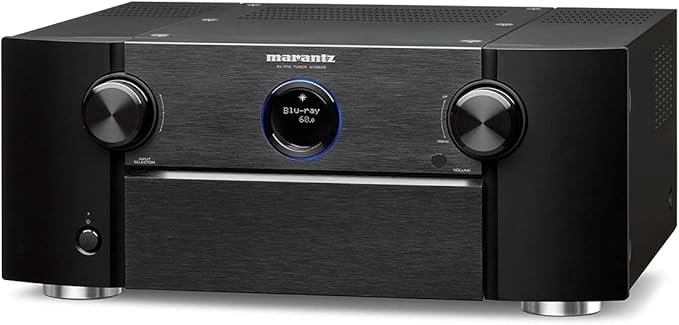
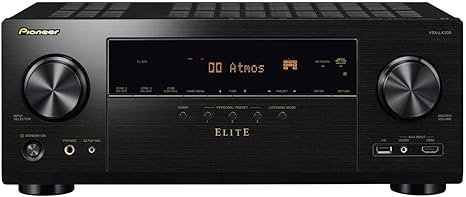
The onkyo tx-nr696 is a midrange AV receiver built for modern U.S. homes that need clean power and flexible connectivity. It delivers seven channels of amplification, rated at 100 watts per channel, and offers seven HDMI inputs for 4K HDR10 and Dolby Vision pass-through. This makes it a solid hub for a home system that handles both video and sound with ease.
The unit shines with streaming and multi‑room support — Chromecast, AirPlay, DTS Play‑Fi, and more — plus dual subwoofer outs and a dedicated phono input for turntables. Reviewers call its sound fun and lively, with credible dynamic range that suits long music sessions and movie mixes without fatigue.
Compared with peers like Denon and Sony, it trades a touch of pure musical refinement for extra inputs, features, and a more dynamic presentation. In the sections ahead we’ll dig into specs, real‑room performance, setup tips, and head‑to‑head comparisons to help you decide if this receiver fits your speakers, space, and budget.
Onkyo TX-NR696 Review: Key Specs, Features, and What’s New
The TX-NR696 refines core power and modern connectivity with a native seven-channel amplifier and updated front output stages. The strengthened PSU and dual-transistor front sections improve instantaneous current delivery, giving more headroom during big movie scenes and dynamic music passages.
7 x 100W per channel rating means reliable output for typical living rooms. In practice you get solid per channel power and quoted 175W at 6 ohms with one channel driven, which helps transient impact and low-end control when a single channel is stressed.

Channel layout and Atmos options
The receiver supports native 7-channel wiring for 5.2.2 setups. You can run two height channels for true Dolby Atmos or use firmware-enabled Dolby Atmos Height Virtualization and DTS Virtual:X when height speakers aren’t possible.
HDMI, video and formats
Video connectivity includes 7 in/2 out HDMI with HDCP 2.2/2.3 compliance and pass-through for 4K HDR10, Dolby Vision, and HLG. Supported audio formats cover dolby atmos and DTS:X, letting object-based mixes map cleanly across channels.
- Streaming and multi-room: Chromecast built-in, DTS Play‑Fi, AirPlay 2, Bluetooth, Spotify Connect, FlareConnect, and Works with Sonos.
- Inputs: dedicated phono input, USB, optical/coaxial digital, analog jacks, front-panel HDMI and source buttons, plus dual subwoofer pre-outs.
- Zones and expandability: powered Zone 2 and new front L/R pre-outs to add a separate stereo amp.
The UI uses a full-color HD on-screen display for setup, though the remote’s control layout draws mixed reactions. Key new items are stronger front amplification, expanded AirPlay 2 and virtualization support, and flexible pre-outs that extend system life.
Performance and Sound Quality in the Home Theater
This receiver brings lively, room-filling playback that makes action scenes and concert tracks feel immediate.
Movie playback and object-based audio
Dolby Atmos and DTS:X lock objects in place so helicopters and rain move cleanly through the space. The unit’s output supports deep, cohesive bass and tight transients without getting brittle at higher levels.
Stereo music and long-session comfort
In stereo/direct mode the amp bypasses extra processing for clearer imaging and timbre. Acoustic tracks gain a sense of air and texture, making music easy to enjoy for hours.
Dynamic range, speaker pairing, and room tips
Quiet details come through and crescendos hit with authority, so dynamic range serves both film and music. If your speakers run warm or polite, choose a livelier package to retain sparkle and attack.
- Small to mid rooms: 5.2.2 with height speakers above the front stage gives good immersion.
- Dual sub outs let you smooth modal peaks for even low-frequency range across seats.
- The onkyo tx-nr696 favors energetic playback that stays fatigue-free at higher listening levels.
Setup, Connectivity, and Day-to-Day Use
A tidy wiring plan makes 4K passthrough and HDR switching seamless for daily use. Start by labeling each HDMI so consoles, streamers, and UHD Blu-ray players map cleanly to the system.
4K video pass-through and HDMI wiring
Use the seven HDMI inputs for modern sources and reserve the second HDMI output for a projector or second display. The receiver supports HDR10, Dolby Vision, and HLG with HDCP compliance to keep UHD video stable.
Room calibration and speaker placement
Run the quick microphone setup to set distances and crossovers. Angle height speakers toward the listening area for better object tracking with Dolby Atmos.
Connect both subwoofer outputs and place subs asymmetrically to reduce room modes, then re-run calibration for smoother bass.

Daily usability and connections
The full-color on-screen UI speeds tasks like renaming inputs and switching formats. Use the front HDMI and front-panel source buttons or USB for temporary devices and quick testing.
Zone 2 gives simple multi-room support; assign independent sources or stream via Chromecast/DTS Play‑Fi for outdoor or kitchen speakers. Keep firmware updated via USB to enable virtualization and AirPlay 2 support.
| Task | Recommended Action | Why it matters |
|---|---|---|
| Wiring plan | Label HDMI by device and assign outputs | Prevents switching errors and maintains HDCP 4K passthrough |
| Calibration | Run quick mic setup; confirm speaker sizes/distances | Optimizes audio imaging and crossover points |
| Height speakers | Angle toward listening area | Improves object steering in Dolby Atmos mixes |
| Bass | Use both sub outs; asymmetric placement | Reduces modal peaks and evens low-frequency response |
| Daily control | Use app/voice or on-screen UI; update firmware via USB | Fixes quirks and enables new formats/features |
How It Stacks Up: Denon, Sony, and the Previous Onkyo TX-NR686
When stacked against rivals, the NR696 leans toward a bolder, more entertaining sound and a richer feature set. That makes it a stronger choice for mixed home theaters that need flexible HDMI routing and modern streaming support.
Against Denon AVR-S740/AVR-750H
The Denon often wins for two-channel music finesse and slightly finer tonal balance. If ultimate musical refinement tops your list, Denon nudges ahead.
But the NR696 answers with more HDMI, broader streaming options, and a livelier presentation that many users prefer for movies and games.
Against Sony STR-DN1080
Sony delivers high detail retrieval and a tight midrange. That can sound fatiguing over long sessions.
The NR696 trades a hair of micro-detail for fuller bass and less listening fatigue, giving more punch in action scenes and stronger low-end output.
NR696 vs NR686
The newer model keeps THX Select and boosts quoted output with beefier front amplifier stages and a stronger PSU. It adds AirPlay 2, firmware-based height virtualization, and front L/R pre-outs for external amplifiers.
It drops legacy composite/component video and trims some older digital inputs, but retains USB, dual sub outs, phono input, dts play-fi, Chromecast, FlareConnect, and Zone 2. For a modern, multi-source system the trade-offs are sensible and future-ready.
| Factor | NR696 Advantage | Why it matters |
|---|---|---|
| Features | More HDMI, AirPlay 2 | Simpler video routing and Apple multi-room control |
| Power / Output | Stronger front amp, higher quoted output | Better transient headroom and bass control |
| Inputs | Retains USB & phono input | Works with vinyl and portable sources |
Conclusion
Conclusion
If you want a flexible hub for a modern home theater, this onkyo tx-nr696 receiver delivers. It pairs ample HDMI and 4K video pass-through with broad streaming support and powered zone control, making system expansion simple. The unit’s features and firmware updates add long-term value without fuss.
On the performance side, expect lively audio, confident amplifier power, and clean channel steering whether in movie or stereo modes. For mixed-use listeners who stream, watch Atmos content, and may later add a separate amp via the front pre-outs, the onkyo tx-nr696 receiver is an easy recommendation. If you need legacy analog video, consider the older NR686; otherwise this model is the smarter buy for most home setups this year.
FAQ
What channels and power does this 7-channel receiver offer for a 5.2.2 Dolby Atmos setup?
The unit supports seven amplified channels, allowing native 5.2.2 Atmos configurations without an external amp. Per-channel power is rated to drive typical bookshelf or tower speakers used in home theaters, with enough headroom for dynamic movie scenes. For very large rooms or demanding heights, adding a separate amplifier via the pre-outs improves headroom and dynamics.
How many HDMI inputs and outputs are available, and what video formats does it pass?
You get seven HDMI inputs and two HDMI outputs. It passes 4K signals with support for HDR10, Dolby Vision, and HLG, and it is compatible with current HDCP requirements for most streaming boxes, consoles, and 4K Blu-ray players.
Which immersive audio formats are supported?
Native decoding includes Dolby Atmos and DTS:X, plus height virtualization modes for setups that can’t use physical overhead speakers. The receiver also handles common surround formats for legacy discs and streaming sources.
What streaming and multiroom options are built in?
Built-in support covers Chromecast, DTS Play-Fi, Apple AirPlay and AirPlay 2, Bluetooth, and Works with Sonos integration. Multiroom streaming and grouping through proprietary apps and third‑party ecosystems are supported for music throughout a house.
Does it include a phono input for turntables and other analog connections?
Yes, a moving‑magnet phono input is onboard for connecting a turntable directly. In addition, the receiver offers USB, optical/coaxial digital inputs, several analog inputs, and front-panel convenience jacks for easy source swapping.
Can I connect two subwoofers and a second zone?
There are dual subwoofer pre-outs to help smooth bass response and placement. The receiver also provides powered Zone 2 or pre-out options for a second stereo zone, enabling separate audio in another room or feeding an external amplifier.
How effective is the room calibration and setup for height channels?
The included microphone performs quick auto‑calibration that sets levels, distances, and basic EQ to integrate height speakers. For optimal Atmos imaging, manual tweak of speaker heights and toe‑in plus minor EQ adjustments in the setup menu usually yield the best results.
What stereo music performance can I expect for two‑channel listening?
Stereo playback is clear, with a wide soundstage and good midrange detail suitable for long music sessions. While it primarily targets home theater use, the amplifier and decoding deliver satisfying two‑channel results for most popular genres.
Are there phono and USB inputs for connecting physical media and digital files?
Yes. The unit includes a dedicated phono input for analog turntables and a USB port for connecting storage devices or compatible digital sources. These inputs make it easy to play vinyl and ripped music files without extra boxes.
Does the receiver support Dolby Vision passthrough and current HDCP standards?
It supports Dolby Vision passthrough and modern HDCP compatibility, ensuring use with current 4K HDR sources and streaming devices. Firmware updates may be released to maintain compatibility with future formats or copy‑protection updates.
How does its dynamic range and channel-driven design affect movie sound?
The amp delivers lively dynamics and impactful bass that enhance movie effects and immersion. The channel-driven architecture helps maintain clarity and separation during complex mixes, preserving punch without harshness at moderate to high listening levels.
Can the receiver be expanded with external amplifiers for larger rooms?
Yes. Pre-outs for front L/R and zone outputs allow adding stereo or multichannel amplifiers to increase power and drive large speakers or cover bigger rooms. This expandability is useful when factory power isn’t sufficient for demanding listening environments.
Is there support for wireless protocols like Bluetooth and AirPlay 2 for smartphone streaming?
The receiver includes Bluetooth and AirPlay/AirPlay 2 support for straightforward wireless streaming from phones and tablets. Chromecast built‑in and DTS Play‑Fi give additional multiroom and app‑based streaming options.
How user-friendly are the front-panel controls and remote for day-to-day use?
The front panel has dedicated source buttons and an intuitive layout for quick changes, while the remote and on‑screen UI provide deeper access to settings. Most users find the workflow logical for everyday switching between streaming, consoles, and disc players.
What speaker configurations are recommended for small to medium rooms?
For small to medium rooms, a 5.2.2 setup with compact front towers or bookshelf mains and two height speakers (in‑ceiling or upward‑firing where supported) offers immersive performance without overpowering the space. Match speaker sensitivity and impedance to the amp’s ratings for best results.
How does it compare to models from Denon or Sony in terms of features and sound?
Competitors like Denon and Sony trade places on refinement and feature sets. This receiver leans toward energetic dynamics and broad format support, while rivals may offer different tuning or software ecosystems. Specific comparisons depend on priorities such as music finesse, streaming platform preference, and price.