This short guide explains common causes and quick safety steps when an audio amp gives off a suspicious odor.
Old amplifiers can warm and briefly emit a dusty, musty scent. That is different from smoke or a continuous hot smell. If smoke appears, stop using the unit and get a technician.
Start with the basics: unplug before cleaning. Only clean exterior surfaces. Inside parts can hold dangerous charge in filter capacitors even when unplugged.
Use minimal liquid when wiping — spray a cloth, not the chassis. Avoid spraying transformers or vent openings. Overheated components in power or output stages can degrade and need replacement.
What to expect: a healthy receiver may warm with brief odors, but persistent smells or any smoke show a real issue. Follow safe checks first, then consult a qualified service pro if the odor does not stop.
Safety first: what to do immediately when your receiver has a burning smell
An acrid odor from electronics calls for immediate, calm action. Treat any strong hot scent or visible smoke as a potential electrical fire risk. Quick, correct steps cut the chance of flames and further damage.
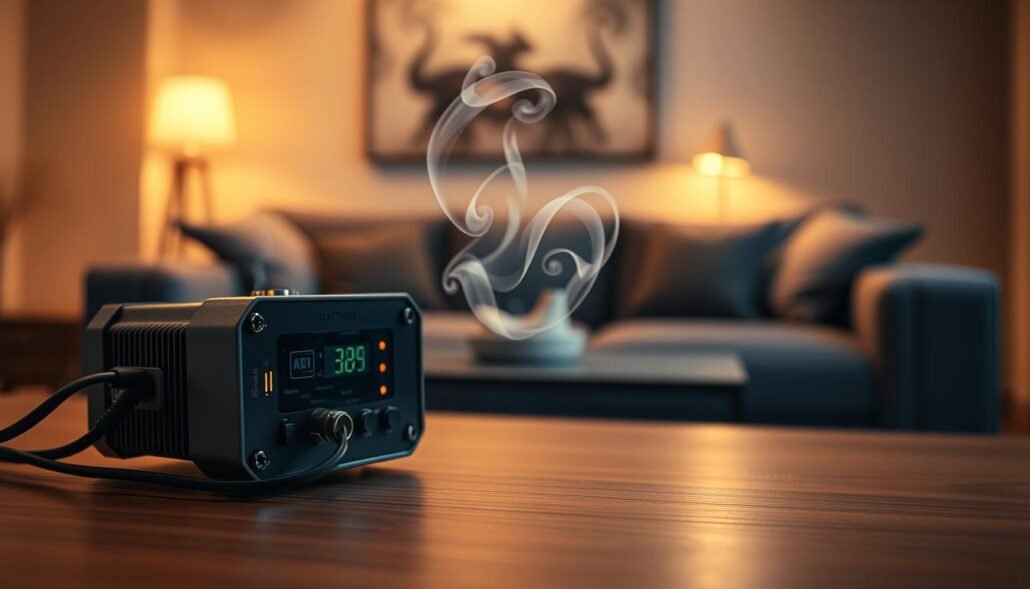
Red flags: visible smoke, sparks, popping sounds, or an acrid “hot plastic” scent are signs of a real fire hazard. If you see any of these, shut everything down right away.
- Power off the unit and unplug it from the wall. If the device is very hot or smoking, do not move it by hand.
- Let the chassis cool fully before approaching. Keep the area clear and ventilated while it cools.
- Avoid opening the case. Filter capacitors and other internal parts can hold a dangerous charge even when unplugged; do not touch internal components.
- Do not continue to test gear that still presents a burning smell or smoke. Re-energizing may exacerbate the issue.
- If the odor is brief with no smoke, it could be heated dust. Still, wait for complete cool-down before any exterior cleaning.
- When unsure or if the smell returns, stop troubleshooting and call a qualified technician to inspect the faulty component.
Most likely causes: burning dust, overheating components, or poor ventilation
Most odors trace back to dust, overheated parts, or cramped ventilation. Start by noting whether smoke appears or if the scent is a short, musty waft. A musty dust odor without smoke usually points to surface buildup on hot surfaces and grills.
Burning dust indicators: fine dust warms quickly and releases a stale, musty scent. Upright chassis, tube areas, and power-handling sections collect more dust over time. Clean exterior vents carefully and test only after full cool-down.
Overheating parts and failing elements
Excessive heat or voltage can damage insulation, capacitors, resistors, and transformers. Aging electrolytic capacitors and scorched wiring often emit a sharper, plastic-like odor. If the smell persists after cleaning, assume a stressed component and seek service.
Heat buildup from poor ventilation
Poor airflow—blocked vents, stacked units, or tight cabinets—traps heat and accelerates wear. Mismatched speaker loads or driving amps at high volumes raises current and internal temperature. Reduce load and improve clearance to limit further stress.
- Quick tip: persistent odor after exterior cleaning usually signals an internal component fault.
- Transformer caution: avoid aggressive cleaning or liquids near windings and cores.
Step-by-step troubleshooting and fixes you can do safely
Start by unplugging the unit and working calmly. Prepare a clean, stable workspace and gather soft microfiber cloths and a small bottle of isopropyl alcohol. Use the product sparingly and always spray the cloth, not the chassis.
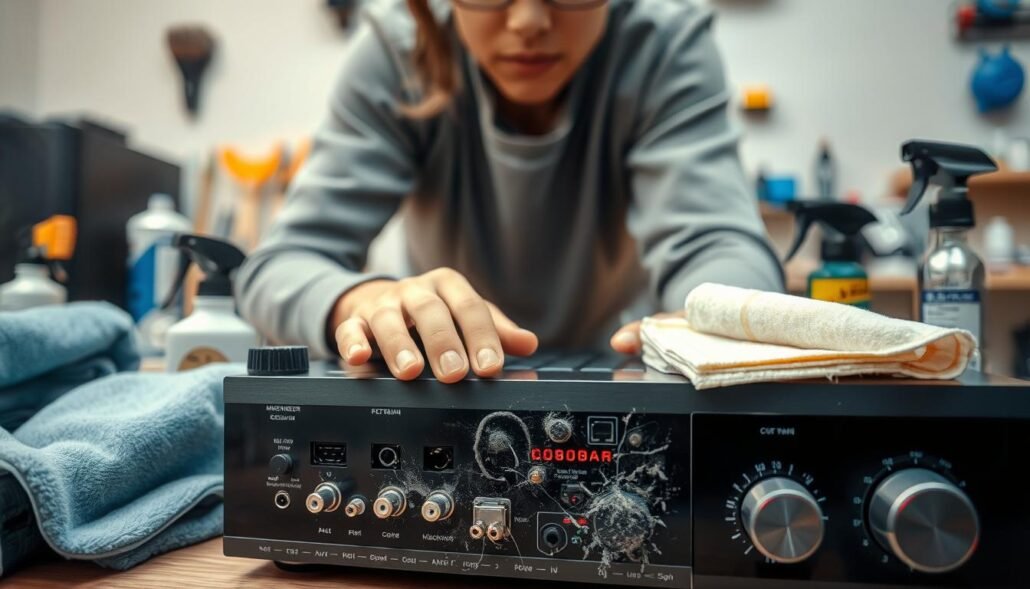
Tools and preparation
Have gloves, a flashlight, and a non-metal brush ready. Keep tubes removed on tube gear and set them aside on a soft towel.
Exterior-only cleaning
Gently remove dust from vents, grills, and heat sinks. Avoid soaking any surface. Minimal liquid prevents migration into connectors or solder joints.
Visual inspection
Look for discoloration, warped plastics, or soot near vents. These signs point to a stressed component and may require pro service.
Transformer caution
Keep liquids away from the transformer. Do not scrub windings; light brushing is enough. Rust on cores can be harmless and should not be removed aggressively.
Reassembly, dry-time, and test
Let everything dry fully before power-up. Do a short, supervised test at idle. If the unit smells like an electrical issue or heat increases, shut everything off and seek a technician.
Why does my receiver smell like burning plastic?
A brief musty waft usually means dust; a sharp plastic scent can signal a failing part.
Common benign cause: heated dust on vents and hot surfaces often creates a musty burning smell with no smoke. That odor usually fades after careful exterior cleaning and proper cool-down.
More serious signs: if the scent persists or turns sharp, suspect a failing component in the power supply or output stage. Excessive current or voltage can overheat parts and cause insulation to bake. Electrolytic capacitors and scorched resistors commonly emit a plastic-like scent.
- Wires or winding insulation that ages can release odors during long or heavy use.
- A transformer that runs hot or hums may point to stress elsewhere in the circuit.
- Any return of the odor after cleaning—or visible smoke—means an internal issue requiring service.
| Symptom | Likely Cause | Action |
|---|---|---|
| Musty hot odor, no smoke | Heated dust on vents or grills | Clean exterior, improve ventilation, test |
| Sharp plastic scent | Failing caps, scorched resistors, degraded insulation | Power off and consult technician |
| Humming, high heat from transformer | Circuit stress or overload | Avoid liquids near transformer; seek diagnostics |
| Odor returns with volume or trips protection | Power-handling stage under heavy current | Stop use; schedule professional repair |
Bottom line: dust explains many temporary smells, but persistent or worsening odors can indicate a safety hazard. If unsure, power down and get a qualified technician to inspect the unit.
Conclusion
,To finish, prioritize safety—unplug first, clean gently, and call a pro for persistent faults. Most cases trace to dust on vents or grills; a careful, exterior-only clean and better ventilation often clears the musty odor.
If the smell persists or worsens, suspect a stressed component. Stop use and shut everything down to avoid an electrical fire or further damage. Visible smoke or flames require immediate professional help.
Keep the unit clear of other gear, match speakers to rated impedance, and dust the setup every few months. Over the years, heat cycles age components; routine checks help prevent a small issue from becoming a costly repair.
FAQ
What immediate steps should I take if I notice a strong acrid odor from an audio receiver?
Shut the unit off and unplug it from the wall. Move everyone away from the device and avoid breathing fumes. If you see smoke or flames, call emergency services. Do not attempt repairs while the unit is powered.
Which signs mean there could be an active electrical fire risk?
Look for visible smoke, glowing or sparking parts, a hot chassis, or an acrid “hot plastic” or metallic odor. Listen for popping sounds. These are red flags; evacuate the area and contact professionals.
Can I safely troubleshoot the odor at home?
Only if there is no smoke or visible damage. Power down, unplug, and let the receiver cool fully. Work in a well-lit, ventilated area with no liquids nearby. If you are unsure, call an authorized technician.
Why does dust create a burning smell when a unit heats up?
Dust on hot components or heat sinks chars and releases a musty, burnt scent. The odor often appears briefly after long idle periods or when fans fail and temps rise. Cleaning vents can remove the source.
Which internal parts commonly overheat or fail and cause a plastic-like odor?
Worn capacitors, resistors, insulation on wiring, and transformers can overheat and emit a chemical or plastic smell. Plastic connectors and PCB coatings can soften or scorch when temps climb.
How does poor ventilation lead to odor or damage?
Blocked vents, stacked gear, or enclosed cabinets trap heat. Higher operating temperature stresses components and accelerates insulation breakdown, which produces persistent smells and shortens lifespan.
What tools and supplies are safe for basic cleaning?
Use soft brushes, compressed air, lint-free cloths, and 90%+ isopropyl alcohol sparingly on metal contacts. Work on a nonconductive surface, wear gloves, and avoid spraying liquids into vents.
How should I inspect the exterior without voiding a warranty?
Clean grills and vents externally, remove loose dust, and look for scorch marks around vents and connectors. Do not open sealed units or remove warranty stickers; contact the manufacturer if under warranty.
What visual cues indicate internal damage requiring professional service?
Look for melted plastic, brown or black scorch marks on circuit boards, bulging or leaking capacitors, or deformed transformer casings. Any of these mean professional repair or replacement is needed.
Are there special precautions for transformers when cleaning?
Yes. Avoid applying solvents or water near the transformer. Do not dislodge insulation or wiring. If the transformer smells strongly or shows heat damage, stop and seek technician help to prevent shock or fire.
How long should I wait after cleaning before powering up the unit?
Ensure all solvents have fully evaporated and the interior is dry — typically at least one to two hours in a warm, ventilated room. Reassemble panels firmly before testing.
What is a safe test procedure after maintenance?
Power the receiver briefly at low volume while standing by. Monitor for unusual heat, odors, or noises for several minutes. If any issue returns, power down immediately and consult a service center.
If a unit is several years old and emits odors, should I repair or replace it?
Consider age, repair cost, and safety. Older receivers with multiple failing components or significant heat damage are often better replaced. Consult an AV technician for a cost estimate versus replacement value.
Could speaker mismatch or improper impedance cause overheating and smells?
Yes. Driving speakers with too low an impedance or overloading amplifier channels raises current draw and heat. Verify speaker specs and amplifier ratings to prevent stress and odors.
When is it necessary to contact a certified technician or the manufacturer?
If you detect smoke, visible internal damage, persistent chemical odors after cleaning, or if the unit is under warranty. Qualified technicians can safely test insulation resistance, replace parts, and certify the unit.