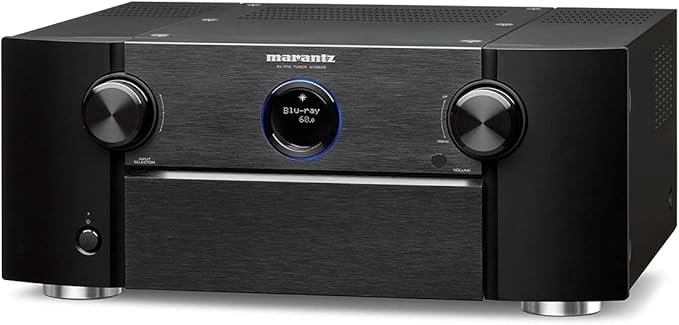
This review frames who should consider this receiver in a typical American home and what to expect from its performance, features, and price point.
The unit brings three HDMI 2.1 inputs with 8K/60 and 4K/120 passthrough, a cleaner 1080p GUI, and Audyssey MultEQ XT with an optional editor app for fine tuning. These upgrades boost daily use and setup simplicity.
Power matters: the amplifier delivers 95 watts per channel into 8 ohms (20Hz–20kHz, 0.08% THD), which suits medium-size rooms and common 5.1.2 Atmos layouts. Expect richer, more open sound and improved dialog clarity compared with its predecessor.
Gaming is well covered with VRR, ALLM, QFT, FRL and eARC for uncompressed audio. Streaming is handled through HEOS, AirPlay 2, Spotify Connect, Bluetooth, and Roon Tested, plus USB hi-res playback for music lovers.
Street pricing hovers near $999–$1,049, so this analysis weighs value against competitors. Findings come from multiple test rooms and hands-on listening to reflect real-world experience.
What follows: positioning and pricing, feature breakdown, real-world performance, setup and calibration, competitors and value, and a concise verdict for users.
Denon AVR-X2800H Review: Who It’s For, What’s New, and Why It Matters
If you want future‑facing video and solid multi‑channel power in one box, this receiver fits the bill.
Positioning in the lineup and for home cinema users
This model sits above the value tier with higher power and connectivity while staying below the flagship that adds extra amplification. It supports seven channels and 7.1 processing, making it ideal for common 5.1.2 Atmos layouts in medium rooms.
What’s improved over the previous generation
Key upgrades include three HDMI 2.1 inputs with 8K/60 and 4K/120 passthrough, 8K upscaling on all inputs, and a sharper 1080p GUI. A remote HDMI‑output toggle adds setup flexibility.
Listening teams noted a tuning shift toward a more open soundstage, clearer dialog, and tighter timing with slightly less dominant bass. Those changes improve movie and music performance without added complexity.
U.S. pricing and value at this price point
Launch MSRP sat near $1,200, but regular promotions push street price down to about $999–$1,049. At those levels, it competes well with rivals from Yamaha, Sony, and Onkyo while offering proven ergonomics and format support.
| Feature | This Receiver | Lower Model | Higher Model |
|---|---|---|---|
| Channels | 7 ch amp / 7.1 proc | 7 ch / basic HDMI | 9 ch amp / wider 8K parity |
| Power | 95 W/ch (8Ω) | 80 W/ch | Higher continuous power |
| HDMI | 3× HDMI 2.1 (8K/60, 4K/120) | Limited HDMI 2.1 inputs | Full 8K parity across inputs |
| Key formats | Dolby Atmos, DTS:X, Dolby Vision, HDR10/10+, HLG, eARC | Most formats, fewer HDMI features | Same formats, more channels |
In short, this receiver matters now because it brings the HDMI and format support next‑gen console owners and movie fans need, with enough power for mainstream speakers and a straightforward setup for most users.

Design, Features, and Technology: HDMI 2.1, 8K Video, and Multi-Room Streaming
Inside the chassis, the latest HDMI and streaming tech come together to simplify modern home AV setups.
HDMI board, video formats, and HDR
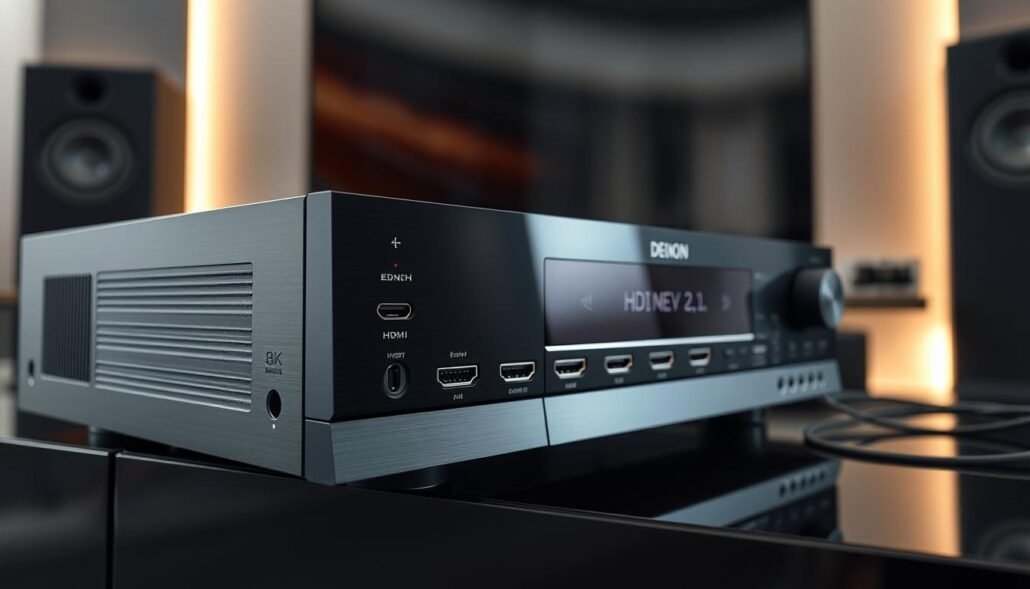
The receiver offers three HDMI 2.1 inputs rated up to 40Gbps, enabling 8K/60 and 4K/120 passthrough for current consoles and UHD players.
eARC on the main output supports uncompressed audio return, while 8K upscaling is available across all inputs. HDR compatibility includes Dolby Vision, HDR10, HDR10+, and HLG for broad video support.
Audio formats, channels, and amplification
Native decoding covers Dolby Atmos and DTS:X, plus Atmos Height Virtualization and DTS Virtual:X for setups without height speakers.
The amp uses a discrete seven‑channel design rated at 95 W per channel (8 ohms, 20Hz–20kHz, 0.08% THD) with 7.1 processing suitable for common 5.1.2 layouts.
Streaming, interface, and control
Wireless features include HEOS multi-room, AirPlay 2, Spotify Connect, Bluetooth (with transmitter mode), and Roon Tested. The front USB plays FLAC/ALAC/WAV and DSD 2.8/5.6MHz files for direct hi‑res access.
A 1080p GUI simplifies setup and gives direct access to Audyssey MultEQ XT and the Audyssey Editor App for room correction and room calibration. Voice assistants and a remote with an HDMI output toggle round out control options.
| Feature | What it Provides | Why it Matters |
|---|---|---|
| HDMI 2.1 inputs | 3× 40Gbps (8K/60, 4K/120) | Future‑proofs consoles and 8K sources |
| HDR & video formats | Dolby Vision, HDR10/10+, HLG | Wide compatibility with streaming and discs |
| Audio formats | Dolby Atmos, DTS:X, Atmos height virtualization | Immersive sound—even without ceiling speakers |
| Power & channels | 95 W per channel, 7 ch amp, 7.1 proc | Enough headroom for medium rooms and common setups |
| Streaming & USB | HEOS, AirPlay 2, Spotify, Roon, front USB hi‑res | Flexible listening across rooms and direct hi‑res playback |
Performance and Sound Quality: Movies, Music, and Gaming Experience
Playback tests reveal clearer dialog, tighter transients, and a wider sense of space than the prior model.
Home cinema playback with Dolby Atmos delivers an expansive soundstage. Height channels create believable vertical cues while dialog stays locked to center with improved clarity. Dynamic headroom preserves impact during loud sequences so explosions and crescendos retain weight without distortion.
Movie detail and effects precision
Scenes like the sandworm emergence in Dune show better separation between score, brass, and effects. Elements no longer compete, which improves effects precision and the overall listening experience.
Transients—gunshots in No Time To Die—feel snappier and more immediate. The system keeps microdetail intact even at moderate levels, avoiding a one‑note bass that can blur dialog and effects.
Two-channel music listening
Two-channel tracks such as Ani DiFranco’s Little Plastic Castle reveal a clean midrange and tight acoustic attacks. Imaging stays stable and vocals remain focused while instruments occupy distinct spaces.
Jazz and modern R&B cuts by Robert Glasper emphasize air and expression, showing the receiver’s ability to retrieve subtle timbral cues and maintain tonal balance with slightly leaner bass and clearer top-end.
Gaming responsiveness and video formats
For gamers, HDMI 2.1 features—4K/120, VRR, ALLM, and QFT—cut latency and reduce tearing. Motion feels smooth and responsive, and HDR/Dolby Vision support enhances contrast where content and displays permit.
- System cohesion: Channel steering and Audyssey calibration keep effects localization accurate in a typical 5.1.2 setup.
- Speakers & placement: Proper height-channel positioning improves vertical continuity and perceived scale.
- Value: At this price, the improvements over the previous generation meaningfully upgrade both movie immersion and everyday music listening.

Setup, Room Calibration, and Everyday Usability
Setup starts with a 1080p on-screen walkthrough that guides wiring and basic configuration step by step.
The on-screen assistant uses color-coded terminals and plain-language prompts to help users connect each speaker correctly. The high-resolution display shows diagrams and verifies each connection to speed the initial setup.
For first-time calibration, run Audyssey MultEQ XT with the included mic. The software measures room response, sets distances, levels, and crossovers automatically for consistent performance across seats.
The Audyssey MultEQ Editor App lets you create custom target curves and limit correction ranges for precise room correction. Dual Speaker Presets store two Audyssey profiles so you can switch between Movie and Music setups instantly.
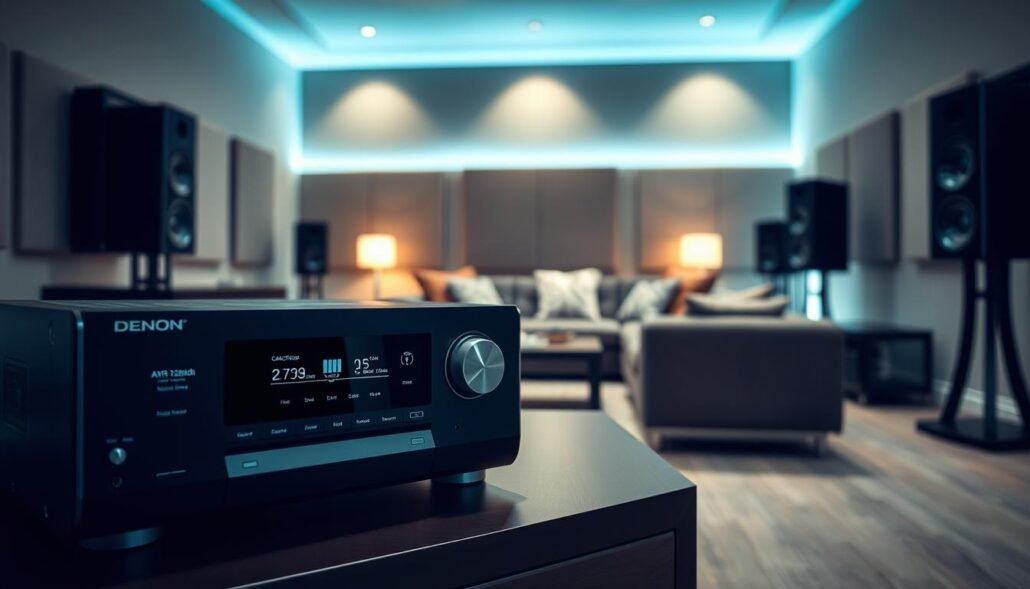
HEOS supports multi-room playback, while voice control and the remote’s HDMI output toggle simplify everyday control between TV and projector. Quick tips: check speaker polarity, set subwoofer gain before calibration, and measure at multiple listening positions.
| Task | What It Does | Why It Helps |
|---|---|---|
| 1080p setup guide | Wiring diagrams + color codes | Reduces errors and setup time |
| Audyssey MultEQ XT | Automated room correction | Balances levels, distances, and bass |
| Editor App & Presets | Custom curves + Dual Presets | Fine-tunes sound for different rooms or displays |
Bottom line: simple interface and robust calibration tools make the receiver easy for most home users while keeping advanced software options for enthusiasts.
Competitors, Alternatives, and Overall Value in the US
Comparing nearby models and rivals makes the value proposition clearer for U.S. buyers.
Within the lineup: the AVR-X1700H suits budget-focused users who can accept lower power (about 80 W per channel) and fewer HDMI outputs for roughly $699.
For builders needing more channels and wider 8K input parity, the AVR-X3800H (~$1,700) adds amplification and processing headroom.
Against key rivals
Yamaha’s RX-V6A trades a warmer, bass-forward sound at a slightly lower price but lags on full 8K passthrough. The RX-A4A raises power toward ~110 W per channel and tightens chassis refinement.
Onkyo’s TX-NR6100 brings THX certification and strong gaming features, though some users reported decoding quirks; audition if stability matters.
Sony’s TA-AN1000 impresses with energetic detail; discounts on the AVR-X2800H have restored competitive value for buyers who favor a smoother, more even sound.
Who should buy, step up, or step down
- Buy: users wanting hdmi 2.1 gaming features, solid home cinema performance, easy setup, and balanced power without extra complexity.
- Step up: enthusiasts planning 7.1.4 layouts or external amplification and needing more inputs/outputs should consider the higher-tier model.
- Step down: those with small rooms, simpler speaker layouts, or tighter budgets can opt for the X1700H class and save on price.
| Option | Typical US Price | Why Choose |
|---|---|---|
| X1700H (budget) | $699 | Similar formats, less power, fewer HDMI outputs |
| X2800H (this model) | $999–$1,049 | Balanced power, HDMI maturity, strong interface and software |
| X3800H (upgrade) | $1,700 | More channels, greater 8K parity, higher headroom |
| Yamaha / Onkyo / Sony rivals | Varies | Different sound signature, some with THX or higher power; audition recommended |
Value verdict: at typical US street prices the receiver offers a compelling mix of inputs, outputs, formats, and performance for most home cinema users.
Conclusion
For owners who want 8K-ready inputs without needless complication, this receiver hits the sweet spot.
It blends HDMI bandwidth, broad HDR and Dolby Vision support, and clear per-channel power into a unit that feels future-ready at a sensible price.
Sound and music playback lean toward an open, balanced presentation with Dolby Atmos effects rendered cleanly and dialog that stays intelligible across volumes.
Everyday ownership is easier thanks to a 1080p interface, Audyssey MultEQ XT plus an Editor App, Dual Presets, and flexible streaming (HEOS, AirPlay 2, Spotify, Bluetooth, Roon, USB hi‑res).
At typical US street prices near $999–$1,049, this system delivers strong performance and format flexibility. Pair with suitable speakers, run room calibration thoroughly, and the experience will stay rewarding for years.
FAQ
What channels and power does this receiver provide?
It offers seven-channel processing with rated power around 95 watts per channel into 8 ohms (20Hz–20kHz, 0.08% THD). That makes it suitable for 5.1.2 Dolby Atmos setups and two-channel listening with healthy headroom for most home speakers.
How many HDMI 2.1 inputs and what video features are supported?
The unit includes multiple HDMI 2.1 inputs with 8K/60 and 4K/120 passthrough, eARC support, and compatibility with HDR10, HDR10+, and Dolby Vision for modern video sources and next-gen consoles.
Does it handle advanced gaming features like VRR and ALLM?
Yes. It supports VRR, ALLM and other game-friendly features, along with low-latency 4K/120 passthrough, making it a strong choice for PlayStation 5 and Xbox Series X|S users.
What immersive audio formats are supported?
It decodes Dolby Atmos and DTS:X, and offers virtual height processing options such as Atmos Height Virtualization and DTS Virtual:X for setups without physical height speakers.
Is there room calibration and can I fine-tune the results?
Audyssey MultEQ XT room correction is included. You can use the Audyssey Editor app to view and adjust filters, and save speaker presets or dual setups for different listening positions.
What streaming and wireless options are available?
Built-in HEOS multi-room streaming, AirPlay 2, Spotify Connect, Bluetooth, and USB hi-res playback are supported. The receiver is also Roon Tested for users who run Roon servers.
How easy is the physical setup for speakers and cables?
The receiver uses a color-coded terminal layout and a step-by-step on-screen setup assistant (1080p GUI). That simplifies speaker hookup, HDMI assignment, and network setup for most users.
Can it drive demanding speakers and bi-amp configurations?
The discrete amplification and solid power rating give good dynamic headroom for demanding speakers. While it supports bi-amping some fronts, check speaker impedance and power needs before configuring high-current systems.
How is the remote and user interface for everyday use?
The remote is straightforward and includes quick access to source and sound modes. The graphical interface runs at 1080p and provides clear menus for calibration, input naming, and streaming control.
What is the expected price range in the United States and value positioning?
It sits in a mid-tier price bracket aimed at buyers who want modern HDMI 2.1 features and Atmos capability without stepping up to high-channel flagship models. It competes well on feature set per dollar versus similar Yamaha, Onkyo, and Sony models.
How does sound quality perform for movies, music, and gaming?
For movies it delivers expansive soundstage and precise effects with clear dialog. Two-channel music playback offers balanced tonality and good imaging. Gaming benefits from low latency and responsive video passthrough.
Are there multi-room or voice assistant integrations?
Yes. HEOS provides multi-room setups and the system supports major voice assistants for basic control via compatible smart speakers and mobile apps.
What alternatives should buyers consider at this level?
Buyers looking to step down might consider entry-level models with fewer channels or HDMI features. Stepping up offers more channels, higher power, or additional HDMI inputs. Comparable rivals include offerings from Yamaha, Onkyo, and Sony.
Does it support high-resolution audio files and USB playback?
It supports hi-res formats over USB and network sources, suitable for FLAC, ALAC, WAV and DSD files, enabling detailed music listening when paired with quality speakers.
Can I use this receiver in a two-room or multi-zone configuration?
The receiver supports multi-room workflows via HEOS and speaker output configurations to send audio to secondary zones while maintaining a main home theater channel layout.
Is firmware updated regularly and how are new features delivered?
Firmware updates are delivered by the manufacturer to add features, fix bugs, and improve compatibility. Updates can be installed via network connection or USB when available.