Want to stream music or use wireless headphones without replacing your vintage stereo receiver? This short guide shows two clear ways to add wireless convenience to your home audio system. One method brings audio into the receiver from a phone or tablet using a bluetooth receiver. The other sends sound out from the amp to headphones using a transmitter.
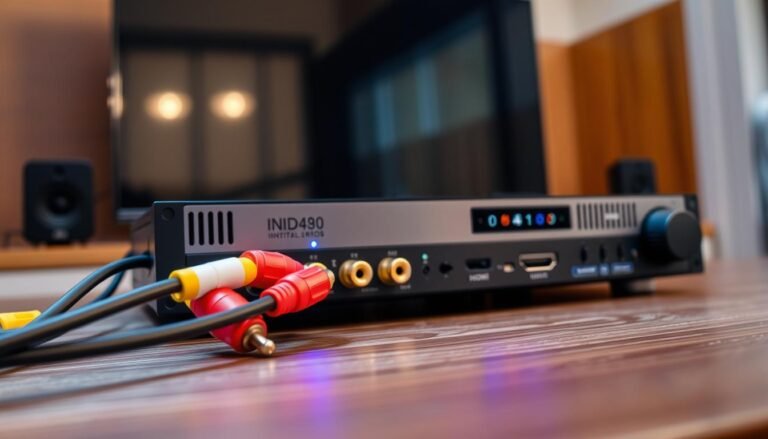
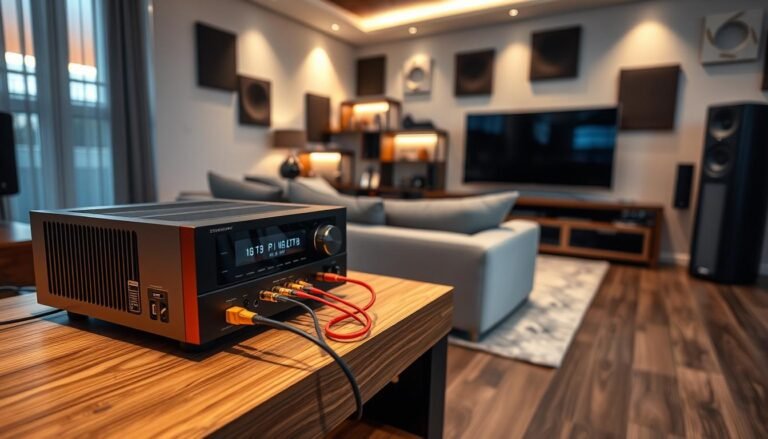
Most models with standard RCA or AUX inputs will accept these small dongles. Look for an AUDIO OUT or the PHONES jack when planning where to place the device. Many units need only USB power for the dongle, which can share a power strip with the receiver for tidy setup and shared power control.
This guide keeps parts minimal, uses common cables, and explains pairing and codec choices to reduce latency for TV or video. Clear steps and name-brand options make the process easy, even for first-time users, across a wide range of Onkyo models and similar amplifiers.
Why add Bluetooth to a vintage Onkyo receiver today
Streaming from a phone brings modern convenience to a beloved vintage stereo without replacing core parts.
Adding bluetooth capability lets you stream music from phones and tablets into your AVR using a small, powered adapter that plugs into an RCA or AUX input.
This keeps your warm vintage sound while giving new playback options.
- Play playlists, podcasts, or internet radio around the home and keep the speaker setup you prefer.
- Install the adapter quickly: plug into an input, power it on, and pair with your device.
- Low cost and minimal disruption—no rewiring, no component swaps.
Modern codecs deliver enjoyable quality for casual listening, and later sections explain how to improve latency for TV and video use.
| Benefit | What it means | Why it matters |
|---|---|---|
| Convenience | Stream music from a phone | Easy playback without swapping sources |
| Compatibility | Works with phones, tablets, laptops | Family members can pair quickly |
| Value | Keeps vintage stereo character | Extends system life at low cost |
| Flexibility | Supports TV audio with proper cables/codecs | Useful for both music and video |
Can I add a Bluetooth adapter to an older Onkyo receiver?
Modern wireless options let you keep vintage sound while adding streaming or headphone support. Decide whether the goal is to send phone audio into the amp or to send the amp’s audio out to wireless headphones.
Two common goals
Stream music to the stereo: use a bluetooth adapter that receives audio and plugs into an AUDIO INPUT such as RCA or AUX. Power the device, pair your phone or tablet, then select that input on the receiver.
What your unit needs
- Check the back for unused RCA jacks labeled CD, AUX, TAPE IN, or LINE IN.
- To send sound out, look for AUDIO OUT, LINE OUT, or REC OUT; use the front PHONES jack if no line out exists.
- Most adapters need USB power and an appropriate RCA-to-3.5 mm cable.
- Note: many models only receive; transmitting to headphones will usually require a separate transmitter device.
| Goal | Port to use | Typical cable | Notes |
|---|---|---|---|
| Phone → Stereo | RCA / AUX input | RCA-to-3.5 mm | Power receiver device via USB; select input |
| Stereo → Headphones | AUDIO OUT / PHONES | RCA or 3.5 mm | May mute speakers when using PHONES jack |
| Both goals | Back panel check | Varies by model | Confirm available jacks before buying |
Choosing the right Bluetooth adapter: receiver vs. transmitter, latency, and quality
Not all wireless modules behave the same; match features to how you plan to use the system.
Receiver vs. transmitter: a bluetooth audio receiver converts phone or tablet streams into analog for an AUX or RCA input. A transmitter sends line-level or headphone output wirelessly to headphones.
Which one to pick for music or headphones
For streaming music from a phone, connect a receiver-type unit to an RCA or AUX input. Short RCA or 3.5 mm cables keep the setup tidy and stable.
For headphone listening, use a transmitter on an AUDIO OUT or the PHONES jack. If you want speakers and wireless headphones at once, choose a pass-through model like the Avantree Oasis Plus or Orbit.
Codecs and lip-sync for video
Standard SBC often adds delay that is noticeable with video. For better lip-sync, pick adapters and headphones that both support aptX Low Latency.
Note: codec gains apply only when both ends support the same profile; mixed devices will default to SBC.
Power and placement
Most units run on USB power from a wall charger or a surge strip. Plugging the receiver and unit into the same switched strip makes daily control easier.
Keep the module visible and free from metal obstructions; range is typically about 30 feet line-of-sight.
- Tip: Verify TX/RX mode on dual-purpose units before troubleshooting.
- Invest in low-latency models for regular video use; budget picks work for casual music.
| Use case | Device type | Connection | Key feature |
|---|---|---|---|
| Phone → Stereo | Bluetooth audio receiver | RCA / AUX input | Simple setup, USB power |
| Stereo → Headphones | Bluetooth transmitter | AUDIO OUT / PHONES | Low-latency option for video |
| Speakers + Headphones | Pass-through transmitter | Line-out with bypass | Simultaneous wired and wireless output |
Setup guide: stream music from your phone to your Onkyo via a Bluetooth audio receiver
This short guide walks through the basic setup to stream music from a phone into your stereo. Gather a USB-powered bluetooth receiver, a USB charger, and an RCA-to-3.5 mm cable before you start.
Locate an unused RCA or AUX input and cable it correctly
Find an unused RCA input labeled CD, TAPE IN, or AUX on the back panel. Plug the RCA ends into that input and the 3.5 mm into the receiver’s output.
Power the bluetooth receiver and place it within 30 feet
Use a USB charger or the same switched surge strip as your stereo so both power on together. Set the module on top or in front of the amp for better line-of-sight and stable range (about 30 feet).
Pair your phone and select the correct input
- Enable Bluetooth on your phone and choose the receiver’s model name to begin pairing.
- After confirmation, select the matching input (e.g., CD) on the receiver to route audio to the speakers.
- Start playback, set phone volume near 75–100%, and control room level with the receiver’s master volume.
| Part | What to do | Why it matters |
|---|---|---|
| USB-powered receiver | Plug into charger or switched strip | Keeps power in sync with the stereo |
| RCA-to-3.5 mm cable | Connect output of device to RCA input | Converts phone audio to line-level for the amp |
| Placement | Front/top of amp, avoid metal racks | Improves pairing stability and range |
Setup guide: use Bluetooth headphones with your Onkyo via a Bluetooth transmitter
For private listening, route the amp’s signal into a dedicated Bluetooth TX via the AUDIO OUT or PHONES port. Use the AUDIO OUT/REC OUT when available for a clean, line-level feed. If only a front PHONES jack exists, a 3.5 mm cable will work but may mute the speakers.
Connect from the receiver’s audio out or phones jack
Set the transmitter to TX mode if it supports dual operation. Plug the appropriate cable into the receiver’s port and the transmitter’s input. Power the unit with its USB supply and keep it visible for best range.
Pairing steps for AirPods, Bose QC35, and other headphones
- Put the transmitter in pairing mode (follow its LED pattern).
- Place your headphones in their manufacturer pairing state (AirPods: open case or press sensor; QC35: hold power until pairing tone).
- Watch LEDs and listen for chimes—these confirm a successful link.
Speakers and headphones at the same time
If you want both outputs concurrently, choose a pass-through/bypass transmitter such as Avantree Oasis Plus or Orbit. These models accept line-level input and feed wireless cans while leaving speakers active.
Understanding limitations
Many AVRs only receive wireless streams and do not transmit natively. Adding a compact external transmitter is the reliable step for headphone use. For video, match transmitter and headphone codecs (aptX Low Latency) to reduce lip-sync delay.
| Use case | Port to use | Notes |
|---|---|---|
| Headphones only | PHONES or AUDIO OUT | PHONES may mute speakers; use 3.5 mm or RCA depending on jack |
| Speakers + headphones | Line-level out with bypass | Pass-through transmitters keep speakers active while sending wireless audio |
| Video viewing | Line-level out | Choose low-latency adapters and headphones for good lip-sync |
Troubleshooting and optimizing your Bluetooth audio
Many connection issues come down to ports, power, and pairing — start there. Follow a short checklist to find the cause quickly and get clean sound back to your stereo receiver.
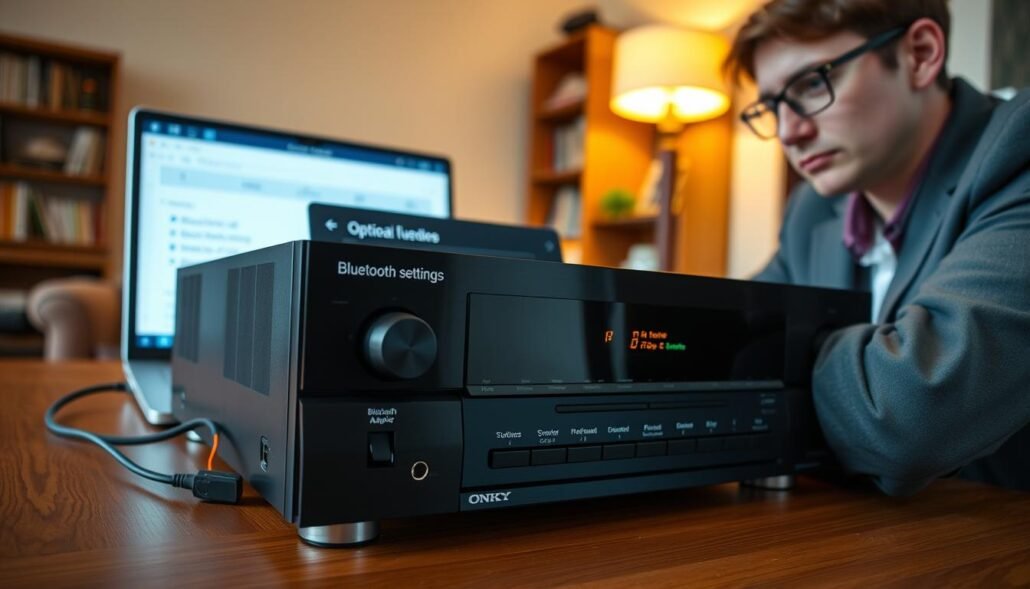
If you hear nothing
Check ports first. Phone-to-stereo needs an input (RCA/AUX); headphones need an output or PHONES port on the back. Confirm the receiver’s selector matches the connected port.
Confirm mode. Dual-purpose devices must be in RX for streaming in and TX for sending out. Wrong mode often results in silence.
Fixing lag and dropouts
Match codecs for video: both transmitter and cans must support aptX Low Latency to reduce lip-sync delay. Otherwise SBC may introduce noticeable lag.
Keep line-of-sight and avoid routers, thick metal racks, or dense wiring. Range is roughly 30 feet; moving the device a few feet can stop dropouts.
Level and quality tips
Raise your phone volume near max and use the receiver for room level. Avoid double-amping when the device has its own gain control.
Reset pairing memory if connections misbehave and use the same switched power strip to keep the device powered with the system.
| Issue | Quick fix | Why it works |
|---|---|---|
| No sound | Select correct input/output; confirm mode | Routes signal through the proper port |
| Lag with video | Use aptX Low Latency on both ends | Reduces codec delay for lip-sync |
| Dropouts | Improve placement and reduce interference | Strengthens stable wireless link |
| Poor level or EQ | Set phone near 75–100% and adjust receiver | Prevents clipping and preserves sound quality |
Conclusion
Keep the amp and speakers you trust while unlocking streaming capability with a simple, low-cost setup.
Two clear paths exist. Use a bluetooth audio receiver into an RCA/AUX input for phone-to-stereo music. Or route line out or PHONES into a transmitter when you want wireless headphones.
Select the correct port, keep cables short, and power the module via USB for steady operation. Many modern AVRs only receive wireless signals; an external transmitter is normal for sending sound out.
For concurrent speakers and cans, choose a pass-through model like the Avantree Oasis Plus. For video, match devices that support aptX Low Latency to cut lip-sync lag. Review the back panel, pick the right cables, and follow the final step for a smooth first-time setup.
FAQ
What are the two common goals when using wireless with a vintage Onkyo?
You typically want to either stream music from a phone or tablet into the stereo, or send audio out from the receiver to wireless headphones. Streaming uses a Bluetooth audio receiver connected to an AUX/RCA input. Wireless headphone use requires a Bluetooth transmitter hooked to the receiver’s audio output or headphones jack.
Which receiver ports matter for adding wireless capability?
Check for unused RCA or AUX inputs for incoming wireless audio and a PHONES or LINE OUT jack for sending audio out. Some Onkyo models also have tape or monitor outputs that work. Confirm which jacks are active in the receiver’s front or back panel before buying any device.
What’s the difference between a Bluetooth audio receiver and a transmitter?
A Bluetooth audio receiver accepts audio from your phone and feeds it into the stereo through an input. A transmitter takes audio from the receiver and streams it to headphones. Pick the device based on whether you need phone-to-stereo streaming or stereo-to-headphone streaming.
How do codecs affect video lip-sync and music quality?
Basic SBC works for music but can produce noticeable delay in video. For watching TV or movies choose devices that support aptX Low Latency or similar low-latency codecs. For higher-fidelity music, aptX or AAC may improve clarity, but source and headphone compatibility also matter.
How should I power the wireless device near my receiver?
Most compact units use USB power. Use a USB wall charger, a powered USB port on the receiver (if available), or a nearby power strip. If you want the device always on, choose a reliable wall adapter and consider heat and placement for long-term use.
What are the basic steps to stream music from a phone to an Onkyo using a Bluetooth audio receiver?
Locate an unused RCA or AUX input and connect the receiver with the correct cable. Power the wireless receiver and keep it within roughly 30 feet of the phone. Pair the phone with the device, then select the matching input on the Onkyo and play audio.
How do I connect Bluetooth headphones to the Onkyo with a transmitter?
Plug the transmitter into the receiver’s PHONES or LINE OUT jack using the proper cable. Power the transmitter, put your headphones into pairing mode, then pair them with the transmitter. If there’s no display, watch the transmitter’s LED patterns and consult its manual for pairing indicators.
Can I listen on speakers and headphones at the same time?
Sometimes. Look for transmitters with pass-through or bypass features, or use the receiver’s headphones output with a switch that mutes speakers. Not all Onkyo models support simultaneous output; check your receiver’s manual for headphone-cut policies.
Why is there no sound after hooking up a wireless device?
Common causes are wrong cable direction, incorrect input selection on the receiver, muted zones, or low device volume. Verify the transmitter/receiver is connected to the correct port, confirm the Onkyo input selector, and raise both device and receiver volumes.
How do I fix lag and dropouts with wireless audio?
Match codecs between source and headphones when possible, keep devices in line-of-sight, reduce nearby Wi‑Fi or microwave interference, and avoid metal obstructions. If dropouts persist, try a different USB power source or a higher-quality adapter with better antenna design.
Any tips to improve level and sound quality when using wireless adapters?
Start with moderate volume on both source and receiver to avoid clipping. Use good-quality RCA or AUX cables, disable any loudness or bass boost on the receiver, and avoid double-amping by not running powered speakers and receiver amplification simultaneously without proper configuration.
Will all Onkyo receivers accept aftermarket wireless devices?
Most models accept line-level inputs, so they will work with Bluetooth audio receivers. However, very old units without standard RCA/AUX inputs may need special cabling or a phono preamp. If you want transmitter functionality, remember many AVRs don’t transmit Bluetooth natively and require an external transmitter.