This introduction sets expectations for a full look at a 9-channel AVR built for modern home theater setups. We cover core specs, measured behavior, standout features, and real-world listening tests.
Readers comparing similarly priced receivers will get clear guidance on HDMI 2.1 coverage, Dirac Live integration, and platform limits like power clipping and the lack of full-range preamp outputs.
We note that the brand has been in the news, yet the company assures continued production and support in North America. Expect lab data on bandwidth and resampling, plus subjective takes for movies, music, and gaming.
Quick preview: dual subwoofer outs and Zone 2 add flexibility, while non-backlit remote and power limiting behavior may disappoint some users. This section frames who benefits most from the tx-nr 7100 and what to watch for in later sections.
Quick Take: Who the Onkyo TX-NR7100 Is For in the United States
This nine-channel receiver is aimed at U.S. buyers who want a single, all-in-one system that powers immersive Atmos setups without adding external amps. It delivers 9x100W (8 ohms, two channels driven) and can be configured for 7.1.2 or 5.1.4 speaker layouts.
Gamers and streamers benefit from full HDMI 2.1 support, app-driven streaming, and voice assistant compatibility. Those who already own multiple speakers or plan to add rooms will like the ability to drive nine channels plus two subwoofers and run Zone 2 for another room.
Movie fans get THX post processing and IMAX Enhanced modes for a polished theatrical sound. Users who want room correction will appreciate AccuEQ plus Dirac Live as included options.
- Best for living rooms and media rooms that need easy setup and solid integration.
- Consider alternatives if you need 11 channels, dedicated preamp outputs, or ultra‑hi‑fi two‑channel focus.
- Premium Audio Company has pledged ongoing support and firmware updates for years, which matters to cautious buyers.
This short, practical review snapshot helps U.S. shoppers decide if this unit fits their home theater and multiroom needs.
Price and Availability in the U.S. Market
Street pricing for the onkyo tx-nr7100 receiver has swung significantly since launch. The MSRP sits at $1,299 in the U.S., but major retailers have frequently discounted the unit to around $699. Expect frequent promotions from the likes of Crutchfield and Amazon.
Inventory moves fast during holiday sales and promotional events, so check retailer listings in real time. Recent news about the brand has raised buyer questions, but Premium Audio Company provides U.S. warranty and ongoing support for firmware updates.

Street pricing, discounts, and where to buy now
Look for temporary markdowns online and in specialty shops. If you need nine channels today or want a deal, compare seller ratings and return policies before purchasing.
What’s included out of the box
The package typically contains the AVR, a compact non‑backlit remote, a setup microphone that works with both AccuEQ and Dirac Live, AM/FM antennas, documentation, and detachable Wi‑Fi/Bluetooth antennas.
- Connectivity note: All six rear hdmi inputs and two HDMI outputs are HDMI 2.1 with 8K/60 and 4K/120; the main output supports eARC.
- Pre‑setup tips: attach the antennas, perform a firmware update after network setup, and confirm HDMI cable quality for 4K/120 readiness.
- Compare sister models if you may need more than nine channels in the future; read multiple reviews and check availability at purchase time.
Design and Build Quality: Classic AVR Look, Modern Touches
The AVR pairs a familiar, no‑nonsense front panel with a modern I/O array that suits both new and old gear.
The face is utilitarian: a large volume knob, clear green display, and tidy function buttons make level and source changes obvious from the couch.
The front also includes a handy HDMI input, a 3.5mm audio jack, and a headphone jack for quick testing or short‑term use.
Front panel usability and remote control considerations
The compact remote control is light and fits small hands, but it lacks backlit keys. That makes late‑night adjustments harder unless you know key positions by feel.
Front controls and the display remain readable at normal living‑room distances, and the large knob helps precise level tweaks without menu diving.
Back panel layout and I/O at a glance
The rear cluster balances modern bandwidth and legacy support. Six HDMI 2.1 inputs and two HDMI outputs (main with eARC) cover current video demands.
Legacy video connections—component and composite—stay onboard so older players work without external converters. You also get coax and optical digital, multiple analog pairs, an MM phono input, dual subwoofer outputs, Zone 2, USB, and Ethernet.
- Practical benefit: keeping component/composite avoids extra boxes for older source gear.
- Chassis notes: at ~22.9 lb and compact dimensions, allow ventilation and plan cable routing behind the I/O cluster.
| Feature | Detail | Benefit |
|---|---|---|
| Front I/O | HDMI, 3.5mm aux, headphone jack | Quick hookup and testing |
| HDMI | 6 inputs, 2 outputs with eARC | Supports 4K/120 and 8K/60 sources |
| Legacy Video | Component and composite | Works with older players without converters |
| Audio I/O | Coax/optical, analog pairs, MM phono, dual sub outs | Flexible speaker and source options |
Connectivity, Formats, and System Flexibility
System connectivity starts with a full HDMI 2.1 pipeline that handles the biggest bandwidth demands for modern video and gaming.
Full-bandwidth HDMI and gaming features
All six rear hdmi inputs and both HDMI outputs accept 8K/60 and 4K/120 signals. The main output adds eARC for one-cable audio return from TV apps.
Gaming benefits include VRR to smooth frame delivery, ALLM to enable low-latency mode automatically, and QFT to shave latency further. Use certified Ultra High Speed HDMI cables on key links to preserve 4K/120 and 8K/60 performance.
Wireless, streaming, and voice control
The wireless stack supports Wi‑Fi and Bluetooth with aptX, plus AirPlay 2, Chromecast built‑in, and DTS Play‑Fi for multiroom setups. Voice control with Amazon Alexa and Google Assistant works alongside the mobile app for input switching and volume control.
Legacy I/O, Zone options, and subwoofer notes
Legacy inputs include component/composite video, optical/coax, USB, Ethernet, an MM phono input, and six analog stereo inputs to protect older sources.
The receiver offers Zone 2 speaker and line-level outputs for another room, and two subwoofer outputs for better bass distribution. Note the dual sub outputs are parallel, not independent.
| Category | Interfaces | Practical benefit |
|---|---|---|
| HDMI | 6 inputs, 2 outputs (main with eARC) | Connect multiple 4K/120 consoles and 8K sources without swapping cables |
| Wireless & streaming | Wi‑Fi, Bluetooth aptX, AirPlay 2, Chromecast, DTS Play‑Fi | Native streaming and multiroom flexibility across ecosystems |
| Legacy I/O & zones | Component/composite, phono, optical/coax, 6 analog inputs, Zone 2 | Supports older gear and a second-room audio option |
Practical note: overall power delivery is solid for most setups, but users driving demanding speakers at very high levels should review the power behavior section before finalizing a long-session system. For comparisons, see a sister model comparison.

Setup Experience and Room Correction Options
Setting up the AVR is straightforward, thanks to an on-screen walkthrough that checks wiring, network join, and firmware in a few guided steps.
The unit offers two correction paths. AccuEQ runs on the receiver and accepts up to nine mic positions. It often produces a fuller low end that many users call more cinematic in untreated rooms.
Dirac Live runs through the Controller app using the included low‑profile mic and a smartphone. The app workflow avoids a laptop or dongle and lets you tweak target curves and save profiles.
| Method | Workflow | Typical result |
|---|---|---|
| AccuEQ | On‑unit measurement, up to 9 mic positions | Stronger bass weight, simple control |
| Dirac Live | Mobile app guided measurement, profile storage | Cleaner imaging, cohesive immersive soundstage |
| Practical tip | Rerun after moves; enable Multizone for Zone 2 | Consistent levels and correct polarity |
For layouts, place height speakers centered for 5.1.2, keep surround backs evenly spaced for 7.1.2, and mirror front/rear heights for 5.1.4. Confirm speaker polarity and rerun correction after any change.
Use the app to speed input naming, save Dirac profiles (movie vs late‑night), and simplify day‑to‑day control of channels and presets.
Onkyo TX-NR7100 Review: Lab Measurements and Power Behavior
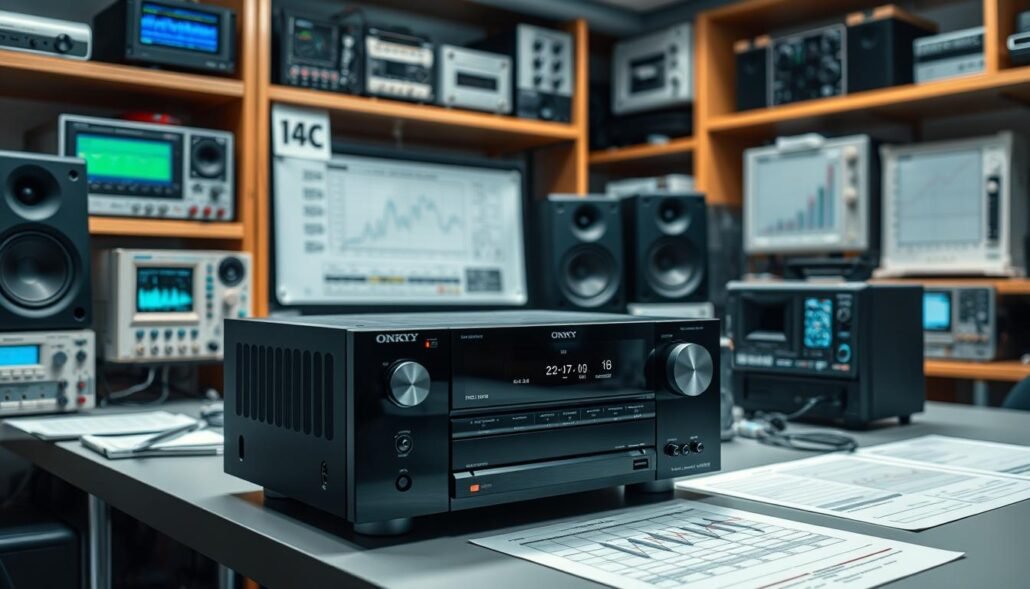
Measured performance uncovers strengths at modest levels and limits when channels are pushed hard. Overall audio results via HDMI and Toslink are serviceable, but analog inputs showed a lower noise floor on single‑tone tests.
Noise, distortion, and bandwidth across inputs
Direct/Pure Direct preserves a wide, flat bandwidth and avoids resampling. With processing engaged, response truncates near ~20 kHz, implying internal resampling.
Multi‑tone and IMD tests revealed a higher noise floor than many competitors, placing this unit in a fair performance tier rather than class‑leading.
Power output realities and the hidden limiting mode
Power sweeps sometimes showed only ~40 W when internal limiting engaged. After a firmware update and a full AC power cycle, full power returned in our tests.
Warning: if a channel clips, the receiver can enter a hidden ECO/limp mode that limits output to roughly 15% of rated power. There is no on‑screen indicator.
Sampling behavior and direct mode impact
Processing paths resample audio and reduce high‑end response unless Direct mode is used. Zone 2 pre‑outs showed higher distortion, suggesting DAC limitations on that output.
| Test | Observation | Real‑world impact |
|---|---|---|
| HDMI/Toslink | Serviceable end‑to‑end; higher noise than best rivals | Good for movies and gaming at normal levels |
| Analog input | Lower noise floor in single‑tone tests | Cleaner two‑channel listening |
| Clipping behavior | Can trigger hidden ECO/limp mode | Unexpected low volume; requires AC removal to reset |
| Bandwidth | Direct = full‑band; processing = resampled ~20 kHz | Use Direct for hi‑res or critical listening |
Practical tips: avoid extended clipping, trim levels sensibly, and let the unit cool after heavy use. If you notice sudden loss of headroom or low volume after a loud session, perform a hard AC power cycle to restore normal power.
Real-World Performance: Movies, Music, and Gaming
In real listening, the AVR creates a convincing cinematic bubble with clear overhead activity and stable object pans.
Home theater impact
The unit delivers impactful Dolby Atmos and DTS:X scenes with convincing overhead cues and stable pans. THX post processing adds scale to older movie mixes, and IMAX Enhanced tracks bring stronger LFE and wide dynamics for action titles.
Gaming at 4K/120
Gaming at 4K/120 was stable in testing. VRR and ALLM kept motion smooth and latency low on fast racing titles. HDMI input switching stayed reliable during sessions, so video and controls felt responsive.
Stereo listening and speaker matching
Stereo performance is clear and detailed, especially in highs and mids, but not class‑leading for pure two‑channel fans. Multichannel music often sounds more engaging with precise panning.
- Tip: pair with neutral or slightly warm speakers to tame bright tendencies at high volume.
- Tip: use Dirac Live movie and music profiles to adjust bass weight and imaging.
- Power note: avoid clipping during long, loud demos to preserve headroom and prevent limiting.
Features That Stand Out at This Price
The feature set here leans into practical tools that speed setup and improve everyday listening. You get advanced room correction, speaker presets, multiroom streaming, and theatrical processing that usually appear on pricier receivers.
Dirac Live made simple
Dirac Live runs through the included low‑profile mic and the mobile Controller app. The smartphone workflow is straightforward and yields clear gains in imaging and room integration.
Tip: create multiple Dirac profiles — for example “Movie Night” and “Late Night” — to control bass and dynamics for different listening situations.
Speaker‑specific tuning and ecosystem support
The Klipsch optimization mode applies recommended crossover values for Reference Premiere speakers. That speeds a clean initial tune and reduces guesswork during setup.
- DTS Play‑Fi enables multiroom streaming across compatible devices.
- Integration with a Sonos Port gives app‑based input and volume control if you already run Sonos.
- THX processing adds scale and ambience to older mixes and streaming content without object tracks.
Voice assistants are supported for basic control, and the remote control plus app give flexible options for everyday use. While raw power can limit extreme demos, this feature stack boosts real‑room performance and value, especially during discounts.
Competitors and Alternatives to Consider
For buyers comparing modern receivers, channel count, HDMI inputs, and expansion options define value more than badge recognition. Pick a model that matches your speaker layout and the video gear you plan to feed into it.
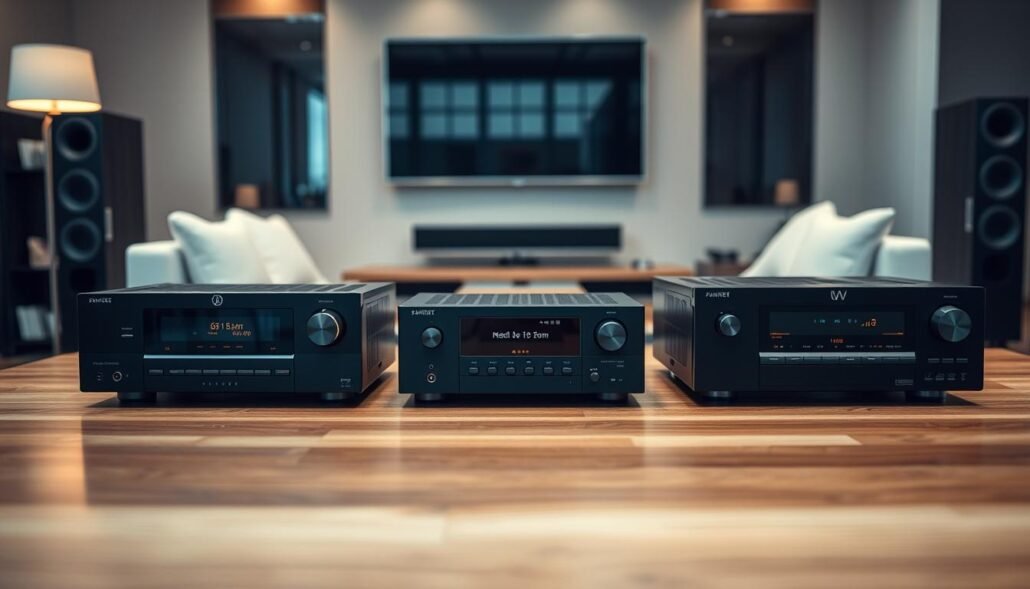
How it stacks up against Denon, Marantz, and Yamaha options
Denon entries like the S960H sit near this price but may lack full HDMI 2.1 on every input. Stepping to an X2700H brings parity at a higher cost.
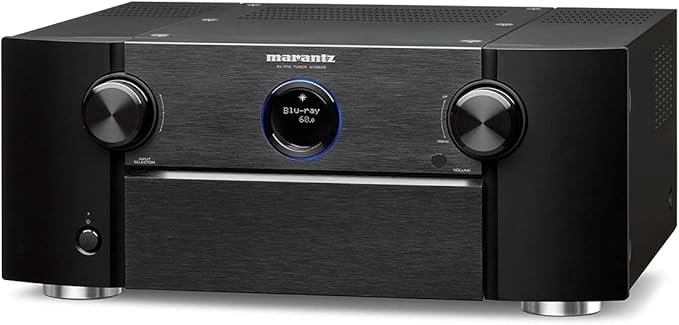
Marantz offers sleeker choices such as the NR1711. That model trades channels and power for a slimmer footprint and fits lifestyle setups better.
Yamaha ranges widely. The RX‑A6A outpaces most rivals in processing but costs far more. The A4A sits closer on price but provides fewer channels for full Atmos builds.
Siblings compared: Pioneer VSX-LX305 and Integra DRX counterparts
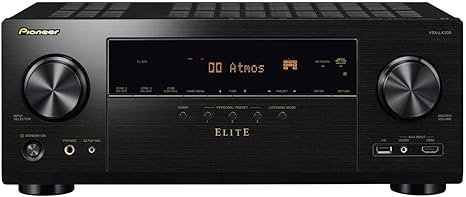
The Pioneer VSX‑LX305 shares platform traits and often mirrors features and inputs. Choose between them based on availability and current pricing.
| Model group | Key strength | When to pick |
|---|---|---|
| Denon | Balanced features, midrange pricing | If you want a familiar UI and solid two‑channel sound |
| Marantz | Compact design, musical voicing | When space and stereo nuance matter more than channels |
| Yamaha/Pioneer/Integra | Processing horsepower / expansion | When you need extra scale or future pre‑outs |
Practical advice: if you need 11‑channel expansion or dedicated pre‑outs, step up to higher tiers like the RZ50 or comparable Integra/Pioneer models. Also note recent company news: Premium Audio Company’s stewardship and manufacturing ties ease long‑term support concerns in the U.S.
- Value edge: all‑HDMI 2.1 inputs at this price can be a deciding factor over some Denon or Marantz models.
- Siblings: the Pioneer sibling is a near match—buying decisions often come down to stock and discounts.
- Audiation tip: audition with your speaker set to judge sound and power relative to your room and listening habits.
Conclusion
As a nine‑channel receiver, the onkyo tx-nr7100 pairs full HDMI 2.1 coverage with Dirac Live, flexible app control, and features that lift home theater and gaming experiences.
Lab tests flag a caveat: a hidden low‑output mode can engage after clipping. If headroom drops, perform a full AC power cycle to restore normal power and levels.
The unit delivers strong movie impact and stable 4K/120 gaming, with THX and IMAX Enhanced adding scale and punch. Stereo listening is competent but not the top choice for audiophile two‑channel fans.
Run room calibration, verify crossovers and levels, and save profiles for different times of day. With U.S. support expected to continue for years, this receiver is a solid pick if you need nine channels, modern HDMI, and robust room correction at a good price.
FAQ
What channels and speaker layouts does the receiver support?
The unit handles up to 11.2 processing with native 9-channel amplification, making it flexible for 5.1.2, 7.1.2, and 5.1.4 Dolby Atmos or DTS:X setups. Use pre-outs for extra amplification if you need full 11-channel drive.
Which HDMI video features are available for modern gaming and 8K sources?
Full-bandwidth HDMI 2.1 features are supported, including 8K/60, 4K/120 passthrough, VRR, ALLM, QFT, and eARC on the main output, allowing next-gen consoles and PCs to benefit from low latency and high frame rates.
Does the unit include room correction, and how well does it work?
It ships with an included calibration microphone for Dirac Live integration, offering precise room correction. The automatic AccuEQ alternative is available but Dirac provides finer control and better low-frequency management.
Can I stream music wirelessly and control the receiver with apps or voice assistants?
Yes. Built-in Wi‑Fi, Bluetooth, AirPlay 2, and Chromecast enable wireless streaming. Voice control works with Amazon Alexa and Google Assistant through linked devices, and a dedicated controller app simplifies setup and basic operation.
How much power does the receiver deliver, and is it sufficient for large rooms?
Rated power per channel meets typical AVR class standards, but real-world output depends on speaker impedance and load. For very large rooms or power-hungry speakers, consider adding external amplification via pre-outs to ensure headroom.
Are there multiple HDMI inputs and can I use a second zone or dual subs?
The back panel offers several HDMI inputs and outputs alongside legacy connections. It supports a second zone for stereo playback and dual subwoofer outputs with independent level control for improved bass integration.
How does the receiver perform in gaming regarding latency and stability?
Gaming performance is strong with 4K/120 passthrough and VRR/ALLM support, keeping latency low and experience stable for compatible consoles. Firmware updates can further refine HDMI handling and stability.
What calibration or setup tips improve results for 7.1.2 and 5.1.4 speaker layouts?
Place height channels symmetrically and match speaker distances in the app or on-screen menu. Run Dirac for best bass and time alignment, set sub crossover around 80 Hz (adjust by speaker capability), and fine-tune levels with a test tone or SPL meter.
Does the receiver use resampling or change source sampling rates during playback?
The processor may resample certain inputs depending on processing mode. Engage a direct or pure audio mode to bypass resampling where possible and preserve source bit depth and sample rate for critical stereo listening.
What remote control and front-panel usability should buyers expect?
The remote provides full feature access and the front-panel is intuitive, with clear input selection and basic tone controls. The on-screen setup assistant and app help simplify more advanced configurations.
How does this model compare with Denon, Marantz, and Yamaha rivals?
It competes well on features like Dirac integration and HDMI 2.1 bandwidth. Denon and Marantz may offer different sonic tuning and ecosystem features, while Yamaha often emphasizes music streaming and YPAO room correction—choice depends on feature priorities and sound preference.
Are there any quirks or modes to watch for, such as ECO or limiting behaviors?
Some power-saving or protection modes can reduce available output under extreme loads. If you notice clipping or reduced dynamics, check ECO settings and speaker impedance; adding an external amp or adjusting limits can resolve issues.
Is THX, IMAX Enhanced, or brand-specific speaker optimization supported?
The receiver supports major surround formats like Dolby Atmos and DTS:X. It also offers brand-specific modes and optimizations that can tailor processing to certain speaker lines—use these with matching speakers for best synergy.
What accessories and cables are included out of the box?
The box typically includes a remote, batteries, quick-start guide, calibration microphone for Dirac, and a power cord. HDMI cables and speaker wire are usually not included, so plan to purchase quality cables separately.
Where can I buy this receiver in the U.S., and are there common discounts to watch for?
Major electronics retailers, authorized dealers, and online stores stock this model. Watch seasonal sales, manufacturer promotions, and authorized dealer bundles for discounts and added accessories.