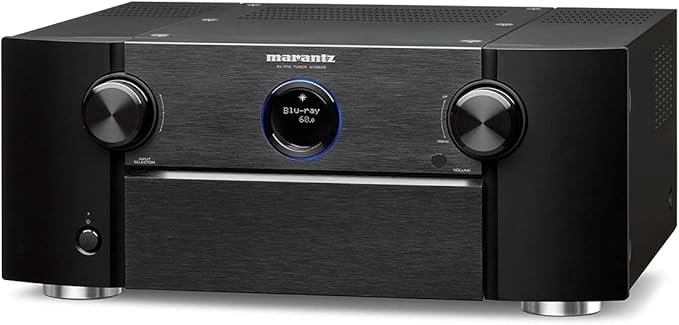
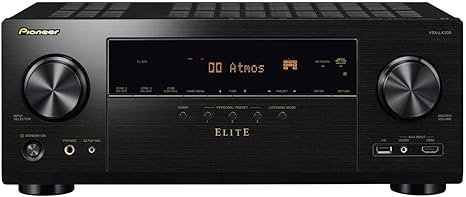
This 11-channel flagship AVR aims to be an all-in-one amplifier platform for modern US living rooms. It targets immersive movie playback with wide format support — Dolby Atmos, DTS:X, IMAX Enhanced, and Auro-3D via firmware — plus Dirac Live included for room correction.
The chassis is heavy and properly built, and the unit pairs dual ESS DACs with robust HDMI 2.1 connectivity. Expect a cinematic, forward sound profile: big scale, strong spatial steering, and controlled aggression that favors impact over the finest vocal nuance.
In the US market the model often appears under the VSX-LX805 name; this write-up focuses on the LX805 platform’s real-world strengths and tradeoffs. We tested setup flow, room correction choices (MCACC vs Dirac), HDMI and gaming readiness, streaming stability, and both movie and music listening.
Who should read on: buyers building 7.2.4 systems, gamers needing HDMI 2.1, and enthusiasts who want balanced connectivity alongside modern streaming features.
What the Pioneer VSA-LX805 Is and Who It’s For in the US
This single-chassis solution combines broad connectivity with ample onboard amplification for serious living-room builds. It targets the higher end of the US market where buyers prefer one box that can drive large setups and still support modern formats and gaming features.
11-channel Class A/B: practical meaning
An 11-channel Class A/B layout means enough onboard amps to run a full 7.2.4 Dolby Atmos setup without adding external amplification. That frees owners from buying separate power amps while keeping headroom for dynamic movie moments.
Understanding the “11.4” label
The marketing tag highlights four subwoofer outputs, but those are implemented as two independent sub channels with paired outputs. For multi-sub tuning this matters: you get wiring flexibility, not four fully separate low-frequency amp channels.
| Spec | Detail | Note |
|---|---|---|
| Channels | 11 internal | Up to 7.2.4 |
| Power | 150W (2 ch driven) | Rated at 8Ω |
| Weight | 21.5 kg | Sturdy console needed |
Who benefits? Movie-first listeners and gamers who need full HDMI 2.1 feature support, plus mixed households wanting three-zone flexibility. Audiophiles should note the 150W spec is two-channel measured; overall power with all channels active is lower but real-world performance shows ample headroom for typical listening levels.
Design, Build Quality, and Day-to-Day Usability
If you keep gear out in the open, this unit trades flash for a familiar, understated presence. The industrial design follows classic lines: an understated black-box chassis with a brushed metal face that looks at home alongside other components.

Faceplate, flap, and materials
The drop-down front flap hides ports and buttons for a tidy living-room look. That makes quick connections easy while keeping the front clean for daily life.
Build impressions are largely positive: the AVR feels heavy and robust, reflecting solid build quality. One small caveat: the flap’s plastic feel is a step down from the metal faceplate.
Controls, setup, and app
The included remote is simple, backlit, and practical — it gets the job done without luxury ergonomics. On-screen setup is straightforward and beginner-friendly, though it lacks the extra hand-holding you see from some rivals.
Connectivity and quick adjustments are easier through the companion app. The app works well for level trims and tonal tweaks and can assist with Dirac measurements during room correction.
- Choice for visibility: conservative styling suits most US living rooms.
- Day-to-day value: fast app controls improve real listening outcomes when dialogue or bass shifts between titles.

Features and Formats That Matter: Dolby Atmos, IMAX Enhanced, Auro-3D, and Streaming
Modern home theaters need broad codec support to turn streaming catalogs into true immersive experiences. Full format coverage matters because many new discs and services deliver object-based mixes that reward capable decoding and upmixing.
Immersive codec support and what it unlocks
Dolby Atmos and DTS:X handle mainstream movies and games, giving clear height cues and placement. IMAX Enhanced appears on select titles for a more theatrical presentation. Auro-3D arrives via firmware for listeners who prefer its upmixer and spatial character.
Room correction: quick vs. precise
MCACC and MCACC Pro offer a fast, useful baseline for most rooms. Dirac Live is bundled here and usually tightens bass and imaging when measured carefully. For US buyers, the included Dirac license is a meaningful value add.
Streaming and multiroom
- Roon Ready and Apple AirPlay 2 make music access simple for dedicated libraries and iOS homes.
- Chromecast and DTS Play‑Fi support multiroom setups across platforms.
- Wi‑Fi and Ethernet keep high-bitrate streaming stable; Bluetooth covers quick guest playback.
| Feature | What it provides | Practical note |
|---|---|---|
| Dolby Atmos / DTS:X | Object-based height effects | Best for movies & games |
| Dirac Live | Advanced room correction | Bundled license adds value |
| Streaming stack | AirPlay 2, Chromecast, Roon Ready, DTS Play‑Fi | Covers most ecosystems |
| DACs | Dual ESS ES9026PRO Hyperstream | Hi-res decoding and clean multichannel |
Connectivity Deep Dive: HDMI 2.1 Inputs, Outputs, and Audiophile Extras
How the AVR connects determines day-to-day value; here you’ll find multiple high-speed HDMI inputs plus pro-grade analog options. The unit balances modern gaming needs with legacy compatibility for older gear.
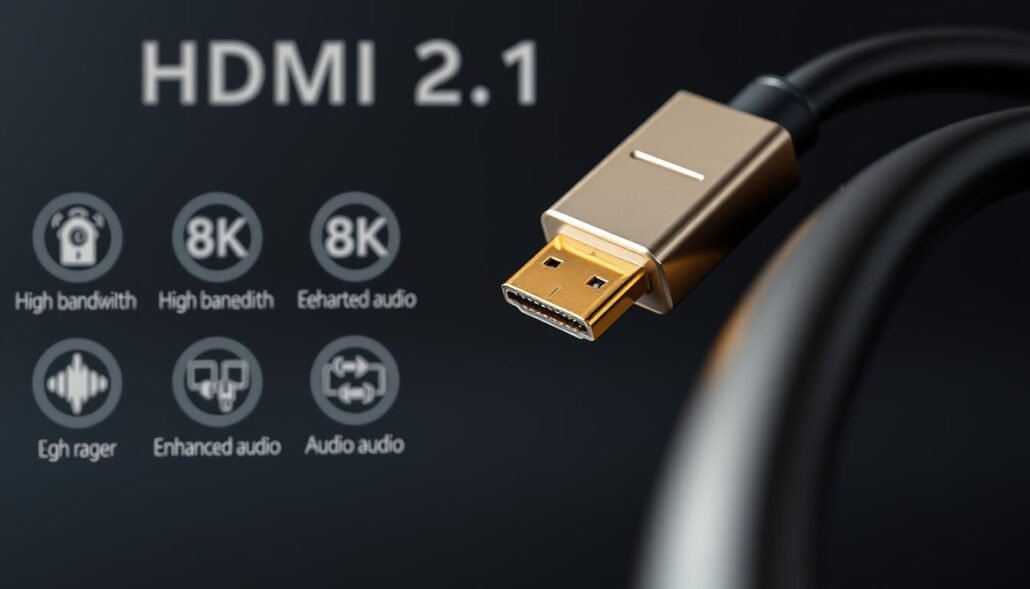
HDMI 2.1 readiness and gaming features
Six rear HDMI 2.1 inputs plus a front HDMI input give seven total HDMI inputs, so you can hook up consoles, streamers, and players without constant swapping. Two outputs support 4K/120 and 8K/60 pass-through for high-frame-rate gaming and projectors.
The receiver supports VRR and ALLM to reduce latency and smooth motion for consoles and PC gaming.
Outputs, eARC, and zone routing
Three HDMI outputs include eARC on the main output for return audio to a TV. A secondary HDMI output can feed a projector or second display, while the zone output may have limited 4K capability depending on assignment.
HDR passthrough checklist
- Dolby Vision — supported for dynamic metadata on compatible sources and displays.
- HDR10+ — pass-through for select streaming and disc content.
- HLG and HDR10 — covered for broadcast and standard HDR sources.
Mixed-system inputs and analog extras
For enthusiasts, a balanced XLR input accepts pro sources, and balanced left/right pre-outs let you add external amplification. An MM phono input handles turntables without a separate phono stage.
Subwoofer routing and legacy connections
There are four subwoofer outputs, mapped as two independent sub channels (pairs). That setup helps smooth bass across a room with two-to-four subs when calibrated carefully.
A passive sub connection is also mentioned, offering uncommon wiring flexibility; confirm compatibility with your subwoofer before using.
| I/O | What it provides | Practical note |
|---|---|---|
| HDMI inputs | 7 total (6 rear HDMI 2.1 + 1 front) | Fits consoles, players, streamers |
| HDMI outputs | 3 (main with eARC) | Main + sub support 4K/120 & 8K/60 |
| Analog | Balanced XLR in, balanced L/R pre-outs, MM phono input | Good for turntables and external amps |
Pioneer VSA-LX805 Review: Setup, Room Correction, and Performance
Setup choices and room treatment shape the real-world performance of any AVR more than raw specs. Start with placement, ventilation for the heavy chassis, and tidy speaker wire routing for an 11-channel layout.
Dirac Live workflows and quick vs. full measurement
Dirac Live runs two practical ways: a fast app-based measurement for convenience, or a laptop plus a calibrated mic for repeatable, high-precision room correction. The calibrated approach yields the tightest bass and cleaner imaging.
MCACC baseline and multi-sub realities
MCACC gives a quick baseline when you want acceptable audio fast. For deeper refinement, Dirac handles multi-sub routing better and adds Bass Control to even low-end delivery across tricky rooms.
Home theater and music performance
The receiver delivers immersive height effects and strong dimensional placement. Action mixes show controlled aggression and wide effects delivery, though dialogue and micro-detail can lack the last layer of nuance.
| Area | Strength | Note |
|---|---|---|
| Calibration | Dirac precision | Use laptop + mic for best results |
| Quick setup | MCACC speed | Good for fast installs |
| Home theater | Immersive delivery | Great for large-scale effects |
| Music | Stereo timing | Vocals less delicate than rivals |
Conclusion
For film-first viewers building a full 7.2.4 system, this AVR delivers an unusually complete feature set and practical connectivity. It pairs bundled Dirac Live room correction with multiple HDMI 2.1 inputs, eARC, and broad HDR pass-through for long-term flexibility.
Standout practical touches include balanced XLR input, an MM phono stage, and support for IMAX Enhanced plus firmware-enabled Auro-3D. Multi‑sub routing helps bass coverage, but the “11.4” label maps to two independent sub channels rather than four separate amps.
Tradeoffs are conservative styling and a sound that favors scale and impact over the finest vocal nuance. If immersive home theater performance, flexible I/O, and strong room correction matter most, this flagship is a compelling choice; if two-channel finesse is your priority, audition alternatives first.
FAQ
What is the VSA-LX805 and who is it designed for in the US?
The VSA-LX805 is an 11-channel Class A/B AV receiver positioned as a flagship unit for serious home theater and stereophile listeners. It targets buyers who want a high-power, flexible hub for immersive formats, multiroom streaming, and audiophile-grade playback in larger listening rooms.
How much power does the receiver deliver and what are real-world specs?
The unit claims around 150W per channel into two channels. In practice, expect robust headroom for typical home systems. The chassis weighs about 21.5 kg and supports three-zone outputs for multiroom setups.
What is the build quality like and how does it look in a rack?
The front sports a brushed-metal faceplate with a drop-down flap and a restrained black-box aesthetic. Fit and finish lean premium, with tactile controls and a solid remote. It balances a modern showroom look with functional durability for everyday use.
Can I control it with an app or should I rely on the on-screen setup?
On-screen setup covers most configuration steps, while the companion app and network control make everyday operation and streaming management faster. Power users will still use the on-screen menus for advanced routing and calibration options.
Which immersive formats and codecs does it support?
It supports Dolby Atmos, DTS:X, and is IMAX Enhanced certified. Firmware updates enable additional formats such as Auro-3D. This makes it compatible with current object-based and immersive surround formats.
What room correction options are included?
The receiver ships with Dirac Live for detailed room correction and offers MCACC Pro as a faster baseline. Dirac gives finer control over bass, timing, and imaging when you take time for multi-point measurements and calibration.
Which streaming and multiroom platforms are supported?
It is Roon Ready and supports Apple AirPlay 2, Chromecast, DTS Play-Fi, Bluetooth, and both Wi‑Fi and Ethernet. That broad compatibility covers most streaming workflows and multiroom ecosystems.
What DAC and audio internals are used?
The design uses dual ESS ES9026PRO DAC chips for high-resolution audio handling. Expect strong detail retrieval, wide dynamic range, and support for hi-res PCM and DSD files.
How many HDMI inputs and what version do they use?
The receiver features HDMI 2.1–capable inputs and outputs to support 4K/120 and 8K/60 signal paths where implemented. It also supports gaming features like VRR and ALLM for consoles and PCs.
Which HDR formats are passed through?
HDR passthrough covers Dolby Vision, HDR10+, HLG, and HDR10 to ensure compatibility with modern sources and displays.
What analogue and professional audio connectors are available?
Connectivity includes balanced XLR inputs, balanced L/R pre-outs, an MM phono input for turntables, and legacy video options. These extras help integrate both audiophile and older AV gear.
How do the subwoofer outputs work?
There are four subwoofer outputs with support for two independent channels, allowing flexible placement and bass management. The design also accommodates passive subwoofer setups through pre-out routing.
What is the Dirac Live workflow like versus MCACC?
Dirac Live offers a more thorough correction path with multi-point measurements and phase/time alignment, best done via laptop and calibrated microphone. MCACC gives a quicker auto-setup for those who prefer a fast baseline without deep tuning.
How does the receiver perform for home theater listening?
In movies it delivers immersive height effects, precise object placement, and controlled dynamics—what some describe as “controlled aggression.” It excels with surround mixes and complex sound design.
How does it handle music listening in stereo and multichannel modes?
For music it offers excellent detail retrieval and wide soundstaging in both stereo and multichannel playback. Timbre and imaging are strong, though the most delicate textures can depend on speaker choice and room correction.
Is there a phono input for vinyl playback?
Yes, an MM phono input is included to connect a turntable directly, making it convenient for vinyl enthusiasts who want integrated analog playback without an external phono stage.
Are balanced outputs and pre-outs available for integrating external amplification?
Balanced L/R pre-outs and multi-channel pre-outs are provided for those who prefer to use external power amplifiers or bi-amp critical channels, improving system scalability and flexibility.
What streaming services and file types are supported for hi-res music?
The receiver supports major streaming platforms through Roon Ready, AirPlay 2, Chromecast, and DTS Play-Fi. It handles hi-res PCM and DSD files, letting listeners play studio-quality sources without compromise.
Does it support Dolby Vision and pass-through for modern displays?
Yes, Dolby Vision is supported along with other HDR formats to ensure high dynamic range content displays correctly on compatible TVs and projectors.
How does it compare in the market for price versus features?
The unit competes strongly at the high end by bundling advanced room correction, high-channel count, modern HDMI features, and audiophile DACs in one chassis. Buyers should weigh speaker setup, room acoustics, and needed features against alternatives from other premium brands.