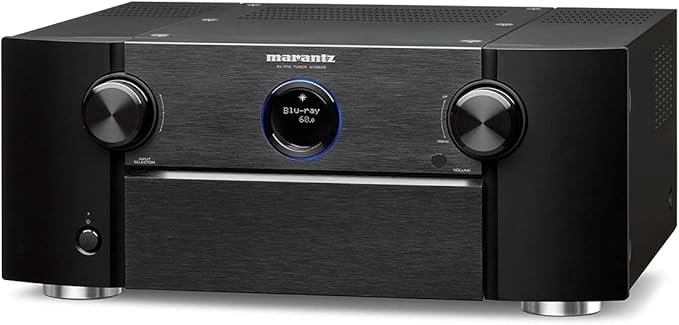
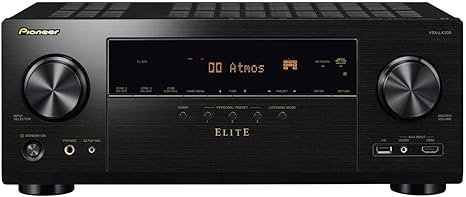
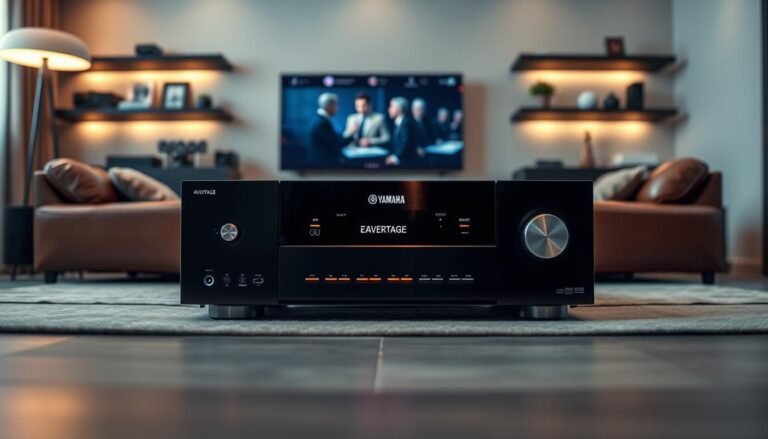
Deciding which name fits your home theater starts with heritage, tuning, and priorities. This short review sets expectations by comparing roots, tuning philosophy, and feature focus for each maker. It shows how those differences shape real-world movie, TV, and game setups across the United States.
“Better” means practical traits for buyers: platform stability, ease of setup, gaming video supports like HDMI 2.1, room calibration, multiroom streaming, and long-term ownership. We also note price, models, and core features that affect day-to-day use.
Test results show distinct reputations. One maker leans warm with adaptive calibration and dense features. Another favors cinematic voicing and robust build. A third targets value with modern streaming and step-up models that add precise calibration tools. When systems are properly matched to rooms and speakers, final sound often comes down to calibration and setup, not brand name alone.
Why this comparison matters today for U.S. home theaters
Today’s living rooms need gear that handles high-frame-rate gaming, advanced HDR, and reliable streaming. Fast-evolving display and console standards like 4K/120, VRR, and HDR formats make the receiver choice central to future-proofing any home setup.
HDMI 2.1 bandwidth and eARC matter. They let TVs pass lossless object-based audio back to the receiver and ease connections for Apple TV, Roku, PS5, and Xbox Series X without extra boxes.
Streaming ecosystems and voice integrations shape daily convenience for U.S. users who mix cable, apps, and gaming. Wide app suites and stable firmware reduce handshake problems and confusion during family movie nights.
- Speaker layout ambitions (5.1.2 up to 9.1.4) and room size drive which models track best for upgrades.
- Firmware maturity cuts passthrough issues with popular devices and keeps video and sound consistent.
- Total ownership cost includes initial price, calibration add-ons like Dirac or Audyssey, and any extra amps for more channels.
Reliable calibration tools deliver even sound across mixed seating. That consistency matters in family rooms and multipurpose spaces common across the United States.
Brand snapshots at a glance: heritage, focus, and lineups
Each maker brings a clear heritage and a focused product line that tells you where priorities lie.
Denon traces back to 1910 and mixes deep engineering history with feature-rich receivers. Core strengths include Audyssey MultEQ XT/XT32, HEOS multiroom, IMAX Enhanced on select models, and optional Auro‑3D support in higher tiers.
Onkyo began in 1946 and targets value buyers. The lineup balances power and connectivity, adds Dirac Live on step-up models like the TX‑RZ50, and offers broad streaming options through partnerships.
Yamaha dates to 1887 and emphasizes build quality in the Aventage series. Expect rigid chassis, Surround:AI processing, strong phono performance on RX‑A models, and YPAO room correction for neutral sound.
| Brand | Heritage | Calibration / Multiroom | Typical features |
|---|---|---|---|
| Denon | Founded 1910 | Audyssey; HEOS | IMAX Enhanced, multi-sub outputs, broad HDMI |
| Onkyo | Founded 1946 | Dirac Live (step-up); Cast/Play‑Fi/Sonos | Value power, many inputs, streaming suite |
| Yamaha | Founded 1887 | YPAO; MusicCast | Aventage chassis, Surround:AI, phono support |
Sound quality and room calibration: Audyssey vs Dirac Live vs YPAO
Calibration often decides whether a setup sounds polished or muddled in real spaces. Proper tuning shapes imaging, bass coherence, and overall playback more than small differences in circuitry. Below are practical notes on each approach and quick setup tips.
Denon’s Audyssey MultEQ XT/XT32
Audyssey uses multi-position measurements to build filters that smooth frequency and time-domain response. It usually gives newcomers an easy, adaptive path to better sound.
Run several mic positions and enable subwoofer integration for smoother bass. Audyssey’s aim is reliable results with minimal tweaking.

Onkyo’s Dirac Live and AccuEQ
Dirac Live applies mixed-phase filters to correct both magnitude and phase. When the measurement flow is followed carefully, imaging and low-frequency integration improve noticeably.
Dirac rewards careful setup; AccuEQ adds faster correction but with less depth than Dirac on supported models like the RZ50.
Yamaha YPAO and Surround:AI
YPAO often delivers a set-and-enjoy experience with neutral voicing. Surround:AI then adds cinema-focused processing for an engaging movie presentation without heavy coloration.
Stereo vs surround: practical impressions
Stereo tends to reveal voicing more: one maker leans slightly warm, another more neutral. In surround sound, room correction and speaker placement narrow those gaps.
- Mic placement: use 6–8 listening positions for best averages.
- Sub integration: adjust phase and crossover after measurements.
- Remember: speaker position and room treatment often affect perceived dynamics more than the receiver model.
Video readiness and HDMI: 8K, 4K/120, Dolby Vision, and gaming
A receiver’s video chain now matters as much as its audio path, thanks to 4K/120 and 8K sources. Modern setups need enough bandwidth to pass high-frame-rate game signals and dynamic HDR without dropouts. eARC also simplifies sending lossless sound from a smart TV back to the main unit.
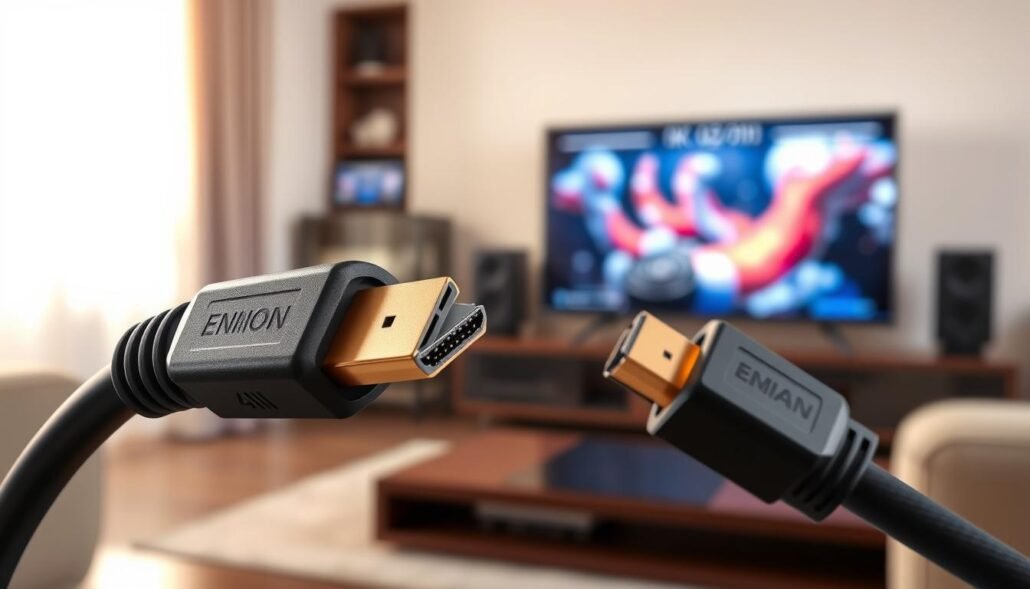
HDMI 2.1 bandwidth enables 4K/120 gameplay and 8K displays. Models vary: one flagship offers six HDMI 2.1 inputs and three outputs with 8K/60 and 4K/120 passthrough and 8K upscaling. Others provide seven inputs with two outputs and similar 4K/120 support. Pick units with enough hdmi inputs and at least one dedicated 8K-ready port for consoles and projectors.
HDR, passthrough, and gaming stability
Receivers differ in handling dolby vision versus HDR10 and HDR10+. Dolby Vision uses dynamic metadata, so reliable passthrough matters. Firmware and robust handshaking cut black screens between sources like streaming sticks and premium TVs.
| Model | HDMI ports | Key video features |
|---|---|---|
| AVR‑X3800H | 6 inputs / 3 outputs | 8K/60, 4K/120, HDR10+, Dolby Vision, eARC |
| TX‑RZ50 (Read Review) | 7 inputs / 2 outputs | 8K compatible, 4K/120, Dolby Vision, HDR10 |
| RX‑A4A | 7 ports | 4K/120, 8K support, Dolby Vision, HLG |
- Enable VRR and ALLM on compatible consoles for tear-free play.
- Favor receivers with extra outputs if you run TV plus projector zones.
- Look for models with prompt firmware updates to keep passthrough stable.
Streaming, multiroom, and wireless: HEOS, Chromecast, AirPlay, Bluetooth
Today’s receivers act as hubs that bridge apps, bluetooth wi-fi, and whole‑home playback. That means your choices affect daily music and streaming services across rooms. Pick systems that match your phone and smart speakers.
Denon HEOS and AirPlay 2: whole‑home ease and app support
HEOS offers simple grouping and broad compatibility with major streaming services. AirPlay 2 adds tight iOS integration and low-latency multiroom sync. HEOS devices scale from compact speakers to full AVR lines for easy expansion.
Onkyo’s streaming suite: Google Cast, Sonos, DTS Play‑Fi
Models like the TX‑NR6100 support Google Cast, DTS Play‑Fi, Sonos, AirPlay, and Bluetooth. The TX‑RZ50 adds two‑way Bluetooth and voice assist options for flexible device connections and quick listening.
Yamaha MusicCast and phono friendliness
MusicCast groups rooms and handles high‑res streams reliably. Many RX‑A models include strong phono stages for vinyl lovers, so streaming and analog music coexist smoothly.
- Bluetooth is great for quick pairing and casual listening; Wi‑Fi gives higher quality and whole‑home control.
- App stability and firmware updates matter—services can be added or improved over time.
- Check support for Spotify Connect, Tidal, and native services when expanding devices.
Power, channels, and formats: Atmos, DTS:X, Auro‑3D, and Atmos Music
Channel count and expansion choices set the stage for any multi‑height surround sound plan. Choose a base layout that fits seating and room size, then confirm how many channels and outputs the receiver supports.
Why channels matter: a 9‑channel receiver lets you run 5.1.4 or 7.1.2 without extra amplification. Pre‑outs and built‑in additional channels allow stepping up to 11 channels by adding power amps.
Height speakers vs virtualization
True height speakers deliver precise up‑and‑over cues for dolby atmos and DTS:X. When installation limits exist, Height Virtualization simulates those cues and still improves immersion.
Subwoofer outputs and bass strategy
Multiple independent outputs smooth low‑end across seats. For example, the AVR‑X3800H’s four sub outputs help reduce room modes and deliver even bass in larger living rooms.
Auro‑3D and premium formats
Mid and upper models often include Auro‑3D decoding and IMAX Enhanced content. These add alternate immersive masters and can raise the impact of select movie tracks.
- Match amplifier power to speaker sensitivity and room size to avoid clipping and keep dynamics clean.
- Use pre‑outs to expand to full 7.1.4 or 9.1.4 systems when needed.
- Consider virtualization when ceilings or placement prevent real height speakers.
| Feature | Typical capability | Practical benefit |
|---|---|---|
| Channel count (example) | 9.2–9.4 channels | Supports 5.1.4 or 7.1.2 layouts without external amps |
| Subwoofer outputs | Single to four independent outputs | Improves bass uniformity and seating coverage |
| Immersive formats | Dolby Atmos, DTS:X, Auro‑3D, IMAX Enhanced | More object‑based mixes and higher fidelity masters |
| Virtualization | Height Virtualizer modes | Simulates height cues when physical speakers aren’t possible |
Denon vs Onkyo in the midrange: AVR‑X3800H vs TX‑RZ50
Choosing between two strong midlevel models comes down to connectivity, calibration, and headroom. Both units aim at home theaters that need modern HDMI routing, immersive formats, and expandability without breaking the bank.
Connectivity: HDMI counts, pre‑outs, and zones
The denon avr-x3800 packs six HDMI 2.1 inputs and three outputs with 8K upscaling, plus four subwoofer outputs for smoother bass across seats.
The tx-rz50 adds one extra hdmi input and two outputs, which helps when many sources are present. Both models expand to 11 channels with extra amps. Choose the unit that matches your input list and how many zones you plan to run.
Calibration: ease versus accuracy potential
Audyssey gives a fast, friendly workflow that delivers consistent results for most rooms. It’s ideal for quick setups and reliable daily listening.
Dirac Live requires more measurement care but can unlock tighter imaging and superior bass control when done well. That accuracy often rewards time spent during setup.
Sound and value takeaways for movies, music, and TV
Power ratings favor the tx-rz50 for headroom, while the avr-x3800 balances formats with IMAX Enhanced and extra sub management. Both models deliver clear dialog and punchy movie dynamics in medium to large rooms.
Value wise: one model leans toward feature density and Dirac at its current price, while the other counters with broader format support, extra sub outs, and flexible outputs for custom systems. Match your priorities: inputs and zones, or calibration depth and Atmos impact.
| Model | Channels | HDMI inputs/outputs | Notable features |
|---|---|---|---|
| denon avr-x3800 | 9.4 | 6 in / 3 out | 4 sub outs, Audyssey, 8K upscaling |
| tx-rz50 | 9.2 | 7 in / 2 out | Dirac Live, THX, two‑way Bluetooth |
Onkyo’s sweet spot pick and Yamaha’s theater focus: TX‑NR6100 vs RX‑A4A
One unit targets broad usability and streaming flexibility; the other pursues cinematic heft and refinement.
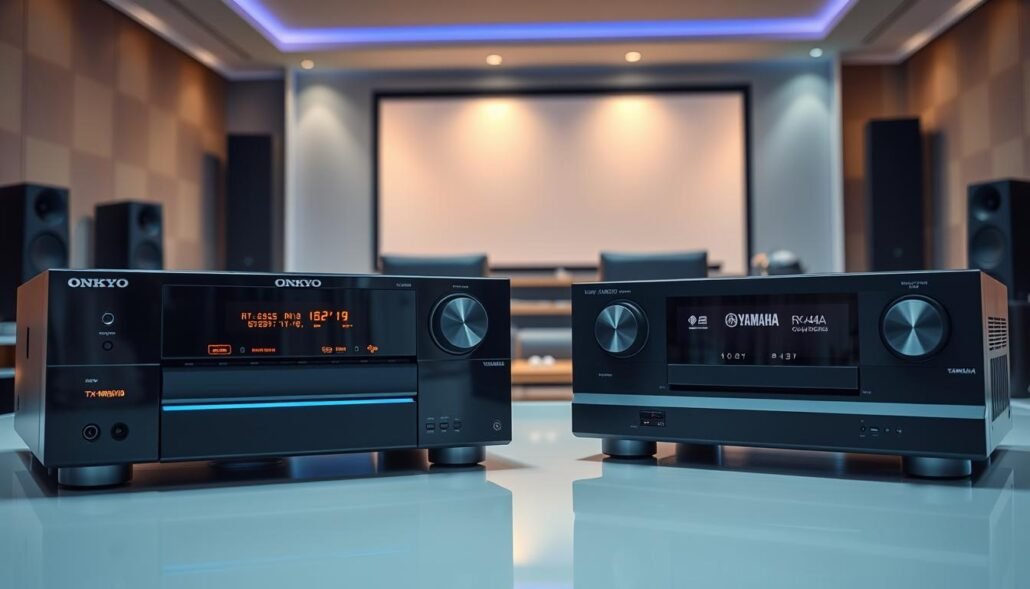
Why the TX‑NR6100 tops value lists
TX‑NR6100 brings 7x100W of reliable power and six HDMI inputs, with three 8K‑capable ports for modern video chains.
Gaming and streaming feel plug‑and‑play: the unit handles 4K/120 game signals and supports Google Cast, DTS Play‑Fi, Sonos, AirPlay, and Bluetooth.
For budget buyers who want wide device support and stable streaming services, this model offers an excellent mix of usability and performance.
Why the RX‑A4A fits theater fans
RX‑A4A emphasizes build quality, seven HDMI ports, and a cinematic sound signature that fills larger rooms.
Its strong onboard phono stage helps vinyl owners skip an extra preamp, and native support for dolby vision, HDR10, and HLG keeps video flexible.
The unit leans toward movie impact while still delivering solid music performance.
- Music vs movies: the TX‑NR6100 balances both; the RX‑A4A favors cinematic scale.
- Ideal users: choose the NR6100 for affordability and broad streaming services; pick the A4A for chassis rigidity and turntable support.
- Ecosystems: Onkyo’s wide device compatibility contrasts with Yamaha’s cohesive MusicCast multiroom approach.
Denon vs Yamaha in upper tiers: AVR‑X3800H/X6700H vs RX‑A6A/A8A
Premium receivers distinguish themselves by how they handle heavy movie dynamics and multiroom routing.
Where Denon stretches: higher-end units like the denon avr-x3800 and the X6700H push expandability with extra subwoofer outputs, broad format support including Auro‑3D and IMAX Enhanced, and reliable 8K upscaling across HDMI sources. These models offer flexible channel expansion paths and plentiful bass outputs for even coverage.
Where Yamaha shines: Aventage mechanical design adds chassis rigidity that reduces vibration and improves long-term stability. Surround:AI tuning enhances cinematic immersion, and select RX‑A models provide multi‑zone audio for whole‑home setups.
Compare channel and power limits: the X6700H supports 11.2 native channels and expands to 13 for large 7.1.6 or 9.1.4 layouts. Yamaha’s RX‑A8A lists 11.2 channels with strong stereo power ratings. Both handle blockbuster dynamics well; choose based on needed expansion, extra outputs, or specific video and dolby vision handling.
| Model | Channels | HDMI/Video | Notable strengths |
|---|---|---|---|
| AVR‑X6700H | 11.2 (expandable) | 7 in / 3 out; 8K upscaling | IMAX Enhanced, multi sub outs |
| RX‑A8A | 11.2 | 7 in / 3 out; 8K/4K120 | Aventage chassis, Surround:AI, multi‑zone |
| AVR‑X3800H / RX‑A6A | 9.4 / 9.2 | 6–7 in; 8K upconversion | extra outputs vs strong chassis |
What is a better brand: Denon, Yamaha, or Onkyo?
Choosing between these makers means balancing setup ease, advanced tuning, and long-term value for your home system.
Feature density and interfaces
Denon leads in feature depth, packing many formats, multi‑sub outputs, and user‑friendly Audyssey. That makes setup faster for most users and keeps everyday menus simple.
Onkyo focuses on value and streaming breadth, and step‑up models add Dirac Live. Dirac delivers pro‑grade correction but asks for careful measurements and a steeper learning curve.
Yamaha favors sturdy build and cinema voicing with YPAO and Surround:AI. Its interface is straightforward — set it, then enjoy — which suits movie‑first systems.
Reliability, parts quality, and ownership experience
Many users report strong reliability and parts quality from Denon, while Yamaha’s Aventage chassis adds mechanical resilience. Onkyo has modernized but can require closer firmware attention.
Recommendation: check warranty terms, allow good ventilation, and apply firmware updates to extend service life and keep support smooth.
Price‑to‑performance: where each leads
Onkyo often wins lower‑to‑mid tier price comparisons with solid power and streaming features per dollar.
Denon stretches toward higher format support and expansion at slightly higher price points, offering broad receiver choices for future upgrades.
Yamaha rewards buyers who value build quality and cinematic staging, even if streaming music features are less central.
- Buy if: you want features and easy setup — favor the feature‑dense option.
- Buy if: you want maximum value and optional pro correction — favor the value‑forward line.
- Buy if: you want chassis quality and theater sound — favor the premium build choice.
| Focus | Strength | Best for |
|---|---|---|
| Feature density | Many formats, multi‑sub outs | Users who upgrade often |
| Value and tuning | Dirac option, streaming | Budget to midrange buyers |
| Build and voicing | Aventage chassis, cinematic sound | Movie enthusiasts |
Buyer’s guide: match the brand to your room, speakers, and use case
Match your room and listening habits to the receiver’s strengths before shopping. Measure the space, note seating positions, and list how you plan to use the system. That clarity makes it easier to pick features that matter.
Movie-first, gamer-first, music-first, and mixed-use scenarios
Movie‑first: Favor units with strong cinematic processing, multiple sub outputs, and enough channels for 5.1.4 or 7.1.4. Models with chassis rigidity help dynamics and long sessions.
Gamer‑first: Look for multiple hdmi inputs that support 4K/120, VRR, and ALLM. Examples include the TX‑NR6100 for 4K/120 play and the X3800H for broader 8K/4K120 support.
Music‑first: Prioritize stereo imaging, phono capability if you own vinyl, and tight room correction. The RX‑A4A’s phono stage and MusicCast ecosystem suit pure listening sessions.
Mixed‑use: Balance hdmi input counts, streaming service support, and pre‑outs for future amp expansion.
Room size, speaker layouts, HDMI inputs, and streaming needs checklist
- Measure room dimensions and mark main seating positions.
- Decide speaker layout: stereo, 5.1, 5.1.2, or 7.1.4 and the number of height channels.
- Count current hdmi inputs and estimate number needed in two years; include game consoles and streaming sticks.
- Verify streaming services and ecosystem support (HEOS, MusicCast, Cast/Play‑Fi/Sonos) for whole‑home use.
- Check outputs: pre‑outs for subs and extra amps, and independent sub outputs if you need uniform bass.
- Review specifications for expansion (native channels and expandability) to future‑proof the system.
| Use case | Key specs to prioritize | Recommended trait |
|---|---|---|
| Movie‑first | Channels, multi sub outputs, cinematic processing | Rigid chassis; strong correction for room modes |
| Gamer‑first | Multiple hdmi inputs, 4K/120, VRR/ALLM | Stable passthrough and low latency |
| Music‑first | Phono stage, stereo imaging, room correction | High‑quality DACs and multiroom streaming |
Conclusion
Your ideal choice depends on room size, speaker layout, and whether you prefer plug‑and‑play or deeper tuning. Check HDMI 2.1 and Dolby Vision support to keep video paths current, and confirm streaming needs before you buy.
In short: the TX‑NR6100 stands out for value, the TX‑RZ50 rewards careful setup with Dirac Live, and the X3800H adds flexible sub outs plus Auro‑3D and IMAX Enhanced. The A‑series favors theater build and a strong phono stage.
When properly calibrated, modern receivers deliver very similar final sound. Let room layout, HDMI count, and ecosystem ease steer the shortlist. For many buyers, ownership experience and feature mix win over raw specs in this review.
FAQ
Which brand offers the best feature set for a midrange home theater receiver?
Look at feature density rather than a single name. Denon often packs advanced room calibration, multiple HDMI 2.1 ports, and HEOS streaming in midrange models. Onkyo focuses on cost‑effective HDMI counts and flexible streaming suites, while Yamaha emphasizes solid build, stable firmware, and unique surround processing. Choose based on HDMI needs, calibration preference, and streaming ecosystem.
How do Audyssey, Dirac Live, and YPAO compare for room tuning?
Audyssey MultEQ (used by some Denon models) delivers user‑friendly automatic measurements and broad correction. Dirac Live (available in select Onkyo models or as an add‑on) offers the finest correction when set up carefully. Yamaha YPAO plus Surround:AI leans toward neutral voicing with intelligent adjustments. If you want ease, pick Audyssey or YPAO; for maximum measured accuracy, opt for Dirac.
Are HDMI 2.1 inputs and eARC handled similarly across these manufacturers?
Brands vary in port counts and feature implementation. Higher‑end Denon and Yamaha units provide multiple HDMI 2.1 inputs, stable eARC, and 4K/120 passthrough. Onkyo often matches HDMI feature sets in midrange SKUs but may limit port numbers. Check specific model tables for 8K/4K/120, VRR, and ALLM support before buying.
Which brand supports Dolby Vision, HDR10+, and reliable upscaling?
Video support depends on chipset and firmware. Denon and Yamaha models broadly support Dolby Vision and HDR10, with some offering HDR10+ or improved scaling. Onkyo covers common HDR formats too but double‑check for HDR10+ on specific models. For gaming and high‑end video, higher‑tier models give better upscaling and passthrough stability.
How good is Dolby Atmos Music performance across these receivers?
Dolby Atmos Music playback depends on codec passthrough, channel count, and DAC quality. Denon models often deliver strong Atmos Music rendering with flexible height channel support. Yamaha provides cinematic voicing that works well for Atmos tracks, while Onkyo can offer excellent spatial detail at competitive prices. Speaker layout and calibration greatly influence results.
What streaming and multiroom options exist for each ecosystem?
Denon integrates HEOS and AirPlay 2 for whole‑home playback. Onkyo supports Google Cast, DTS Play‑Fi, and some third‑party multiroom platforms. Yamaha uses MusicCast, offering tight multiroom control and phono connectivity on some models. Pick the ecosystem that matches other devices you own for the best experience.
How many channels and subwoofer outputs should I expect for Atmos and DTS:X setups?
Entry receivers commonly offer 5.1.2 or 7.1.2 capability. Midrange and upper‑tier units expand native decoding to 7.2.4 or more and include multiple subwoofer outputs and preouts for external amplification. If you plan for 4 or more height channels, choose models with sufficient amplifier channels or preouts to add an external amp.
Between Denon AVR‑X3800H and Onkyo TX‑RZ50, which suits movies and music better?
The AVR‑X3800H often wins on calibration ease, HEOS streaming, and broad format support. The TX‑RZ50 can match or exceed measured performance with Dirac Live and offers strong value in connectivity. For a movie‑heavy setup with simple tuning, lean Denon. For tunable accuracy and price value, consider Onkyo.
Why might someone pick Yamaha RX‑A4A over an Onkyo TX‑NR6100?
Yamaha RX‑A4A targets build quality, Aventage chassis rigidity, and cinematic voicing, ideal for immersive movie fans. The TX‑NR6100 delivers excellent value with solid power, 8K passthrough, and broad streaming options. Choose Yamaha for long‑term reliability and theater sound; choose Onkyo for bang‑for‑buck features.
How important are preamp outputs and multi‑zone features when choosing a receiver?
Very important if you plan to expand or run multiple zones. Models with dedicated preouts allow adding external amplifiers for extra channels or different zones. Multi‑zone HDMI routing and discrete audio outputs enable flexible setups for second‑room playback, streaming, or powered subs.
Do these brands support virtualization if ceiling height channels aren’t possible?
Yes. Yamaha, Denon, and Onkyo offer virtualization schemes that create perceived height through signal processing. Results vary by model and room; virtualization helps when physical height speakers aren’t feasible but won’t fully match true height speaker setups.
What should buyers prioritize: power ratings, HDMI inputs, or calibration tech?
Prioritize based on use case. Gamers and 4K/120 users should focus on HDMI 2.1 counts and passthrough. Movie enthusiasts need reliable calibration, strong video features, and stable eARC. Music lovers should value measured power, DAC quality, and stereo‑first tuning. Balance features against price and room needs.
Are firmware updates and streaming service support consistent across these manufacturers?
Firmware cadence varies. Yamaha and Denon typically provide regular updates and add streaming integrations; Onkyo also updates but check model histories. Streaming service support can change, so verify current app compatibility (Spotify, Tidal, Amazon Music, Dolby Atmos Music) before purchasing.
Can I use a receiver from any of these brands with my turntable and multiroom speakers?
Many Yamaha and some Denon models include phono inputs for turntables, and all three integrate with multiroom systems (HEOS, MusicCast, DTS Play‑Fi, Chromecast). Confirm phono presence and chosen multiroom ecosystem to ensure seamless integration with existing speakers and devices.