This quick guide explains what to expect when you check warranty terms for an AV unit and how seller choice affects coverage in the United States.
Modern AV gear handles multi‑channel power, HDMI 4K switching, HDR formats, and room correction. Those features make reliable support and clear coverage vital.
Buying from an authorized dealer typically preserves the manufacturer’s guarantee and gives direct phone and email help for claims and troubleshooting.
This guide lays out how typical guarantees work, what they cover, and how coverage can differ between sellers. It also answers common consumer questions about length, parts, and labor.
Use this short primer to weigh upfront price against long‑term value and pick the seller and protection level that match your home theater plans.
Why receiver warranties matter when you’re building a home theater
An AV amplifier coordinates power, signal routing, and digital decoding for every speaker and source in your room.
This central unit often powers five or more speakers, supports Dolby Atmos and DTS:X, handles 4K HDMI switching, and passes HDR10, Dolby Vision, or HLG. Such complexity means failures can be technical and costly over time.
Reliable support and clear coverage let you get phone or email help without guessing whether repairs are covered. Authorized channels usually preserve the manufacturer’s terms and speed up service.
- The receiver is the system brain, so solid warranty and quick support reduce downtime.
- Multiple boards—amplifier channels, HDMI, networking—raise repair complexity and cost.
- Firmware updates and format changes may require vendor assistance to resolve issues.
| Risk | Why it matters | How coverage helps |
|---|---|---|
| HDMI board failure | Stops video routing and ARC functions | Repair or replacement under coverage limits |
| Amplifier channel fault | Loss of surround channels during movies | Service center diagnostics and repair |
| Network/firmware bugs | Streaming or multi-room audio issues | Technical support and firmware fixes |
Manufacturer warranty: What you typically get with a new receiver
Manufacturer guarantees usually promise parts and labor protection for defined periods after purchase.
Buying from an authorized dealer preserves the full manufacturer warranty and gives you phone and email support in the United States. Typical policies cover defects in materials and workmanship for stated years on parts and labor. You must provide proof of purchase and follow the maker’s process to start repair or service.
Most coverage includes factory-authorized fixes for failed HDMI boards, defective amplifier channels, or faulty processing parts found during normal home use. Firmware faults often get addressed by updates; true hardware defects go through the manufacturer’s service center for evaluation.
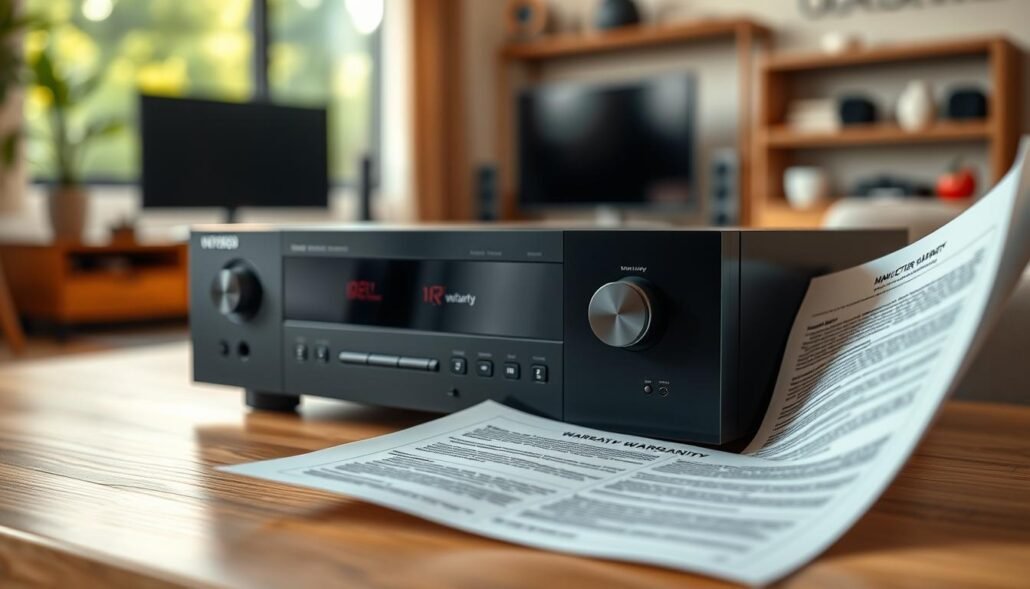
- Keep receipts and serial numbers to speed claims.
- Unauthorized sellers can void eligibility for covered repairs.
- Remember: accidental damage, misuse, and normal wear remain excluded.
| Issue | Typical coverage | Action |
|---|---|---|
| HDMI board failure | Covered if due to defect | Send to authorized center for repair |
| Amplifier channel fault | Factory repair or replacement | Submit claim with proof of purchase |
| Firmware/streaming bug | May be fixed via update | Contact phone/email support |
| Accidental liquid spill | Not covered | Consider third‑party protection |
Buy from an authorized dealer to get the full manufacturer warranty and support
Choosing a vetted seller preserves official coverage and gives access to trained support staff.
Authorized vs. unauthorized sellers: how coverage and service differ
Authorized outlets validate serials and register sales so the manufacturer warranty stays active.
Unauthorized channels may offer lower prices but can leave you without valid coverage. In some cases the maker will refuse service if the unit wasn’t intended for the U.S. market.
Added benefits: phone/email support, easier claims, and peace of mind
Authorized dealers provide direct phone and email help, brand-trained staff, and fast access to service centers. That reduces downtime at home and makes claims easier to process.
- Faster verification: registered serials speed claim approval.
- Practical help: setup, firmware updates, and HDMI/HDR checks often resolve issues without a return.
- Customer-first policies: clearer return and repair paths give long-term peace of mind.
For home theater buyers, these benefits help protect your investment and keep future service predictable for every customer.
What warranty comes with a new receiver, and from whom should I buy?
Buying through an authorized U.S. dealer preserves official coverage and makes claims far easier to process.
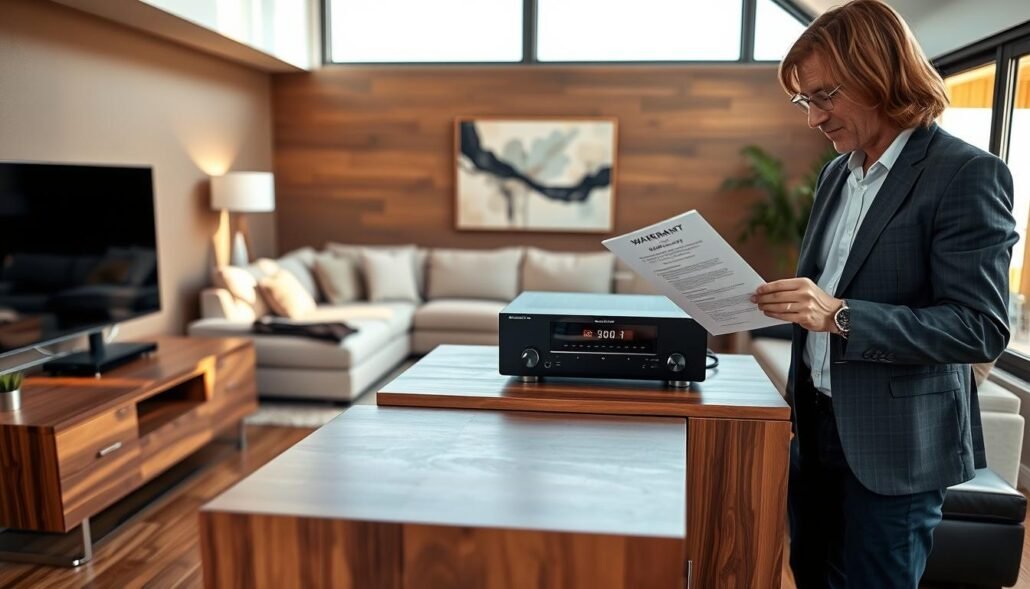
Most new AV units include a limited manufacturer guarantee that covers defects for a defined term. Confirm parts and labor length before you pay; terms vary by brand and model and can change long‑term cost.
Ask clear questions up front: parts vs. labor duration, exclusions, where repairs occur, and who pays shipping. Knowing this avoids surprise expenses and speeds service when problems occur.
- Authorized sellers validate serials, register sales, and often assist with documentation and contact to service centers.
- Price vs. cost: a slightly higher price at an authorized store can save money if a claim is honored.
- Technical support: verify the seller helps with 4K switching, HDR, and Atmos issues so you get help if features misbehave.
| Issue | Typical coverage | Action |
|---|---|---|
| HDMI board failure | Covered if defect during covered term | Send to authorized center for repair |
| Amplifier channel fault | Factory repair or replacement | Submit claim with proof of purchase |
| Accidental damage | Not covered | Consider third‑party protection |
Bottom line: purchase from an authorized U.S. dealer, verify coverage specifics, keep receipts and serial numbers, and ask the right questions now to protect your home system later.
Extended warranties and protection plans: when do they make sense?
Extended warranty plans plug gaps the maker’s standard term often leaves open. They can add years of protection or cover accidental damage that the original policy excludes.
Not all plans are equal. Some providers offer 2–5 years of additional cover and include deductibles or service fees. Others sell subscription-style umbrella plans across electronics and appliances with monthly fees and claim limits.
What extra plans cover versus maker limits
Most extended warranties begin when the manufacturer term ends or fill specific exclusions. If a plan explicitly lists accidental damage, it will cover drops or spills. Manufacturer terms usually exclude misuse and liquid damage.
Examples and common differences
- Retailer-tied plans: faster claim paths but vary in exclusions.
- Third-party plans: can offer multi-product protection but may require deductibles.
- Subscription umbrellas: broader categories, sometimes monthly billing and claim caps.
Expert tip: when skipping add-ons can save money
One industry expert advises comparing total plan cost—premiums, deductibles, and fees—against likely repair costs. If you upgrade gear every few years or keep equipment in a low-risk spot, you may save money by self-insuring.
| Plan type | Typical coverage | Useful for |
|---|---|---|
| Manufacturer extended | Parts & labor extension | Those who want seamless service |
| Retailer plan | May include accidental damage | High-traffic homes or moves |
| Third-party umbrella | Multi-device protection, variable caps | Owners of many appliances and electronics |
Cost, value, and fine print: how to evaluate warranty plans
Compare total plan cost to likely repair bills before committing to extra coverage.
Start with the simple rule of thumb: don’t spend over 30% of the product price on an extended plan unless you expect heavy use or high repair risk.
Next, add up the real price of coverage. Include premiums, deductibles, service fees, shipping, and potential downtime. That total shows the true cost warranty impact.
The fine print that changes value
- Check exclusions for wear, cosmetics, and improper installation.
- Confirm whether repairs go to an authorized center or a third party.
- Verify if advance replacements or loaners are offered during long repairs.
| Factor | Why it matters | How to judge |
|---|---|---|
| Premium vs product price | High premiums can exceed repair value | Apply the 30% rule to decide |
| Deductible & service fees | Raises out-of-pocket cost at claim time | Compare total expected spend, not just upfront price |
| Claims experience | Slow or rejected claims reduce plan value | Read consumer reports and reviews for handling times |
| Coverage scope | Exclusions negate protection for common failures | Ensure HDMI board, power supply, and labor are included |
Bottom line: choose a plan only when its cost, coverage, and support clearly add more value than the money you’d set aside for likely repairs.
Smart buying steps in the United States: verify coverage before you pay
Before you pay, confirm seller status and claims rules so coverage problems don’t surprise you later.
How to confirm authorized status and warranty eligibility
Make sure the seller is listed on the manufacturer’s U.S. site. That is the fastest way to confirm eligibility.
Call or use online chat to test phone support responsiveness before purchase. Quick pre-sale service usually signals smoother claims later.
What to ask about coverage length, parts/labor, and repair logistics
- Make sure you know how many years parts and labor are covered, and whether coverage is U.S.-only.
- Ask what documentation is needed—receipt, serial number—and the way claims start (online portal or phone).
- Confirm who pays shipping both ways, whether advanced replacement is available, and typical turnaround times to keep your home system running.
- For any protection plan, make sure exclusions and accidental coverage are clear so the plan matches your products and use.
| Question | Why it matters | Action |
|---|---|---|
| Authorized dealer? | Preserves official coverage | Check manufacturer dealer list |
| Parts vs. labor years | Determines out-of-pocket risk | Get exact year counts in writing |
| Claims process | Speeds repair | Test phone or chat pre-sale |
Conclusion
Choose an authorized U.S. dealer first to preserve manufacturer warranty and get fast phone support for setup and repair coordination. That step often saves time and reduces claims hassle.
Extended warranty options can help when they clearly add accidental damage protection or extra years of coverage. Compare total cost, deductibles, and claims experience before committing.
Think about how you use the product and where it lives in your house. Proper placement, ventilation, and gentle handling lower risk of damage and may reduce the need for extra plans.
In short: secure official coverage, weigh extended warranties selectively, and favor transparency and strong customer support for peace of mind.