This short guide explains why your screen may show “No Signal” and gives a clear path to restore both video and audio. HDMI carries picture and sound on one cable, so loose plugs, wrong input, damaged leads, or resolution mismatch often cause the problem.
Quick wins include reseating both ends, switching to the correct HDMI input, and power cycling for 1–2 minutes. If that fails, try another port, swap cables, or reduce output to 1080p or 720p.
For PCs, update graphics drivers; for TVs and consoles, check firmware and HDCP compatibility. Long cable runs may need a repeater or an extender kit to keep a stable connection.
Follow this logical, step-by-step troubleshooting approach to rule out faulty hardware before calling for service. For a full setup and deeper steps, see our guide on setting up a home theater.
Why your HDMI shows “No Signal” and what users really need right now
The fastest restoration route is a short, ordered check of cables, inputs, and ports.
Common triggers include a loose or damaged hdmi cable, the display set to the wrong input, or a fatigued port. A source may also send a resolution the display cannot render, leaving the screen blank.
- Most problems start with the physical link: reseat both ends and confirm the chosen input/source.
- Handshake failures (EDID or HDCP) can act like an invisible error; switching the source to another port often restores the signal.
- Software matters: outdated drivers or firmware can cause intermittent detection and should be updated when time allows.
| Cause | Quick check | Fast remedy |
|---|---|---|
| Loose cable | Wobble connector | Reseat or swap cable |
| Wrong input | Input/source selection | Pick correct input |
| Resolution mismatch | Unsupported mode | Lower output to 1080p |
| Port handshake | One port works, another fails | Try different HDMI port |
Troubleshooting steps to restore an HDMI signal on TVs, monitors, and projectors
A quick physical inspection and input sweep usually restores the picture fast. Start with the basics and move through each short step. Test after every change so you know what solved the problem.
Check connections and reseat both ends
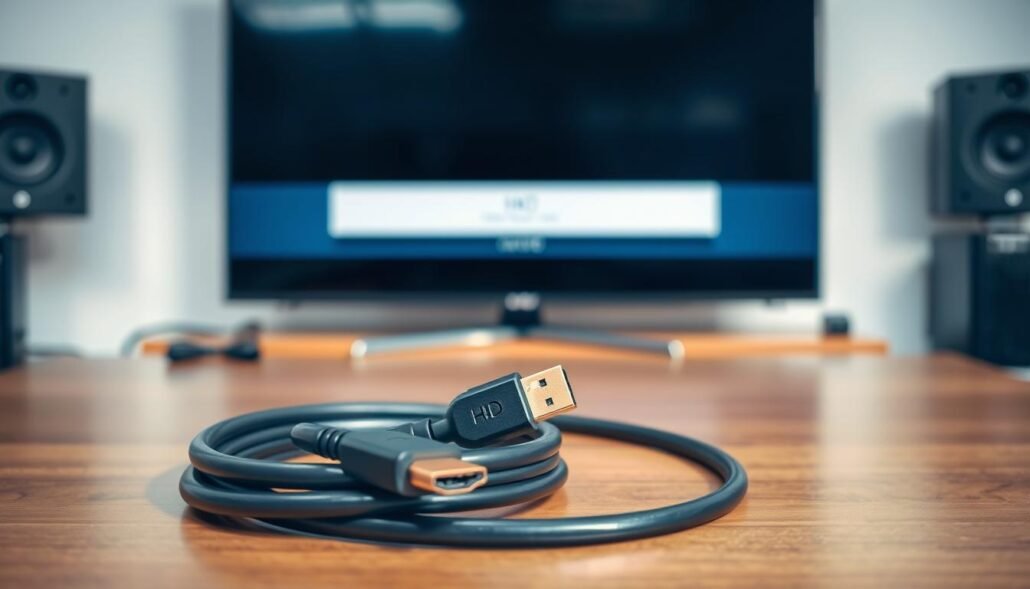
Firmly plug in the hdmi cable at the display and the source. If a connector feels loose, swap the cable for a known-good one.
Verify the correct input
Use the remote or front buttons to step through HDMI 1, HDMI 2, and HDMI 3 until the active source appears.
Power cycle and order the startup
Unplug both units for 60–90 seconds. Power the display first, then the device to improve the handshake.
Swap ports, cables, and test another device
Move the cable to another hdmi port and try a second cable. Connect a different device or laptop to the same input to isolate the fault.
Lower the output resolution and inspect connectors
Set the source to 1080p or 720p if possible. Check for bent pins, frayed jackets, or sharp bends in the cable that block video or audio.
- Keep one change per step and test after each.
- If video returns but audio is silent, confirm the device’s HDMI audio output is enabled.
How do I fix “no signal” issues when connecting devices via HDMI?
Start by forcing a fresh handshake: swap the cable to a different input and give the display time to report its capabilities. EDID and HDCP live in every link, so a port change often restarts negotiations and clears protected-content errors.
Resolve HDCP and EDID handshake problems by switching HDMI inputs
If a display refuses to lock onto the hdmi signal, move the cable to another hdmi port. That forces a fresh EDID read and can fix HDCP blocks. For protected content, try the alternative input or use a newer high-speed cable.
Update graphics drivers, TV/monitor firmware, and system software
Outdated drivers or firmware often cause this error. On PCs update graphics drivers through Device Manager or macOS system updates.
For TVs and consoles, find firmware updates in settings. Manufacturers patch handshake and compatibility bugs regularly.
Adjust startup order: display first, then the source device
Powering the display first helps the source read EDID before sending video. If that fails, reverse the order as a test. Also check output resolution and lower to 1080p if the display cannot render the chosen mode.
- Temporarily connect the source directly to the display to rule out AVRs or splitters.
- Match settings like enhanced format or HDR options across the chain.
- Keep a known-good cable and mark the reliable port for future use.
| Symptom | Quick action | Expected result |
|---|---|---|
| Protected content error | Move to different input / use high-speed cable | HDCP negotiation succeeds |
| No video but device detected | Update drivers / firmware | Compatibility bugs fixed |
| Intermittent drops | Power display first; test direct connection | Stable handshake |
For deeper technical notes on HDMI capabilities and revisions, see the HDMI 2.0 specifications.
HDMI cables, ports, and distance: eliminate hardware-related signal problems
Inspect connectors and run length first; many problems trace back to worn cables or a weak port.
When to replace a cable: Replace a hdmi cable if the jacket is cut, connectors wobble, or pins are bent. Even undamaged cords can fail internally, so swap in a known-good hdmi cable for a quick test.
Choose the right specs: For 4K or high-frame-rate setups pick certified High‑Speed or Ultra High Speed cables to handle bandwidth and secure handshakes for protected content and high resolutions.
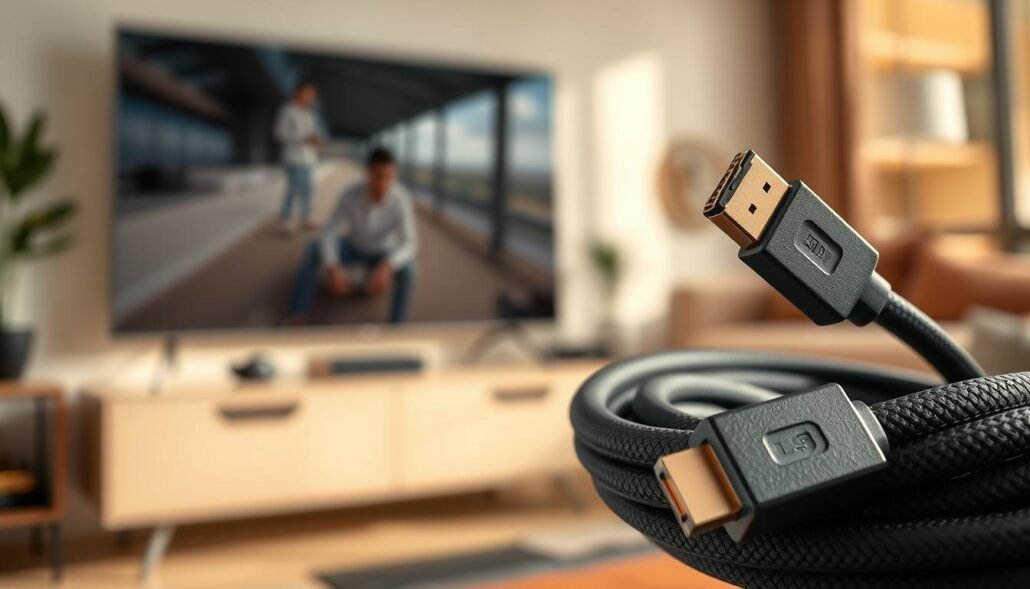
When length matters
Short runs preserve signal integrity. Beyond roughly 10 meters, plan for an in-line repeater. For 40–100 meters use an extender kit that converts the signal for long distance.
Diagnose a bad port
If one hdmi port works and another does not, the original port may be failing. Connect the source directly to the display with a short cable to isolate the fault.
- Move devices closer and retest with a short cable to confirm distance problems.
- Route cables away from power bricks and unshielded runs to cut interference.
- Keep a spare cable to rule out a faulty hdmi quickly.
| Symptom | Quick test | Best remedy |
|---|---|---|
| Intermittent dropouts | Swap to short known-good cable | Replace cable or use repeater |
| One port works, another fails | Try alternative hdmi port | Use working port; service display if needed |
| No picture on long run | Move device closer | Use extender kit or active cable |
Prevent future HDMI issues with these best practices
A few careful routines will stop most connection failures before they start.
Handle cables with care. Coil slack gently and secure cable runs so connectors aren’t under strain. Avoid tight bends that can break conductors and cause intermittent dropouts.
Unplug correctly. Always grip the connector housing, not the cable jacket, to preserve internal wires and extend the life of the hdmi cable.
Simple maintenance steps
- Keep ports free of dust; a short burst of compressed air improves contact reliability.
- Standardize resolution and refresh across shared displays (for example, default to 1080p) to reduce handshake mismatches.
- Limit hot‑swapping. Power down before moving connections to protect delicate transceivers.
- Route cables away from large power supplies and wireless transmitters to cut interference.
Practical habits for shared rooms
Post a small settings card so a laptop user can match resolution and audio quickly. Keep a labeled spare cable on hand; swapping it in saves time during a live meeting.
| Symptom | Quick action | Result |
|---|---|---|
| Intermittent dropouts | Short known-good cable | Stable connection |
| Handshake errors | Set display to 1080p | Fewer negotiation failures |
| Dirty port | Compressed air | Improved contact |
One last tip: make one change at a time during maintenance so any new problem can be traced to a specific adjustment, not a bundle of tweaks.
Conclusion
A quick sequence of basic steps usually restores video and audio without extra tools. Start by selecting the correct input, reseating the hdmi cable, and confirming the source is powered. These small checks often clear the most common problem.
Work in order: power cycle the display then the device, try another hdmi port, and swap in a known-good cable. If video still fails, lower the device resolution to 1080p or 720p and review system settings and drivers.
Switching inputs can force a fresh EDID/HDCP handshake. For long runs, upgrade cabling or add a repeater. Document the working step sequence and keep a spare cable so future reconnects are fast and predictable.