Want a simple way to pick the right receiver for your home theater? This guide helps you match budget, room size, and ecosystem to a standout model. Our 2025 list spans entry-level to premium picks and highlights setup ease, measured performance, and long-term value.
A receiver acts as the hub for video switching, audio decoding, amplification, and smart control. It keeps many speakers and sources tidy and easy to manage. Expect eARC for TV apps, HDMI 2.1 for gaming, and Dolby Atmos at many price points this year.
Top picks include Denon and Onkyo for value and Atmos, Sony ES for 11-channel power, Marantz for sub output flexibility, and Anthem for pure sound. We test for channels, watts, HDMI inputs, room EQ, streaming platforms, and multi-ecosystem control.
Read on for concise pros and cons, real-world power notes, and setup tips so you can expand a system over time and get great sound in your home.
What to Expect in a modern AV receiver with voice control compatibility
Modern home theater hubs now pair hands-free assistants and multiroom streaming to simplify daily use. Expect easy app-based setup, built-in streaming, Bluetooth receive and transmit on select models, and smart-home routine triggers for lights and power.
How assistants work: Alexa, Google Assistant, and Siri can set volume, switch inputs, and run scenes. Some tasks depend on the brand app and account linking. Local commands are faster; cloud requests may need linked accounts and internet access.
Popular streaming platforms
- HEOS: Denon and Marantz whole-home grouping and app control.
- Chromecast & AirPlay 2: simple casting from Android and Apple devices.
- DTS Play‑Fi and Sonos: multiroom options; Onkyo can bridge to Sonos Port on models like the TX‑RZ50.
Note Bluetooth transmit for late-night headphone listening versus standard receive for phones. Wired Ethernet improves reliability and privacy. Finally, match platform and services (Spotify Connect, Apple Music via AirPlay 2, Tidal) to your existing speakers, smart displays, and phones to reduce friction.
Key buying criteria: channels, watts per channel, Dolby Atmos/DTS:X, HDMI inputs, and room EQ
Start by planning speaker layout and power needs, then check HDMI and room correction. Choose a baseline layout—5.1 is the simplest starter. Moving to 5.1.2 adds two height channels for Atmos; 7.1 gives extra surrounds. A 5.2.4 system shows two subs and four heights for fuller immersion.
Channel counts explained
Remember that channel math matters: 5.1 = five amplified channels plus one sub out. Some models can process more channels than they amplify. That allows future expansion using external amps or preamp outputs.
Watts per channel and real-world power
Ignore single-channel marketing figures. Look for full-bandwidth, low-THD ratings when all channels are driven. Dynamic headroom and a robust power supply often matter more than quoted watts per for movie peaks.
HDMI 2.1, eARC, 8K, and gaming features
Check which hdmi inputs are 8K-ready and that at least one port supports eARC for lossless Atmos from TV apps. VRR, ALLM, and QMS reduce lag and stutter for console gamers.
- Inputs & outputs: Plan enough hdmi inputs for streamers and disc players, and at least one 8K/eARC port.
- Room EQ: Budget units use Audyssey; midrange gets MultEQ XT; flagships offer XT32 or Dirac Live and ARC Genesis for tighter bass and consistent timbre.
Balance channel count, correction quality, and amplifier strength to match room size and speaker sensitivity for the best theater upgrade.
Denon AVR-S770H: entry-level 7.2 with eARC, HEOS, and voice control
For anyone building a small cinema room, the AVR‑S770H balances modern video and streaming features with sensible power.
What it offers: Seven powered channels support flexible layouts like 5.1.2. That makes it a tidy upgrade from a soundbar while keeping speaker placement simple.
The amp section is all‑discrete and fed by a larger-than-typical power supply for its class. Rated 75 W per channel (8 ohms, two driven), it delivers punch for efficient speakers and realistic dynamic peaks.
Key features include eARC for lossless audio return, three 8K HDMI inputs, Audyssey MultiEQ for room tuning, and HEOS streaming access to major services. Bluetooth transmit adds private late‑night listening via wireless headphones.
- MM phono input handles a turntable without extra gear.
- Height Virtualizer and DTS Virtual:X upmix non‑Atmos content into a fuller soundstage.
- Simple on‑screen UI helps new builders wire and calibrate the system.
In short, this Denon model fits budget-conscious buyers who want robust channels, current hdmi features, and easy streaming for a compact home theater. Its honest power spec and classic Denon tuning make it a practical first step into multi‑channel audio.
Denon AVR-X2800H: flexible height speaker setup and classic Denon sound
The AVR‑X2800H upgrades your living‑room theater by pairing stronger amplification with detailed height mapping. It supplies seven powered channels at 95 W per channel, giving more headroom for dynamic movie peaks and lively music playback.
Atmos/DTS:X flexibility and height virtualizers
Height speaker options include front, middle, rear, in‑ceiling, on‑wall, and bounce modules. The unit lets you specify each position so processing matches room geometry.
DTS Virtual:X and Dolby Atmos Height Virtualizer boost immersion when physical heights are limited. Audyssey MultEQ XT adds finer filter resolution for tighter bass and clearer dialogue over basic correction tiers.
HEOS streaming and multi-voice control support
HEOS handles multiroom streaming and major services, while built‑in assistants (Siri, Alexa, Google) work through the app for simple hands‑free tasks. Bluetooth transmit permits private headphone listening at night.
| Feature | Benefit | Why it matters |
|---|---|---|
| 7 powered channels, 95 W/ch | More dynamic headroom | Handles peaks in movies and live music without strain |
| Audyssey MultEQ XT | Higher filter resolution | Smoother bass and clearer dialogue in small to medium rooms |
| 3× 8K HDMI, eARC, Dolby Vision | Modern video & audio pass-through | Future‑proofs your theater and supports TV apps’ lossless audio |
| HEOS & hi‑res DACs | Multiroom streaming and local hi‑res playback | Great for music lovers who want both streaming and file playback |
Onkyo TX-NR6100: budget 8K-ready with great streaming and Dolby Atmos
The Onkyo TX‑NR6100 pairs seven powered channels at 100 W each and modern video features into an affordable package.
Why it stands out: Lively Dolby Atmos staging, a wide streaming suite, and a straightforward day‑one setup make it a top value pick for budget home theater builders.
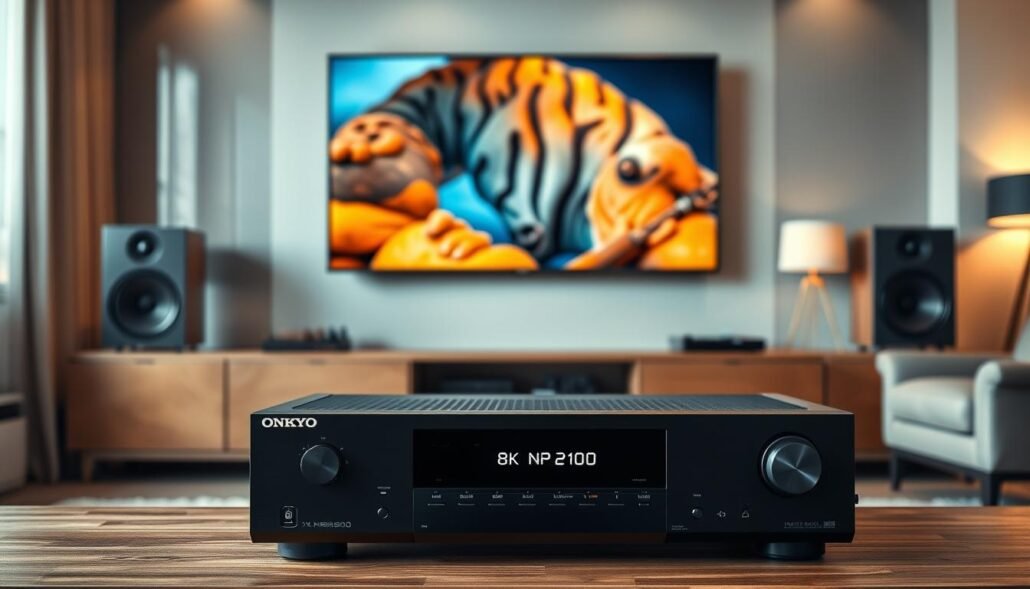
Connectivity is generous: six hdmi inputs including three 8K‑capable ports plus legacy HDR10 and Dolby Vision inputs. Gamers benefit from 4K/120Hz support for current consoles.
- Dedicated phono input for turntables — no extra preamp needed.
- Streaming platforms include Chromecast built‑in, AirPlay, DTS Play‑Fi, Spotify Connect, Sonos, and Bluetooth.
- Reliable CEC switching and a responsive app make daily use fast and painless.
Sonically, the unit delivers expansive, detailed Atmos imaging and solid music handling. In real‑world performance versus price, it punches above its class and can anchor a 5.1.2 setup now, with easy scaling toward 7.1 later.
Onkyo TX-RZ50: Dirac Live, 9-channel power, and best-in-class streaming suite
The TX-RZ50 stakes a claim as a high-value flagship by packing pro-grade correction and flexible amplification into one chassis. Its 9 powered channels and 11-channel processing let you run complex Atmos layouts now and expand later without swapping the main unit.
Why it stands out: Dirac Live room correction sharpens time alignment, phase coherence, and bass control across multiple seats. That translates to clearer dialogue, tighter bass, and a more unified frontstage in both movies and music.
- Power & outputs: 9 channels at 120 W/ch (8 Ω, two driven) and preamp outputs for 11 channels plus two sub outputs allow a straight path to 7.2.4 using an external two-channel amp.
- HDMI switching: Six 8K HDMI inputs and dual 8K outputs handle multiple consoles and players while keeping eARC for TV apps.
- Streaming and connectivity: A top-tier streaming suite, two-way Bluetooth, and Sonos Port integration give broad app and system options.
Dirac Live calibration benefits for sound quality
Dirac Live improves timing and phase across drivers. Use the supplied mic and the Onkyo app for the best results. Enthusiasts can opt for a calibrated USB mic for tighter matches.
8K HDMI inputs, two-way Bluetooth, and Google/Alexa control
Robust HDMI inputs simplify source switching in busy rooms. Two-way Bluetooth streams audio in or sends to headphones. Hands-free assistants and a responsive app make daily operation fast and reliable.
Who should consider it: Buyers who want near-flagship correction, strong power, and flexible outputs without separate amplifiers. Its cinematic punch and stable daily use make it ideal for large living-room theaters.
Sony STR-AZ5000ES: 11-channel ES-class build with immersive DCAC calibration
The STR-AZ5000ES is a robust centerpiece for larger rooms that need reference-level performance and long-term reliability. This Sony unit targets serious home theater installs and offers an 11-channel layout that fills complex seating areas.
ES-class build means a heavy 42+ lb chassis, a beefy power supply, and discrete amplifier sections. Each driven channel delivers 130 W (8 Ω, 20 Hz–20 kHz, 0.08% THD, two ch), so the unit sustains dynamics without strain.
DCAC calibration maps a detailed 3D image of speaker locations. That process tightens localization and creates deep envelopment. Installers praise the precision it brings to complex layouts.
- Six 8K HDMI inputs plus eARC simplify multi-source video routing.
- Preamp outputs for 11 channels support external amps or bi-amping strategies.
- Wireless surround options and phantom surround modes help when wiring is limited.
| Feature | Benefit | Why it matters |
|---|---|---|
| 11 channels / 130 W/ch | Reference-level headroom | Delivers stable dynamics for large rooms and demanding soundtracks |
| Sony DCAC 3D mapping | Precise spatial imaging | Improves dialogue focus and immersive effect across seats |
| Preamp outputs (11) & 6×8K HDMI | Easy expansion and modern video support | Future-proofs system growth and simplifies source switching |
Who should consider it: users who want eleven powered channels without separates, installers who need a long warranty and rock-solid build, and enthusiasts who value immersive accuracy. The guided on-screen setup speeds placement and calibration. Daily benefits include quiet operation, fast source switching, and dependable operation during long sessions.
Marantz Cinema 50: 9-channel amp, 11.4 processing, and four discrete sub outs
Marantz designed the Cinema 50 to pair warm, musical tuning with practical expansion for serious home theater systems.
Power and processing: Nine amplified channels at 110 W per channel let you run a full 7.4.4 layout when paired with an external two‑channel amp. The unit handles 11.4 processing, so future speaker growth is straightforward.
Audyssey MultEQ XT and optional Dirac Live
Audyssey MultEQ XT is included for fast, reliable room correction. It gives clear gains in dialogue and bass balance without a steep learning curve.
Optionally, Dirac Live is available to push timing and phase further for tighter imaging across multiple seats.
Subwoofer outputs and connectivity
Four discrete sub outs matter because they enable independent calibration. That reduces standing waves and gives smoother bass across the room.
Six 8K HDMI inputs plus eARC cover modern source switching and high‑bandwidth passthrough for gaming and streaming media.
- HEOS, AirPlay 2, and Bluetooth support multiroom streaming and quick music playback.
- Moving magnet phono is built in for vinyl fans who want direct integration into the main path.
- Dynamic Volume preserves late‑night dynamics and keeps dialogue intelligible at low listening levels.
Who it’s for: Enthusiasts who prioritize bass management, warm sonics, and a polished on‑screen GUI. This receiver balances flexibility, outputs, and room‑EQ options in a premium mid‑tier package.
Yamaha RX-A4A: cinematic tuning, robust build, and solid phono stage
Yamaha’s RX‑A4A leans into cinematic presentation, delivering a roomy frontstage that favors movie soundtracks over streamed albums.
Built for theater first: The RX‑A4A fills a medium-size home theater with impact. Its tuning emphasizes scale, low-end weight, and clear dynamics so film effects land with authority.
Construction matters here. Yamaha packs neat components around a substantial transformer. That design gives the amplifier stable current for peaks and sustained passages.
Connectivity and analog love: Seven HDMI ports make switching between video sources easy for streamers, consoles, and disc players. The built‑in phono input is notably strong and reduces the need for an extra box for vinyl fans.
- Best match: mainstream tower or bookshelf speakers in a living‑room cinema.
- Daily use: straightforward menus and reliable operation for long sessions.
- Tradeoff: superb home theater performance, slightly less engaging streaming music tonality compared to some rivals.
Who it fits: Users who watch more movies than they critically stream music and who want a stout, dependable unit that pairs well with common speaker packages. Yamaha’s reputation for reliability and controlled amplification rounds out a sensible, movie-first choice.
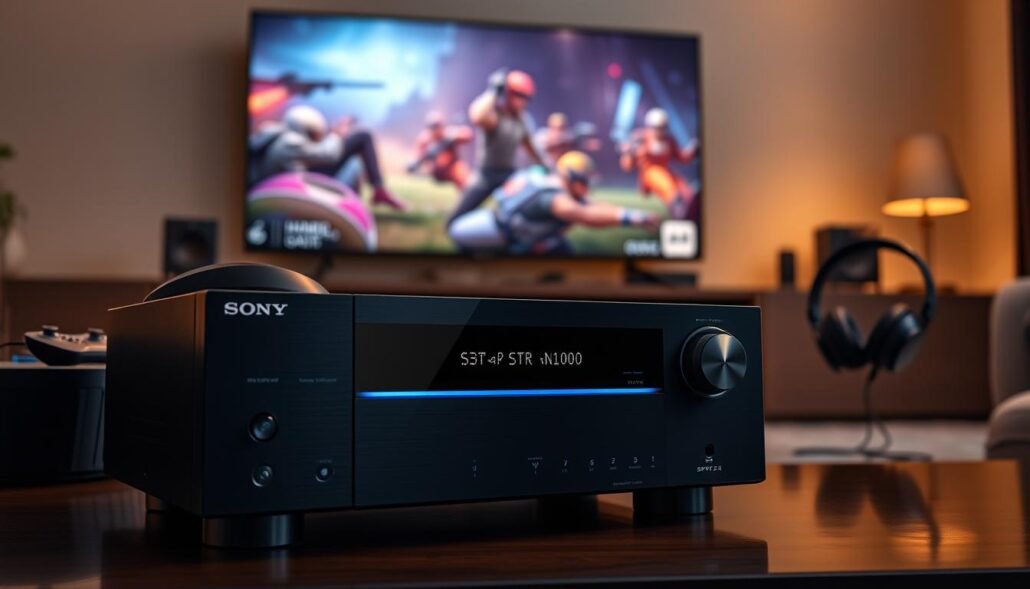
Sony STR-AN1000: gamer-friendly HDMI 2.1 with advanced auto calibration
The STR‑AN1000 targets console-forward households that need low latency, reliable 4K/120Hz passthrough, and a fast daily setup. It packs 7.2‑channel Dolby Atmos processing and a punchy, clean sound that suits a typical living‑room home theater.
Key tech: six HDMI inputs (two 8K-capable) and two 8K outputs simplify routing to displays and consoles. HDR formats—Dolby Vision, HDR10, and HLG—are all supported for consistent video across discs and streaming.
Digital Cinema Auto Calibration IX upgrades tuning with a stereo mic on a stand, multi-position measurement, and manual tools. You can virtually set screen and speaker height to tighten imaging across seats.
Note: there is no dedicated phono input. Vinyl fans should add an external phono preamp for turntables.
- Stable CEC behavior and quick input switching for smooth gaming sessions.
- Best paired with efficient speakers to reach reference-adjacent dynamics in modest rooms.
| Spec | Benefit | Why it matters |
|---|---|---|
| 7.2 Dolby Atmos | Immersive formats | Better movie and game immersion |
| HDMI 2.1, 4K/120Hz | Low latency gaming | Smoother motion and faster response |
| DCAC IX calibration | Precise alignment | Tighter imaging across multiple seats |
Anthem MRX 740: premium sound, ARC Genesis, and flexible processing
For buyers seeking a near-separates experience in one chassis, Anthem’s MRX 740 pairs refined amplification and pro-grade room tuning.
The MRX 740 centers on elevated sound quality and clean power delivery. It supplies seven powered channels rated at 140 W/ch (two driven) and offers preamp outputs for 11 channels so systems can grow without swapping the main unit.
ARC Genesis provides careful bass management and tonal consistency across seats. The correction targets phase, timing, and frequency so detail remains natural rather than over-processed.
The unit supports seven 8K HDMI inputs and eARC for high-bandwidth routing and TV app audio. Flexible amplifier matrixing lets you reassign onboard amps (all but the center) to match bi-amping or add external power stages.
Anthem is known for crisp, dynamic amplifier performance that preserves headroom and uncovers microdetail. That makes the MRX 740 a smart pick for listeners who prioritize reference-grade audio and plan expansion beyond seven channels.
Note: there is no phono input. Vinyl fans should add a standalone phono stage for best results.
- Setup tips: place the ARC Genesis mic carefully and tune target curves iteratively for the main seating area.
- Who it’s for: users wanting separates-like performance, flexible outputs, and surgical room correction in a high-end home theater.
Voice control ecosystems compared: Alexa, Google Assistant, and Siri in receivers
Which assistant fits your household comes down to streaming habits and smart-home depth. Choosing an ecosystem affects everyday tasks like playback, input switching, and scene triggers.
Hands-free music, scenes, and smart home routines
Google Assistant excels at precise casting and Chromecast-based streaming. It handles multiroom groups well for Android-first homes.
Alexa offers the broadest smart-home reach and many skills for lights and automation.
Siri / AirPlay 2 is best for Apple-centric setups and simple multiroom music control.
Best picks by ecosystem and streaming preference
- Denon and Marantz HEOS models work well for mixed Apple and Alexa homes and strong multiroom features.
- Onkyo TX-RZ50 pairs tightly with Google and Alexa and integrates to Sonos via the Sonos Port for Sonos-centric systems.
- Test commands and phrasing in the brand app to confirm reliable scene execution.
| Assistant | Strength | Best for |
|---|---|---|
| Chromecast & precise casting | Android-first homes | |
| Alexa | Smart-home breadth | Complex home automation |
| Siri | AirPlay 2 multiroom | Apple-focused users |
Privacy & reliability: prefer wired Ethernet and local linking where possible to reduce cloud dependency. Check supported streaming services and multiroom grouping before purchase; see features you will want in your next for more setup tips.
Room correction showdown: Audyssey MultEQ tiers vs Dirac Live vs ARC Genesis
Room correction determines how evenly bass, dialogue, and ambience reach every seat in your home theater. Each approach uses a different philosophy: tiered filtering, modular precision, or target-curve shaping.
Subwoofer integration and multi-position measurement
Multi-position mic work averages responses across primary seats. That gives more consistent sound than a single-point sweep. Take measurements around the main listening area and keep the room quiet.
Sub integration depends on outputs, crossover control, and time alignment. Independent sub outputs and phase/time tools yield tighter, more even low end.
When to upgrade to full-range Dirac or Bass Control
Audyssey MultEQ scales from basic to XT32. XT32 narrows gaps in bass with higher filter resolution and better multi-sub handling. Dirac Live offers the highest potential, but base installs can limit correction below 500 Hz unless you buy full-range or Bass Control modules.
Upgrade to full-range Dirac when the room is difficult, the speakers show mid/high anomalies, or multi-sub smoothing is a priority. ARC Genesis suits users who want deep target-curve shaping and iterative tuning.
| System | Strength | Best for |
|---|---|---|
| Audyssey MultEQ (XT32) | Ease, multi-sub support | Simpler setups and fast results |
| Dirac Live (full-range) | Precision timing & phase | Complex rooms and critical listeners |
| ARC Genesis | Custom target curves | Tweakers who iterate profiles |
Save profiles (music vs movie) and compare them. Proper mic placement and quiet measurements matter as much as the algorithm for lasting, high-quality sound.
HDMI 2.1 and 8K for home theater and gaming
HDMI 2.1 raises the ceiling on video and audio performance, moving beyond earlier bandwidth limits. It enables true 8K passthrough and higher-bandwidth 4K/120Hz modes that benefit both movies and modern gaming. Buyers should check how many 8K-capable ports a unit offers and which features each port supports.
eARC for lossless Atmos from TV apps and consoles
eARC sends lossless Dolby Atmos and high-bitrate audio from a TV back to the main system. If you use TV apps or route a console through the television first, reliable eARC on the main output is essential for full Atmos fidelity.
4K/120Hz, VRR, ALLM, and QMS: what gamers should prioritize
4K/120Hz reduces motion blur and unlocks high-frame-rate gameplay. VRR syncs frame rates to the display to cut tearing. ALLM switches compatible displays into low-latency mode automatically for the most responsive input feel.
QMS smooths transitions when frame rates or refresh rates change, preventing black screens during source switching. Note that some models list “HDMI 2.1” but only implement a subset of these features. Verify the real-world feature set before you buy.
- Gamers: aim for at least two HDMI inputs that support 4K/120Hz, VRR, and ALLM.
- Cinephiles: prioritize a stable eARC path and robust HDR handling for TV app Dolby Atmos and high-quality video.
- Wiring tip: plug multiple consoles into supported hdmi inputs on the unit; if ports are limited, connect a console to the TV and use eARC back to the system.
| Feature | Why it matters | Practical advice |
|---|---|---|
| 8K passthrough | Prepares your home theater for future sources | Reserve 8K-capable inputs for set-top boxes or future players |
| eARC | Lossless Dolby Atmos via TV apps | Confirm main output supports eARC and stable handshakes |
| 4K/120Hz, VRR, ALLM, QMS | Improves gaming responsiveness and smoothness | Check which inputs support each feature and use certified Ultra High Speed HDMI cables |
Firmware and cables matter: brands with strong update histories tend to smooth handshake bugs over time. Use certified Ultra High Speed HDMI cables for longer runs and full 2.1 bandwidth. Plan input allocation now to reduce re-cabling as sources evolve.
Subwoofer strategy: .1, .2, and .4 discrete outputs for tighter bass
Adding multiple subwoofers changes how bass fills a room and how consistent low frequencies feel across seats.
.1 vs .2 vs .4 explained: .1 means a single sub output. .2 gives two outputs and may offer independent level or delay. .4 supplies four discrete outputs and full per-sub calibration on some models, such as the Marantz Cinema 50.
Dual or quad subs smooth room modes, cutting peaks and nulls so low notes stay even across the listening area. That reduces localization and improves tactile impact during movies.
Not every dual output is truly independent. Confirm that each sub output on a receiver supports separate level, delay, and EQ before you buy.
Placement tips: try opposing corners or front/rear symmetry, then refine positions while running multi-point measurements. Use room EQ that supports multi-sub optimization—Audyssey higher tiers, Dirac Live Bass Control, or ARC Genesis give the best results.
Practical notes: plan cable runs, match phase and polarity, and set crossover points so mains retain mid-bass headroom. Start with two subs and scale to four for large, multi-row theater setups for the smoothest, most musical low end.
| Output Type | Typical Benefit | Best for |
|---|---|---|
| .1 (single) | Simple setup, single EQ target | Small rooms and single-row seating |
| .2 (dual) | Smoother bass, reduced peaks | Medium rooms, multi-seat setups |
| .4 (quad, discrete) | Even coverage, per-sub tuning | Large rooms or multi-row theater installations |
Price tiers and value picks: matching performance, features, and room size
Start by mapping your room and listening priorities before choosing a tier. Small rooms rarely need huge power or many channels. Medium and large theaters benefit from extra channels, stronger power supplies, and advanced correction.
Under $1,000: compelling 7-channel models
Best for small rooms and first upgrades. Prioritize eARC, enough hdmi inputs, and solid room EQ. The Denon AVR-S770H (7.2, eARC, 3×8K, Audyssey) and Onkyo TX-NR6100 (7×100W, 3×8K-capable) offer strong value and streaming features for this price.
$1,000–$2,000: Dirac Live, more HDMI, bigger power supplies
Ideal for medium rooms that plan to expand. Look for models that add Dirac Live or higher-tier MultEQ, more 8K inputs, and larger transformers. The Denon AVR-X2800H and Onkyo TX-RZ50 (9×120W, 6×8K, Dirac Live) sit in this sweet spot for performance and flexibility.
$2,000 and up: 9–11 channels, premium build, advanced processing
For large rooms and multi-row systems. Choose units that offer 9–11 channels, robust chassis, multiple sub outputs, and pro-grade correction. Consider Sony STR-AZ5000ES (11×130W, DCAC), Marantz Cinema 50 (9-channel, 11.4, four sub outs), or Anthem MRX 740 (7 powered, 11 processing, ARC Genesis).
- Match price to room: don’t overspec a small space.
- Weigh inputs, firmware support, and preamp outputs for future growth.
- Real-world headroom and correction often matter more than small watt differences.
- Budget speakers and subs proportionally; placement and EQ drive results.
Conclusion
, A clear shortlist helps you match power, processing, and inputs to your room and listening habits.
Choose a receiver by balancing channels, room correction, HDMI features, and how you stream music and movies. Match amp headroom to speaker count so dynamics and clarity stay intact.
Streaming ecosystems like HEOS, Chromecast/AirPlay 2, and Sonos make daily use painless—pick the one that fits your devices and habits. Room correction often yields the biggest perceptual gains in sound and dialogue, especially when you add subs.
For Dirac value, consider the Onkyo TX‑RZ50. For bass-focused theaters try the Marantz Cinema 50. For 11-channel immersion the Sony STR‑AZ5000ES is a strong choice. Entry buyers get great value from the Denon AVR‑S770H or the Onkyo TX‑NR6100.
Verify inputs, plan speaker layouts, and set aside time for careful setup and calibration. Spend wisely on EQ and sub strategy—those steps usually outpace chasing raw wattage. With the right choice, your system will deliver engaging music, cinematic home theater sound, and smooth everyday operation.
FAQ
What features should I expect in a modern AV receiver with voice control compatibility?
Expect support for major voice assistants like Amazon Alexa, Google Assistant, and Apple Siri via AirPlay 2. Modern units typically include Dolby Atmos and DTS:X processing, multiple HDMI 2.1 inputs with eARC, streaming platforms such as HEOS, Chromecast, AirPlay 2, or Play-Fi, room correction (Audyssey, Dirac Live, or ARC Genesis), phono input on many mid-to-high models, and ample power per channel for driving home theater speakers.
How do channel counts like 5.1, 7.1, and 7.2.4 affect speaker setup?
Channel counts indicate the number and types of speakers supported: 5.1 covers front left/right, center, and one sub; 7.1 adds two surround speakers; the extra digit(s) indicate height or sub channels (for example, 5.1.2 adds two height/Atmos channels, 7.2.4 means seven main channels, two subs, and four height channels). Choose a layout that matches your room size and the immersive formats you plan to use.
What does “watts per channel” really mean for listening and movies?
Watts per channel tells you the amplifier’s rated output into a specific impedance, usually 8Ω or 4Ω. Real-world performance depends on speaker sensitivity and room acoustics. Higher continuous power helps headroom during dynamic movie peaks and keeps distortion low. Look for measured or reviewed power under real conditions rather than only marketing RMS numbers.
How important is HDMI 2.1 and eARC for gaming and streaming?
HDMI 2.1 brings benefits like 8K support, 4K/120Hz passthrough, VRR, ALLM, and QMS that matter for modern gaming consoles and high-frame-rate video. eARC is crucial for sending lossless Dolby Atmos or multichannel PCM from TV apps back to the system. Prioritize HDMI 2.1 inputs and at least one eARC-capable output if you use game consoles and TV streaming apps.
What are the benefits of room correction systems like Dirac Live, Audyssey MultEQ, and ARC Genesis?
These systems measure your room and adjust equalization and time alignment for tighter bass, clearer imaging, and balanced tonal response. Dirac Live often provides the most transparent and surgical correction, Audyssey MultEQ is widely used and effective for many rooms, and ARC Genesis from Anthem offers excellent phase and bass control. Advanced systems improve subwoofer integration and multi-position listening.
Can I get good stereo music performance and vinyl playback from modern receivers?
Yes. Many mid- and high-end models include dedicated stereo circuits, high-quality DACs, and a phono input for turntables. Brands like Marantz and Yamaha tune their units for musicality, while add-on features like discrete amplification and robust power supplies improve dynamics and clarity for two-channel listening.
Which streaming platforms and multiroom systems should I look for?
Look for HEOS, Chromecast Built-in, AirPlay 2, Sonos compatibility, and Play-Fi depending on your ecosystem. HEOS is common in Denon and Marantz gear, AirPlay 2 is ideal for Apple users, and Chromecast suits Android and many music apps. Pick a receiver that matches the streaming services and whole-home audio system you already use.
How many subwoofers do I need and what do .1, .2, and .4 outputs mean?
The .1, .2, .4 notation indicates the number of discrete subwoofer outputs supported. One sub keeps setup simple; two subs smooth room modes and improve bass uniformity across listening positions; four outputs support large rooms or advanced multi-sub setups. More outputs let you tune sub levels and positions independently for tighter, more even bass.
What power and channel configuration should I choose for a medium-sized home theater under
FAQ
What features should I expect in a modern AV receiver with voice control compatibility?
Expect support for major voice assistants like Amazon Alexa, Google Assistant, and Apple Siri via AirPlay 2. Modern units typically include Dolby Atmos and DTS:X processing, multiple HDMI 2.1 inputs with eARC, streaming platforms such as HEOS, Chromecast, AirPlay 2, or Play-Fi, room correction (Audyssey, Dirac Live, or ARC Genesis), phono input on many mid-to-high models, and ample power per channel for driving home theater speakers.
How do channel counts like 5.1, 7.1, and 7.2.4 affect speaker setup?
Channel counts indicate the number and types of speakers supported: 5.1 covers front left/right, center, and one sub; 7.1 adds two surround speakers; the extra digit(s) indicate height or sub channels (for example, 5.1.2 adds two height/Atmos channels, 7.2.4 means seven main channels, two subs, and four height channels). Choose a layout that matches your room size and the immersive formats you plan to use.
What does “watts per channel” really mean for listening and movies?
Watts per channel tells you the amplifier’s rated output into a specific impedance, usually 8Ω or 4Ω. Real-world performance depends on speaker sensitivity and room acoustics. Higher continuous power helps headroom during dynamic movie peaks and keeps distortion low. Look for measured or reviewed power under real conditions rather than only marketing RMS numbers.
How important is HDMI 2.1 and eARC for gaming and streaming?
HDMI 2.1 brings benefits like 8K support, 4K/120Hz passthrough, VRR, ALLM, and QMS that matter for modern gaming consoles and high-frame-rate video. eARC is crucial for sending lossless Dolby Atmos or multichannel PCM from TV apps back to the system. Prioritize HDMI 2.1 inputs and at least one eARC-capable output if you use game consoles and TV streaming apps.
What are the benefits of room correction systems like Dirac Live, Audyssey MultEQ, and ARC Genesis?
These systems measure your room and adjust equalization and time alignment for tighter bass, clearer imaging, and balanced tonal response. Dirac Live often provides the most transparent and surgical correction, Audyssey MultEQ is widely used and effective for many rooms, and ARC Genesis from Anthem offers excellent phase and bass control. Advanced systems improve subwoofer integration and multi-position listening.
Can I get good stereo music performance and vinyl playback from modern receivers?
Yes. Many mid- and high-end models include dedicated stereo circuits, high-quality DACs, and a phono input for turntables. Brands like Marantz and Yamaha tune their units for musicality, while add-on features like discrete amplification and robust power supplies improve dynamics and clarity for two-channel listening.
Which streaming platforms and multiroom systems should I look for?
Look for HEOS, Chromecast Built-in, AirPlay 2, Sonos compatibility, and Play-Fi depending on your ecosystem. HEOS is common in Denon and Marantz gear, AirPlay 2 is ideal for Apple users, and Chromecast suits Android and many music apps. Pick a receiver that matches the streaming services and whole-home audio system you already use.
How many subwoofers do I need and what do .1, .2, and .4 outputs mean?
The .1, .2, .4 notation indicates the number of discrete subwoofer outputs supported. One sub keeps setup simple; two subs smooth room modes and improve bass uniformity across listening positions; four outputs support large rooms or advanced multi-sub setups. More outputs let you tune sub levels and positions independently for tighter, more even bass.
What power and channel configuration should I choose for a medium-sized home theater under $1,000?
For under $1,000, strong 7-channel models offering around 70–100 watts per channel into 8Ω provide solid performance for medium rooms. Focus on HDMI features, basic room correction, and reliable streaming like HEOS or Chromecast. Brands such as Denon, Onkyo, and Yamaha often offer compelling value in this tier.
When should I consider higher tiers ($1,000–$2,000 and $2,000+)?
Move to $1,000–$2,000 for Dirac Live, extra HDMI 2.1 ports, larger power supplies, and better build quality. Above $2,000, expect 9–11 channel amplifiers, advanced processing, premium room correction, multiple sub outputs, and higher-grade components for top-tier sound and flexibility in larger rooms or multi-zone systems.
Are there receivers optimized specifically for gaming?
Yes. Gaming-friendly models emphasize HDMI 2.1 features like 4K/120Hz, VRR, ALLM, and low-latency passthrough. Some include advanced auto-calibration to optimize audio for position-based effects and retain minimal input lag. Sony and Onkyo offer gamer-focused models with these capabilities.
How do manufacturers differ in tonal character and sound tuning?
Brands have distinct voicing: Marantz often leans warm and musical, Denon balances clarity and punch, Yamaha tends toward neutral and dynamic, and Anthem emphasizes precise bass and imaging. Listening tests or trusted reviews help match a brand’s tuning to your taste and the speakers you plan to pair.
Is Dirac Live worth the extra cost compared to Audyssey?
For critical listeners and complex rooms, Dirac Live often delivers superior accuracy, phase correction, and sub integration. Audyssey performs well for many setups and is more common at lower price points. If you prioritize the best measured performance and can afford it, Dirac is frequently worth the upgrade.
What setup tips improve sound quality after purchase?
Place speakers symmetrically, toe them toward the listening position, calibrate using the included room correction, position subwoofers for smoother bass, use quality speaker cables, and keep firmware updated. Small changes in speaker placement and proper calibration often yield the largest gains.
Can I use multiple voice assistants and smart home routines with a single unit?
Many modern models support multiple control methods—Alexa, Google Assistant, and Siri via AirPlay 2—either natively or through companion apps. Integration varies by model, so verify cross-ecosystem support if you use devices from different smart home platforms.
,000?
For under
FAQ
What features should I expect in a modern AV receiver with voice control compatibility?
Expect support for major voice assistants like Amazon Alexa, Google Assistant, and Apple Siri via AirPlay 2. Modern units typically include Dolby Atmos and DTS:X processing, multiple HDMI 2.1 inputs with eARC, streaming platforms such as HEOS, Chromecast, AirPlay 2, or Play-Fi, room correction (Audyssey, Dirac Live, or ARC Genesis), phono input on many mid-to-high models, and ample power per channel for driving home theater speakers.
How do channel counts like 5.1, 7.1, and 7.2.4 affect speaker setup?
Channel counts indicate the number and types of speakers supported: 5.1 covers front left/right, center, and one sub; 7.1 adds two surround speakers; the extra digit(s) indicate height or sub channels (for example, 5.1.2 adds two height/Atmos channels, 7.2.4 means seven main channels, two subs, and four height channels). Choose a layout that matches your room size and the immersive formats you plan to use.
What does “watts per channel” really mean for listening and movies?
Watts per channel tells you the amplifier’s rated output into a specific impedance, usually 8Ω or 4Ω. Real-world performance depends on speaker sensitivity and room acoustics. Higher continuous power helps headroom during dynamic movie peaks and keeps distortion low. Look for measured or reviewed power under real conditions rather than only marketing RMS numbers.
How important is HDMI 2.1 and eARC for gaming and streaming?
HDMI 2.1 brings benefits like 8K support, 4K/120Hz passthrough, VRR, ALLM, and QMS that matter for modern gaming consoles and high-frame-rate video. eARC is crucial for sending lossless Dolby Atmos or multichannel PCM from TV apps back to the system. Prioritize HDMI 2.1 inputs and at least one eARC-capable output if you use game consoles and TV streaming apps.
What are the benefits of room correction systems like Dirac Live, Audyssey MultEQ, and ARC Genesis?
These systems measure your room and adjust equalization and time alignment for tighter bass, clearer imaging, and balanced tonal response. Dirac Live often provides the most transparent and surgical correction, Audyssey MultEQ is widely used and effective for many rooms, and ARC Genesis from Anthem offers excellent phase and bass control. Advanced systems improve subwoofer integration and multi-position listening.
Can I get good stereo music performance and vinyl playback from modern receivers?
Yes. Many mid- and high-end models include dedicated stereo circuits, high-quality DACs, and a phono input for turntables. Brands like Marantz and Yamaha tune their units for musicality, while add-on features like discrete amplification and robust power supplies improve dynamics and clarity for two-channel listening.
Which streaming platforms and multiroom systems should I look for?
Look for HEOS, Chromecast Built-in, AirPlay 2, Sonos compatibility, and Play-Fi depending on your ecosystem. HEOS is common in Denon and Marantz gear, AirPlay 2 is ideal for Apple users, and Chromecast suits Android and many music apps. Pick a receiver that matches the streaming services and whole-home audio system you already use.
How many subwoofers do I need and what do .1, .2, and .4 outputs mean?
The .1, .2, .4 notation indicates the number of discrete subwoofer outputs supported. One sub keeps setup simple; two subs smooth room modes and improve bass uniformity across listening positions; four outputs support large rooms or advanced multi-sub setups. More outputs let you tune sub levels and positions independently for tighter, more even bass.
What power and channel configuration should I choose for a medium-sized home theater under $1,000?
For under $1,000, strong 7-channel models offering around 70–100 watts per channel into 8Ω provide solid performance for medium rooms. Focus on HDMI features, basic room correction, and reliable streaming like HEOS or Chromecast. Brands such as Denon, Onkyo, and Yamaha often offer compelling value in this tier.
When should I consider higher tiers ($1,000–$2,000 and $2,000+)?
Move to $1,000–$2,000 for Dirac Live, extra HDMI 2.1 ports, larger power supplies, and better build quality. Above $2,000, expect 9–11 channel amplifiers, advanced processing, premium room correction, multiple sub outputs, and higher-grade components for top-tier sound and flexibility in larger rooms or multi-zone systems.
Are there receivers optimized specifically for gaming?
Yes. Gaming-friendly models emphasize HDMI 2.1 features like 4K/120Hz, VRR, ALLM, and low-latency passthrough. Some include advanced auto-calibration to optimize audio for position-based effects and retain minimal input lag. Sony and Onkyo offer gamer-focused models with these capabilities.
How do manufacturers differ in tonal character and sound tuning?
Brands have distinct voicing: Marantz often leans warm and musical, Denon balances clarity and punch, Yamaha tends toward neutral and dynamic, and Anthem emphasizes precise bass and imaging. Listening tests or trusted reviews help match a brand’s tuning to your taste and the speakers you plan to pair.
Is Dirac Live worth the extra cost compared to Audyssey?
For critical listeners and complex rooms, Dirac Live often delivers superior accuracy, phase correction, and sub integration. Audyssey performs well for many setups and is more common at lower price points. If you prioritize the best measured performance and can afford it, Dirac is frequently worth the upgrade.
What setup tips improve sound quality after purchase?
Place speakers symmetrically, toe them toward the listening position, calibrate using the included room correction, position subwoofers for smoother bass, use quality speaker cables, and keep firmware updated. Small changes in speaker placement and proper calibration often yield the largest gains.
Can I use multiple voice assistants and smart home routines with a single unit?
Many modern models support multiple control methods—Alexa, Google Assistant, and Siri via AirPlay 2—either natively or through companion apps. Integration varies by model, so verify cross-ecosystem support if you use devices from different smart home platforms.
,000, strong 7-channel models offering around 70–100 watts per channel into 8Ω provide solid performance for medium rooms. Focus on HDMI features, basic room correction, and reliable streaming like HEOS or Chromecast. Brands such as Denon, Onkyo, and Yamaha often offer compelling value in this tier.
When should I consider higher tiers (
FAQ
What features should I expect in a modern AV receiver with voice control compatibility?
Expect support for major voice assistants like Amazon Alexa, Google Assistant, and Apple Siri via AirPlay 2. Modern units typically include Dolby Atmos and DTS:X processing, multiple HDMI 2.1 inputs with eARC, streaming platforms such as HEOS, Chromecast, AirPlay 2, or Play-Fi, room correction (Audyssey, Dirac Live, or ARC Genesis), phono input on many mid-to-high models, and ample power per channel for driving home theater speakers.
How do channel counts like 5.1, 7.1, and 7.2.4 affect speaker setup?
Channel counts indicate the number and types of speakers supported: 5.1 covers front left/right, center, and one sub; 7.1 adds two surround speakers; the extra digit(s) indicate height or sub channels (for example, 5.1.2 adds two height/Atmos channels, 7.2.4 means seven main channels, two subs, and four height channels). Choose a layout that matches your room size and the immersive formats you plan to use.
What does “watts per channel” really mean for listening and movies?
Watts per channel tells you the amplifier’s rated output into a specific impedance, usually 8Ω or 4Ω. Real-world performance depends on speaker sensitivity and room acoustics. Higher continuous power helps headroom during dynamic movie peaks and keeps distortion low. Look for measured or reviewed power under real conditions rather than only marketing RMS numbers.
How important is HDMI 2.1 and eARC for gaming and streaming?
HDMI 2.1 brings benefits like 8K support, 4K/120Hz passthrough, VRR, ALLM, and QMS that matter for modern gaming consoles and high-frame-rate video. eARC is crucial for sending lossless Dolby Atmos or multichannel PCM from TV apps back to the system. Prioritize HDMI 2.1 inputs and at least one eARC-capable output if you use game consoles and TV streaming apps.
What are the benefits of room correction systems like Dirac Live, Audyssey MultEQ, and ARC Genesis?
These systems measure your room and adjust equalization and time alignment for tighter bass, clearer imaging, and balanced tonal response. Dirac Live often provides the most transparent and surgical correction, Audyssey MultEQ is widely used and effective for many rooms, and ARC Genesis from Anthem offers excellent phase and bass control. Advanced systems improve subwoofer integration and multi-position listening.
Can I get good stereo music performance and vinyl playback from modern receivers?
Yes. Many mid- and high-end models include dedicated stereo circuits, high-quality DACs, and a phono input for turntables. Brands like Marantz and Yamaha tune their units for musicality, while add-on features like discrete amplification and robust power supplies improve dynamics and clarity for two-channel listening.
Which streaming platforms and multiroom systems should I look for?
Look for HEOS, Chromecast Built-in, AirPlay 2, Sonos compatibility, and Play-Fi depending on your ecosystem. HEOS is common in Denon and Marantz gear, AirPlay 2 is ideal for Apple users, and Chromecast suits Android and many music apps. Pick a receiver that matches the streaming services and whole-home audio system you already use.
How many subwoofers do I need and what do .1, .2, and .4 outputs mean?
The .1, .2, .4 notation indicates the number of discrete subwoofer outputs supported. One sub keeps setup simple; two subs smooth room modes and improve bass uniformity across listening positions; four outputs support large rooms or advanced multi-sub setups. More outputs let you tune sub levels and positions independently for tighter, more even bass.
What power and channel configuration should I choose for a medium-sized home theater under $1,000?
For under $1,000, strong 7-channel models offering around 70–100 watts per channel into 8Ω provide solid performance for medium rooms. Focus on HDMI features, basic room correction, and reliable streaming like HEOS or Chromecast. Brands such as Denon, Onkyo, and Yamaha often offer compelling value in this tier.
When should I consider higher tiers ($1,000–$2,000 and $2,000+)?
Move to $1,000–$2,000 for Dirac Live, extra HDMI 2.1 ports, larger power supplies, and better build quality. Above $2,000, expect 9–11 channel amplifiers, advanced processing, premium room correction, multiple sub outputs, and higher-grade components for top-tier sound and flexibility in larger rooms or multi-zone systems.
Are there receivers optimized specifically for gaming?
Yes. Gaming-friendly models emphasize HDMI 2.1 features like 4K/120Hz, VRR, ALLM, and low-latency passthrough. Some include advanced auto-calibration to optimize audio for position-based effects and retain minimal input lag. Sony and Onkyo offer gamer-focused models with these capabilities.
How do manufacturers differ in tonal character and sound tuning?
Brands have distinct voicing: Marantz often leans warm and musical, Denon balances clarity and punch, Yamaha tends toward neutral and dynamic, and Anthem emphasizes precise bass and imaging. Listening tests or trusted reviews help match a brand’s tuning to your taste and the speakers you plan to pair.
Is Dirac Live worth the extra cost compared to Audyssey?
For critical listeners and complex rooms, Dirac Live often delivers superior accuracy, phase correction, and sub integration. Audyssey performs well for many setups and is more common at lower price points. If you prioritize the best measured performance and can afford it, Dirac is frequently worth the upgrade.
What setup tips improve sound quality after purchase?
Place speakers symmetrically, toe them toward the listening position, calibrate using the included room correction, position subwoofers for smoother bass, use quality speaker cables, and keep firmware updated. Small changes in speaker placement and proper calibration often yield the largest gains.
Can I use multiple voice assistants and smart home routines with a single unit?
Many modern models support multiple control methods—Alexa, Google Assistant, and Siri via AirPlay 2—either natively or through companion apps. Integration varies by model, so verify cross-ecosystem support if you use devices from different smart home platforms.
,000–,000 and ,000+)?
Move to
FAQ
What features should I expect in a modern AV receiver with voice control compatibility?
Expect support for major voice assistants like Amazon Alexa, Google Assistant, and Apple Siri via AirPlay 2. Modern units typically include Dolby Atmos and DTS:X processing, multiple HDMI 2.1 inputs with eARC, streaming platforms such as HEOS, Chromecast, AirPlay 2, or Play-Fi, room correction (Audyssey, Dirac Live, or ARC Genesis), phono input on many mid-to-high models, and ample power per channel for driving home theater speakers.
How do channel counts like 5.1, 7.1, and 7.2.4 affect speaker setup?
Channel counts indicate the number and types of speakers supported: 5.1 covers front left/right, center, and one sub; 7.1 adds two surround speakers; the extra digit(s) indicate height or sub channels (for example, 5.1.2 adds two height/Atmos channels, 7.2.4 means seven main channels, two subs, and four height channels). Choose a layout that matches your room size and the immersive formats you plan to use.
What does “watts per channel” really mean for listening and movies?
Watts per channel tells you the amplifier’s rated output into a specific impedance, usually 8Ω or 4Ω. Real-world performance depends on speaker sensitivity and room acoustics. Higher continuous power helps headroom during dynamic movie peaks and keeps distortion low. Look for measured or reviewed power under real conditions rather than only marketing RMS numbers.
How important is HDMI 2.1 and eARC for gaming and streaming?
HDMI 2.1 brings benefits like 8K support, 4K/120Hz passthrough, VRR, ALLM, and QMS that matter for modern gaming consoles and high-frame-rate video. eARC is crucial for sending lossless Dolby Atmos or multichannel PCM from TV apps back to the system. Prioritize HDMI 2.1 inputs and at least one eARC-capable output if you use game consoles and TV streaming apps.
What are the benefits of room correction systems like Dirac Live, Audyssey MultEQ, and ARC Genesis?
These systems measure your room and adjust equalization and time alignment for tighter bass, clearer imaging, and balanced tonal response. Dirac Live often provides the most transparent and surgical correction, Audyssey MultEQ is widely used and effective for many rooms, and ARC Genesis from Anthem offers excellent phase and bass control. Advanced systems improve subwoofer integration and multi-position listening.
Can I get good stereo music performance and vinyl playback from modern receivers?
Yes. Many mid- and high-end models include dedicated stereo circuits, high-quality DACs, and a phono input for turntables. Brands like Marantz and Yamaha tune their units for musicality, while add-on features like discrete amplification and robust power supplies improve dynamics and clarity for two-channel listening.
Which streaming platforms and multiroom systems should I look for?
Look for HEOS, Chromecast Built-in, AirPlay 2, Sonos compatibility, and Play-Fi depending on your ecosystem. HEOS is common in Denon and Marantz gear, AirPlay 2 is ideal for Apple users, and Chromecast suits Android and many music apps. Pick a receiver that matches the streaming services and whole-home audio system you already use.
How many subwoofers do I need and what do .1, .2, and .4 outputs mean?
The .1, .2, .4 notation indicates the number of discrete subwoofer outputs supported. One sub keeps setup simple; two subs smooth room modes and improve bass uniformity across listening positions; four outputs support large rooms or advanced multi-sub setups. More outputs let you tune sub levels and positions independently for tighter, more even bass.
What power and channel configuration should I choose for a medium-sized home theater under $1,000?
For under $1,000, strong 7-channel models offering around 70–100 watts per channel into 8Ω provide solid performance for medium rooms. Focus on HDMI features, basic room correction, and reliable streaming like HEOS or Chromecast. Brands such as Denon, Onkyo, and Yamaha often offer compelling value in this tier.
When should I consider higher tiers ($1,000–$2,000 and $2,000+)?
Move to $1,000–$2,000 for Dirac Live, extra HDMI 2.1 ports, larger power supplies, and better build quality. Above $2,000, expect 9–11 channel amplifiers, advanced processing, premium room correction, multiple sub outputs, and higher-grade components for top-tier sound and flexibility in larger rooms or multi-zone systems.
Are there receivers optimized specifically for gaming?
Yes. Gaming-friendly models emphasize HDMI 2.1 features like 4K/120Hz, VRR, ALLM, and low-latency passthrough. Some include advanced auto-calibration to optimize audio for position-based effects and retain minimal input lag. Sony and Onkyo offer gamer-focused models with these capabilities.
How do manufacturers differ in tonal character and sound tuning?
Brands have distinct voicing: Marantz often leans warm and musical, Denon balances clarity and punch, Yamaha tends toward neutral and dynamic, and Anthem emphasizes precise bass and imaging. Listening tests or trusted reviews help match a brand’s tuning to your taste and the speakers you plan to pair.
Is Dirac Live worth the extra cost compared to Audyssey?
For critical listeners and complex rooms, Dirac Live often delivers superior accuracy, phase correction, and sub integration. Audyssey performs well for many setups and is more common at lower price points. If you prioritize the best measured performance and can afford it, Dirac is frequently worth the upgrade.
What setup tips improve sound quality after purchase?
Place speakers symmetrically, toe them toward the listening position, calibrate using the included room correction, position subwoofers for smoother bass, use quality speaker cables, and keep firmware updated. Small changes in speaker placement and proper calibration often yield the largest gains.
Can I use multiple voice assistants and smart home routines with a single unit?
Many modern models support multiple control methods—Alexa, Google Assistant, and Siri via AirPlay 2—either natively or through companion apps. Integration varies by model, so verify cross-ecosystem support if you use devices from different smart home platforms.
,000–,000 for Dirac Live, extra HDMI 2.1 ports, larger power supplies, and better build quality. Above ,000, expect 9–11 channel amplifiers, advanced processing, premium room correction, multiple sub outputs, and higher-grade components for top-tier sound and flexibility in larger rooms or multi-zone systems.
Are there receivers optimized specifically for gaming?
Yes. Gaming-friendly models emphasize HDMI 2.1 features like 4K/120Hz, VRR, ALLM, and low-latency passthrough. Some include advanced auto-calibration to optimize audio for position-based effects and retain minimal input lag. Sony and Onkyo offer gamer-focused models with these capabilities.
How do manufacturers differ in tonal character and sound tuning?
Brands have distinct voicing: Marantz often leans warm and musical, Denon balances clarity and punch, Yamaha tends toward neutral and dynamic, and Anthem emphasizes precise bass and imaging. Listening tests or trusted reviews help match a brand’s tuning to your taste and the speakers you plan to pair.
Is Dirac Live worth the extra cost compared to Audyssey?
For critical listeners and complex rooms, Dirac Live often delivers superior accuracy, phase correction, and sub integration. Audyssey performs well for many setups and is more common at lower price points. If you prioritize the best measured performance and can afford it, Dirac is frequently worth the upgrade.
What setup tips improve sound quality after purchase?
Place speakers symmetrically, toe them toward the listening position, calibrate using the included room correction, position subwoofers for smoother bass, use quality speaker cables, and keep firmware updated. Small changes in speaker placement and proper calibration often yield the largest gains.
Can I use multiple voice assistants and smart home routines with a single unit?
Many modern models support multiple control methods—Alexa, Google Assistant, and Siri via AirPlay 2—either natively or through companion apps. Integration varies by model, so verify cross-ecosystem support if you use devices from different smart home platforms.