Ready to bring theater-level sound into your home? An AV receiver acts as a video switch for consoles and streaming boxes while it decodes and boosts audio for your speakers and subwoofer. Modern models support 8K video, Dolby Atmos, music streaming, and robust HDMI links.
Think of a compact hub that centralizes HDMI switching and power. Entry-level units now offer Dolby Atmos, eARC, and app-based streaming. Step-up gear adds more channels and room calibration for cleaner, fuller sound.
Choosing the right unit depends on room size, speaker layout, HDMI needs, and plans to expand a multi-channel system. We weigh reliability, warranty, and easy setup alongside daily usability from solid apps and firmware support.
In the sections ahead, you’ll find quick picks, a buyer’s guide, immersive formats, HDMI and power notes, EQ and streaming tips, plus detailed comparisons tied to gamers, vinyl fans, and movie lovers.
Quick answer: the best all‑around receivers right now, by budget and needs
Below are smart picks that balance price, features, and real‑world performance. These recommendations suit common room sizes and speaker layouts, and they all include eARC plus game‑friendly HDMI for 4K/120Hz play.
Best under $750: Denon AVR-S770H
The AVR‑S770H handles 7.2 wiring and 5.1.2 Dolby Atmos with easy Audyssey setup and three 8K inputs. It adds a phono MM stage, Bluetooth transmit, and useful height virtualization for renters and first‑time buyers.

Best under $1,250: Denon AVR-X2800H
Stronger per‑channel power and flexible height speaker mapping make this model ideal for enthusiasts who want HEOS streaming and better mapping without stepping up to pro calibration.

Value step‑up: Onkyo TX‑RZ50
Nine powered channels, Dirac Live, six 8K HDMI inputs, dual 8K outputs and preouts let calibrators expand to 11 channels later. It’s a tuner for tinkerers who value room correction and expandability.
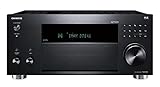
11‑channel value: Sony STR‑AZ5000ES
With 11 amps and muscular output, the AZ5000ES delivers immersive processing and long warranty-backed reliability. It skips phono but targets raw power and build quality for power seekers.
Practical note: 7‑channel units suit small rooms, 9‑channel setups cover 5.1.4 or 7.1.2, and 11 channels support 7.1.4 without extra amps. Match the model to room size, speaker count, and upgrade plans.

What is the best all-around receiver?
A true all-round unit delivers cinematic dynamics, clean stereo for music, and room to grow over years.
Defining “all-around” means balancing clear sound quality, reliable HDMI connectivity, practical features like eARC and streaming, and firmware support that lasts. Build and power reserves matter so peaks stay tight and music remains detailed.
Future-proofing includes 8K pass-through and 4K/120Hz for next-gen gaming. Solid app ecosystems — HEOS, Chromecast, AirPlay, Play‑Fi — make daily use simple for every home.
Editor’s short list for most people (2025)
| Model | Strength | Channels | Best for |
|---|---|---|---|
| Denon AVR-S770H | Value, easy setup | 7.2 (5.1.2) | Entry-level home theaters |
| Denon AVR‑X2800H | Balanced power, streaming | 7.2 with flexible mapping | Midrange music and movies |
| Onkyo TX‑RZ50 (Read Review) | Dirac, expandability | 9 channels | Tinkerers and calibrators |
| Sony STR‑AZ5000ES (Read Review) | High output, reliability | 11 amps | Power-hungry systems |
Longevity tips: check warranty, update cadence, and US parts support. Choose a receiver that fits today’s needs while letting you add speakers or external amps later.
How to choose: a buyer’s guide to features that matter most
Start by matching features to how you actually use your system—movies, games, or music. This keeps spec shopping practical and prevents overpaying for unused options.
Dolby Atmos, DTS:X and height virtualization
Dolby Atmos and dolby atmos dts:x use object-based audio to place sounds in 3D space. Ceiling or height speakers deliver true overhead effects.
If you can’t run new speakers, height virtualization like Dolby Atmos Height Virtualizer or DTS Virtual:X can simulate overhead cues well for many rooms.
HDMI 2.1, eARC and gaming needs
Choose units with HDMI 2.1 bandwidth for 4K/120Hz gaming and low-latency play. eARC returns high-quality audio from TV apps and connected devices.
Plan for a practical number of HDMI inputs to host consoles, streamers, and disc players without constant swapping.
Power, channels and expansion
Look at published power per channel figures but note measurement methods vary. Bigger power supplies and headroom matter in real listening rooms.
Match channel count to layouts like 5.1.2 or 7.1.4. Preamp outputs let you add an external amp later for larger setups.
Room calibration and firmware
| System | Strength | Typical models |
|---|---|---|
| Audyssey (MultEQ) | Fast setup, solid sub integration | Denon, Marantz |
| Dirac Live | Precision correction, deep tuning | Onkyo TX-RZ50 |
| ARC Genesis | Anthem’s tailored correction | Anthem MRX 740 |
| Sony DCAC IX | 3D mapping for Sony systems | Sony STR-AZ5000ES |
Better calibration and subwoofer integration improve bass clarity and overall immersion. Also check firmware update cadence and app stability before buying.
- Checklist: match amplifier headroom to speaker sensitivity and listening distance, confirm HDMI inputs and 8K-capable ports, and verify expansion outputs and calibration support.
Dolby Atmos, DTS:X, and immersive formats explained
Overhead effects and extra surrounds give mixes real depth for movies and next‑gen games. Common layouts range from 5.1.2 up to 7.1.4 and beyond. Each adds more overhead and wider enveloping sound.
5.1.2 suits small rooms and two-row seating. It adds two height speakers for clear overhead cues. Denon AVR-S770H handles this well and includes height virtualizers when in-ceiling placement isn’t possible.
7.1.4 benefits larger rooms and more seats by adding side and rear heights for fuller immersion. Sony STR-AZ5000ES powers 11 channels on board for this layout without extra amps.
| Layout | Why it matters | Receiver type |
|---|---|---|
| 5.1.2 | Basic overhead | 7-channel units |
| 5.1.4 / 7.1.2 | Richer top imaging | 9-channel units (or 11 proc) |
| 7.1.4 | Widest immersion | 11-channel units or add amp |
Place front height speakers slightly above ear level, top middles toward the ceiling center, and rear heights behind listening positions. Onkyo TX-RZ50 can power nine channels and process 11; add external amplification to reach 7.2.4 if needed.
Tip: check ceiling construction, wiring paths, and discrete subwoofer outputs with independent EQ to smooth bass across seats. Start with 5.1.2 and plan expansion for future mixes that increasingly use overhead audio.
HDMI inputs, eARC, and 8K readiness for TVs and consoles
If your living room hosts consoles, streamers, and a disc player, HDMI planning saves headaches.
Count ports before you buy. Aim to have enough inputs for current devices plus one spare high-bandwidth port for future gear. Modern units vary: Denon models offer three 8K-ready inputs, while Onkyo TX-RZ50 supplies six 8K inputs and two 8K outputs.
eARC sends uncompressed Dolby Atmos from TV apps back to your AV hub. That keeps movie soundtracks intact when you stream from smart TV apps.
Switching multiple sources and avoiding bottlenecks
Mixing 8K and older inputs can force lower signal formats. Firmware updates often fix early HDMI 2.1 quirks, so update before troubleshooting. Use certified Ultra High Speed HDMI cables to avoid handshake and dropout issues.
Why gamers care about ALLM, VRR, and 4K/120Hz
Gaming benefits from low latency and stable frame rates. Look for 4K/120Hz support plus ALLM and VRR for smoother play and better performance. Note outputs: dual HDMI outs let you drive a TV and projector, but some models limit the second output to 4K if a zone is active.
- Plan inputs: consoles, streamer, disc player, and one spare.
- Check HDR support: Dolby Vision, HDR10, HLG for widest compatibility.
- Watch firmware: updates can restore full bandwidth and fix feature bugs.
For a deeper look at useful connectivity features you will want, read our guide on ports and modern hookups.
Power, amplifier design, and channel count: what affects sound quality
How a unit feeds current and arranges its amplifier stages tells you more than raw watt numbers.
Power ratings can mislead. Manufacturers often quote watts at 2 channels driven. That number differs from the output when all channels are active. For example, Denon AVR‑S770H lists 75W/ch (2ch driven) while Sony STR‑AZ5000ES shows ~130W/ch (2ch).
Look at supply size and amplifier topology. Larger transformers and discrete amplifier sections point to cleaner dynamics and lower distortion. A heavier chassis often signals a beefier power supply and better quality parts.
Channels matter. More channels onboard can split available current. That lowers headroom if the design lacks reserves. Damping factor and current delivery shape tight, controlled bass and overall audio control.
- Check specs for watts per channel and all‑channel ratings.
- Match headroom to speaker sensitivity and listening distance.
- Use preouts and an external amp when extra power is needed.
Room size, speaker layout, and subwoofer strategy
Speaker placement and sub planning make the biggest audible difference in most installs. Size your channels to fit the room and seating. A compact room rarely needs an 11-channel system. A wider room or multiple rows benefits from more channels or extra amplification.
Discrete subwoofer outputs and better bass integration
A single quality subwoofer improves impact, but dual or more subs smooth bass across seats. Receivers with multiple discrete subwoofer outputs and independent EQ — like the Marantz Cinema 50 with four outputs and separate calibration — let you tame room modes and balance low end per location.
Onkyo TX-RZ50 lists one sub out but supports dual subs via Y or extra processing. Denon models typically provide one sub channel. Multiple subs reduce peaks and nulls and make crossover settings less aggressive.
- Placement tips: try opposite corners, or mid-wall and corner pairs to minimize nodes and nulls.
- Crossover and bass management: set the crossover to blend mains to sub smoothly and use the receiver’s bass management to avoid phase issues.
- Room treatments: soft furnishings and bass traps cut boom and improve clarity.
Calibration mics help set distances and levels, but fine-tuning subs by ear or with measurement apps often yields the best results. Plan wiring paths and outlets for each sub to keep the system neat and reliable.
Room EQ and calibration: getting great sound in your room
Room treatment and smart correction often fix more audible problems than swapping components.
Audyssey MultEQ vs MultEQ XT
Denon’s AVR-S770H ships with Audyssey MultiEQ, which delivers solid basic correction and quick setup. The AVR-X2800H upgrades to MultEQ XT, adding higher filter resolution for tighter bass and clearer midrange.
Dirac Live on the TX-RZ50
Onkyo TX-RZ50 uses Dirac Live for advanced impulse and frequency control. Careful mic placement and quieter test conditions yield sharper imaging and better bass control than single-point runs.
Anthem ARC Genesis on MRX 740
Anthem ARC Genesis gives a hands-on measurement workflow that many enthusiasts prefer. It focuses on curves and time-domain fixes, which improves overall system performance and control.
- Tip: take multi-position measurements for couch and front-row coverage.
- Minimize background noise and follow on-screen guidance during setup.
- Re-calibrate after furniture moves or speaker swaps for best results.
| System | Strength | Notable models |
|---|---|---|
| MultiEQ | Fast, reliable | Denon AVR-S770H |
| MultEQ XT | Higher resolution | Denon AVR-X2800H |
| Dirac Live / ARC | Precision tuning | Onkyo TX-RZ50, Anthem MRX 740 |
Calibration and proper subwoofer integration often yield the biggest gains in audio quality. App-based control lets you store target curves and switch listening modes quickly.
Music streaming, phono inputs, and stereo performance
A strong stereo path and reliable connectivity make day-to-day audio easier and more fun.
Streaming platforms and control
HEOS appears on Denon/Marantz for seamless multiroom. Onkyo supports Chromecast and DTS Play‑Fi plus Spotify Connect and Sonos compatibility on select models. AirPlay and voice assistants add hands‑free playback and simple volume control.
Phono stages and vinyl notes
Denon and Onkyo include MM phono inputs on many models. Yamaha RX‑A4A offers a notably robust onboard phono stage. Sony STR‑AZ5000ES omits phono and needs an external preamp for turntables.
Stereo character and high‑res support
Some models favor cinematic voicing; others lean toward musical, two‑channel clarity. Room and speakers still dominate results, so audition with a favorite playlist.
| Brand | Streaming | Phono | High‑Res |
|---|---|---|---|
| Denon AVR‑X2800H | HEOS, voice | Yes (MM) | 192k/24, DSD |
| Onkyo TX‑NR6100 | Chromecast, Play‑Fi, Sonos | Yes (MM) | 192k/24 |
| Onkyo TX‑RZ50 | Play‑Fi, Sonos Port | Yes (MM) | 192k/24, Dirac |
| Yamaha RX‑A4A | AirPlay, Spotify | Strong onboard | 192k/24 |
- Tip: hardwire Ethernet for reliable high‑bitrate streaming.
- A quick audition with your favorite tracks reveals tonal balance and soundstage.
Top picks by price: best value receivers for home theater
Smart buyers look for a blend of HDMI readiness and reliable amplification. This short guide highlights standout models across a common price range and explains why they matter for typical living rooms.
Entry-level: Denon AVR-S770H
Why it stands out: 7.2 channels, 75W/ch, three 8K HDMI inputs, eARC and Audyssey MultiEQ make setup fast. It includes an MM phono stage for vinyl fans and handles 5.1.2 Atmos layouts well.
Midrange: Denon AVR-X2800H & Onkyo TX-NR6100
The AVR-X2800H brings extra power (95W/ch) and MultEQ XT for tighter bass. HEOS streaming and flexible height mapping suit mixed uses.
The Onkyo TX-NR6100 pairs engaging Atmos delivery with a strong streaming suite: Chromecast, Play‑Fi, Spotify, Sonos, AirPlay, and phono input. It lists 7x100W and three 8K-ready inputs from a larger HDMI complement.
Upper midrange: Onkyo TX-RZ50 & Yamaha RX-A4A
Onkyo TX-RZ50 is the growth pick. Nine amps at ~120W, Dirac Live, six 8K HDMI inputs, two HDMI outputs and preouts let you expand to 11 channels later.
Yamaha RX-A4A delivers cinematic sound with a robust phono stage and solid build. Its seven HDMI ports and tuning favor big-screen movies even if streaming fidelity lags some peers.
| Model | Channels | Power | Key HDMI / I/O |
|---|---|---|---|
| Denon AVR-S770H | 7.2 | 75W/ch | 3×8K inputs, eARC, MM phono |
| Denon AVR-X2800H | 7.2 | 95W/ch | 3×8K inputs, HEOS, MultEQ XT |
| Onkyo TX-NR6100 | 7 | 100W/ch | 3×8K inputs (of 6), Chromecast, phono |
| Onkyo TX-RZ50 | 9 | 120W/ch | 6×8K inputs, 2 HDMI outs, preouts for 11 |
| Yamaha RX-A4A | 7 | ~variable | 7 HDMI, strong phono, cinematic tuning |
Buying guidance: match channels and power to room size so you neither under‑power nor waste budget. Check HDMI inputs and eARC to support consoles and TV apps. If future expansion matters, prioritize preouts and firmware support.
Value pick: For most rooms, the Denon AVR-S770H delivers the best mix of price and sound with straightforward setup. Watch holiday pricing—deals often shift the value leader.
Stepping up to 9 and 11 channels: more speakers, more immersion
Upgrading to more onboard channels lets you build wider, more precise soundscapes without wiring extra amps.
Why 9 and 11 matter: Nine-channel units power complex layouts like 5.1.4 or 7.1.2 without external amplification. Eleven-channel models let you run full 7.1.4 directly from one chassis for cleaner routing and simplified setup.
Marantz Cinema 50: nine amps, 11.4 processing and 110W/ch. Four discrete subwoofer outputs smooth bass across seats. HEOS and eARC add convenience, and an optional Dirac upgrade boosts room correction beyond stock tuning.
Sony STR-AZ5000ES: eleven amps at ~130W/ch, DCAC IX tuning, six 8K inputs, and a five-year warranty. It delivers muscular power and true overhead immersion for larger rooms or multi-row seating.
Practical setup tips: plan wiring runs and in-ceiling backer boxes, place height speakers just above ear level, and run multi-position calibration for best performance. Compare costs: adding external amps to smaller units often costs more than stepping up to a higher-channel model.
Gaming-ready receivers: latency, formats, and control
Low input lag and stable frame pacing matter for serious play. Consoles now push 4K/120Hz, and receivers must pass that signal without adding lag. ALLM and VRR reduce input delay and frame stutter for PS5 and Xbox Series X while keeping motion smooth.
HDMI 2.1 features and console performance
4K/120Hz, ALLM, and VRR lower latency and smooth tearing. Use certified high-bandwidth cables and keep runs short to avoid signal loss. eARC lets your TV act as the switch while returning uncompressed object audio to the system.
Sony STR-AN1000: gamer-focused strengths
The STR-AN1000 supports Dolby Atmos, six HDMI inputs (two 8K) and two 8K outputs. DCAC IX calibration and manual controls tune screen and speaker height for tight imaging. Note: no phono stage.
Practical tips:
- Routing through a unit can add tiny latency; compare direct-to-TV with eARC return when ultra-low lag matters.
- Keep firmware current to maintain hdmi compatibility as consoles update.
- Use voice or app control for fast input switching and volume without pausing play.
- Pick short, high-quality HDMI cables; avoid long passive runs over 5–7 meters for 4K/120Hz.
- Ensure good ventilation so thermal throttling doesn’t affect long sessions.
| Topic | Why it matters | Note |
|---|---|---|
| VRR / ALLM | Reduces stutter and lag | Supported via HDMI 2.1 |
| eARC | Preserves uncompressed audio | Good for TV-first setups |
| Firmware | Keeps devices compatible | Update before troubleshooting |
Connectivity and control: multi-room audio, voice assistants, and apps
Smart receivers must bridge wired LAN, wireless groups, and voice systems for smooth multi-room audio.
Common multi-room paths include HEOS zones for Denon/Marantz, Chromecast groups and AirPlay for many Onkyo and Sony models, and Sonos integration via Sonos Port for legacy setups.
Control layers range from the native remote to brand apps and voice assistants. HEOS pairs with Siri, Alexa, and Google. Onkyo supports Chromecast, Play‑Fi, and Sonos while the TX‑RZ50 adds robust app control and two‑way Bluetooth.
- Bluetooth TX/RX: use transmit mode for private listening and receive for quick phone streaming.
- Zones and power: zone outputs can feed a second room directly or send preouts to an external amp for louder spaces.
- Independent sources: some models let each zone play a different source at once for true multi-room flexibility.
| Brand | Multi-room paths | Control & notes |
|---|---|---|
| Denon / Marantz | HEOS zones, multiroom speakers | App control, Siri/Alexa/Google support; strong music integration |
| Onkyo (TX‑RZ50 / TX‑NR6100) | Chromecast, Play‑Fi, Sonos via Port, AirPlay | Two‑way Bluetooth, solid app control; Sonos Port adds ecosystem bridging |
| Sony | AirPlay, Chromecast on select models | Robust app setup with DCAC IX tuning; dependable remote options |
Integration tips: check for IP or API control if you use a smart home hub. Use wired Ethernet for the main hub receiver to keep latency low and services stable. Set firmware to update regularly to preserve features and streaming access.
Family note: enable parental volume limits or per‑zone restrictions when shared rooms need safe listening levels.
Build quality, warranty, and long-term reliability
Solid mechanical design often tells you more about long-term reliability than peak specs. Heavier chassis with large transformers and discrete amplifier stages usually deliver steadier current and cleaner dynamics under load.
Rigid bracing reduces vibration and keeps noise low. That matters for sustained high-power use and tight bass. Marantz Cinema 50 and Sony STR-AZ5000ES show how weight and parts choice support durable performance.
Transformer size, discrete amps, and chassis design
Large power supplies store energy for peaks, while discrete amp modules give predictable channel behavior. A stout cabinet also protects delicate boards and connectors over years.
Brand support: Denon, Marantz, Onkyo, Sony, Yamaha
Warranty length signals confidence—Sony ES’s five-year term stands out. Denon and Marantz have long US parts networks. Onkyo’s RZ50 brings Dirac and active development. Yamaha earns praise for build and service.
- Check binding post quality and HDMI jack robustness for repeated use.
- Allow ventilation space; consider fan noise and placement in the cabinet.
- Use surge protection and power conditioning to protect your investment.
- Keep original packaging for service shipping and perform periodic dusting.
- Stay current with firmware and consider dealer calibration for best long-term results.
Model comparisons you’re likely considering
Look beyond watt numbers: focus on room correction, HDMI I/O, and how many speakers a model can drive cleanly. Those factors shape daily performance and upgrade paths.
Onkyo TX-RZ50 vs Yamaha RX-A4A vs Denon AVR-X2800H
Onkyo TX‑RZ50 pairs nine onboard amps (~120W) with Dirac and six 8K inputs. Its two HDMI outputs and preouts give a clear path to 7.1.4 later. This model suits enthusiasts who plan 5.1.4 now and want room correction that scales.
Yamaha RX‑A4A favors build quality and stereo power (~110W/ch), with seven HDMI ports and a stronger phono stage. Pick this model when musical tone, cinematic voicing, and phono inputs matter more than extra channels.
Denon AVR‑X2800H offers seven channels at 95W, MultEQ XT, and HEOS streaming. It’s the practical choice for users who need refined height mapping and easy setup on a moderate budget.
Marantz Cinema 50 vs Sony STR-AZ5000ES for 9–11 channels
Marantz Cinema 50 brings nine amps, 11.4 processing and four discrete sub outputs. That design gives extra flexibility for bass management and multi‑sub setups.
Sony STR‑AZ5000ES supplies true eleven-channel amplification with DCAC IX and six 8K inputs. Its five-year warranty and robust power delivery favor larger rooms and power-hungry speaker arrays.
- Short guidance: choose Sony for maximum onboard amps and larger-room power.
- Pick Marantz for superior sub control and processing flexibility with HEOS streaming.
- Opt for Onkyo if you want Dirac and an upgrade path via preouts.
- Select Denon when seven channels, HEOS, and straightforward height mapping match your speaker layout.
| Model | Channels / Power | HDMI / Inputs | Strength |
|---|---|---|---|
| TX‑RZ50 | 9 × ~120W | 6×8K inputs, 2 HDMI outs | Dirac, upgrade via preouts |
| RX‑A4A | 7 × ~110W | 7 HDMI | Build, phono, cinematic sound |
| AVR‑X2800H | 7 × 95W | 3×8K inputs | MultEQ XT, HEOS |
| Marantz Cinema 50 | 9 amps | Multiple inputs | 11.4 proc, 4 sub outputs |
| Sony STR‑AZ5000ES | 11 amps | 6×8K inputs | DCAC IX, 5‑yr warranty |
Decision checklist: match channels to speakers and room size, confirm HDMI counts for your sources, and weigh calibration tools and warranty when making a final choice.
Conclusion
Pick a model that fits your room, speakers, and how you use audio and video most. Balance clear sound, reliable connectivity, and solid firmware support so the unit serves years of movies, games, and music.
Match channel count to your seating and layout. Look for HDMI 2.1 and eARC to future‑proof gaming and streaming. Use Audyssey, Dirac, ARC Genesis, or DCAC to tune performance — calibration pays off more than small spec gains.
Use our quick picks as starting points, plan expansion via preouts or higher channel counts, and confirm streaming ecosystems and warranty support for peace of mind. Any model listed can anchor a great home system when chosen for real habits and room needs.
FAQ
What makes a receiver a great all‑around choice for most home theaters?
A strong all‑around unit blends reliable power per channel, flexible channel count, modern HDMI with eARC and 8K pass‑through, solid room calibration, and support for Dolby Atmos and DTS:X. Good streaming, a useful app, and durable build with a clear warranty help it stay relevant over years.
Which receivers deliver the best Dolby Atmos and DTS:X support for a typical living room?
Look for models that natively decode Atmos and DTS:X and offer at least 5.1.2 or 7.1.2 configurations, plus height‑speaker outputs or reliable virtualization. Denon, Onkyo, Marantz, Yamaha, and Sony provide options across budgets with proven decoding and flexible speaker layouts.
How important are HDMI 2.1 features like eARC, VRR, and 4K/120Hz for gaming and streaming?
Very important if you use a PS5, Xbox Series X, or a modern TV. eARC preserves high‑bitrate audio from the TV, while VRR and 4K/120Hz lower latency and support high frame‑rate gaming. Choose a receiver with multiple 8K/HDMI 2.1 inputs to avoid switching bottlenecks.
How much power per channel do I need for clean, dynamic sound?
Aim for conservative, real‑world ratings around 80–120 watts into 8 ohms for typical living rooms. More power helps headroom and dynamics, but speaker sensitivity and room size often matter more than the headline watt number.
Do room calibration systems really improve sound, and which one should I expect?
Yes. Audyssey MultEQ, Dirac Live, Anthem ARC Genesis, and proprietary systems like Sony DCAC all correct room anomalies and timing. Dirac Live and Anthem ARC often deliver the most transparent results, while Audyssey is widely available and effective when set up correctly.
What channel counts should I consider: 5.1.2, 7.1.4, or 9/11 channels?
Choose based on room size and content. Small rooms often sound great with 5.1.2 or 7.1.2. Larger rooms and serious home theaters benefit from 7.1.4, 9, or 11 channels for fuller overhead immersion and better surround coverage.
Are preamp outputs useful for future upgrades and more power?
Yes. Preamp outs let you add external amplifiers or processors for more channels, higher power, or biamping. If you plan to upgrade speakers or expand to 9/11 channels, choose a receiver with ample preouts.
How should I handle subwoofer setup and integration?
Use discrete subwoofer outputs and room EQ to align phase and crossover. If possible, run two subs for smoother in‑room bass. Adjust crossover, phase, and level in the receiver and fine‑tune with measurement tools or RTA software.
Which streaming and multiroom platforms matter for music lovers?
Support for AirPlay 2, Chromecast, Spotify Connect, HEOS, Play-Fi, and compatibility with Sonos systems covers most needs. Native apps and stable firmware make daily use easier, so prioritize platforms you already use.
Do I need a phono input for vinyl, and what should I look for?
If you play vinyl, a built‑in MM phono stage is convenient. Audiophiles may prefer an external phono preamp for higher quality or MC cartridges. Confirm the receiver’s phono gain and grounding options before buying.
How do brands compare on reliability and support?
Denon, Marantz, Yamaha, Onkyo, Sony, and Anthem all have solid track records. Look at transformer size, discrete amplifier sections, and chassis design for build quality. Check warranty length and local service reputation as well.
What features should gamers prioritize beyond HDMI 2.1?
Low latency, ALLM (Auto Low Latency Mode), VRR (Variable Refresh Rate), and quick HDMI switching matter. Also consider network features for cloud gaming and a game mode that preserves audio fidelity with minimal processing.
How do I choose between built‑in room correction systems like Audyssey and Dirac Live?
Dirac Live usually offers more advanced impulse and frequency correction and can be worth the cost for critical listeners. Audyssey MultEQ is easier to use and very effective for typical setups. Consider available room mic accuracy and whether the receiver includes the premium versions.
Can a receiver handle both movies and stereo hi‑fi well?
Yes—many midrange and higher models balance home theater processing with true stereo performance. Look for high‑quality DACs, discrete amplifier sections, and a dedicated stereo or pure direct mode to minimize processing for music playback.
When should I step up to a 9 or 11‑channel AVR instead of adding an external amp?
Buy a multi‑channel AVR when you need native processing for height and wide surround layouts or want to keep installation simpler. Add external amps if you require much higher power per channel or specialized amplification for fronts or subs.
How do HDMI inputs and switching affect daily use with multiple devices?
More HDMI inputs prevent constant swapping. Quality switching preserves bandwidth and features across ports. Choose receivers with labeled inputs, robust firmware, and enough 8K/HDMI 2.1 ports for consoles, streaming devices, and a TV connection with eARC.
Which receivers offer the best value by price tier for 2025?
Entry and midrange models from Denon and Onkyo often deliver strong feature sets per dollar. Upper midrange and flagship units from Yamaha, Marantz, and Sony provide better amplification and premium room correction. Match features to your room and use case for the best value.