Planning for a future-proof home theater means choosing gear that stays useful for years. Think standards-ready hardware, firmware updates, and a room layout that accepts growth. That approach keeps your home theater relevant today and ready for tomorrow.
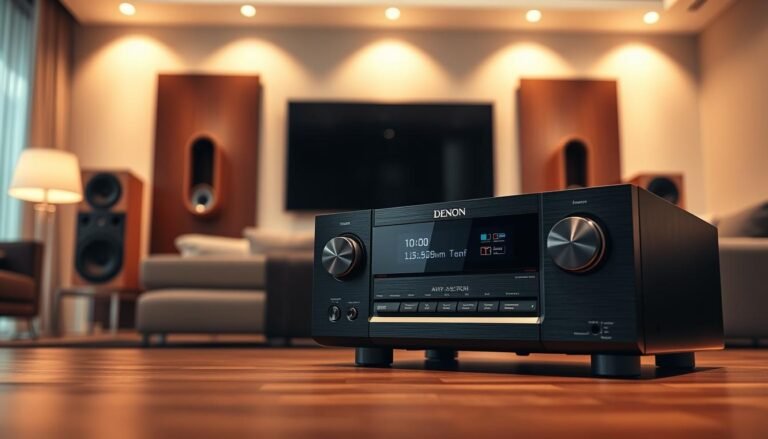
The receiver sits at the center of this plan. It routes video and audio, decodes new formats, and links streaming services with speakers and displays. Good manufacturers push new features via firmware, so owners gain capabilities without full replacements.
Quality over quantity matters. Start with strong speakers and reliable amplification. A solid core reduces bottlenecks when streaming higher-bitrate content or adding immersive sound formats.
Smart setup choices—ventilation, clean cable runs, and conduit—cut downtime for upgrades. For practical guidance on useful capabilities, see the features you will want in your next AV hub.
What does it mean if a receiver is “future-proof”?
Aim for a system that adapts through software and standards-ready ports. In practical terms, a future-proof setup pairs durable hardware with firmware that adds new capabilities over time. Modern models extend lifespan by receiving updates and by including current HDMI and network standards.
Defining future-proofing for today’s home theater receivers
Core hardware vs. software: Amplifiers and passive speakers often last decades. By contrast, the central unit gains value from software updates and standards-ready connections that handle new video and sound formats.
- Practical support means compatibility with major services like Spotify, Tidal, and Deezer, plus AirPlay and Chromecast for easy streaming.
- Connectivity matters: Reliable Wi‑Fi, Bluetooth, and modern HDMI ensure smooth handshakes with displays and network services.
- Balanced experience: Convenience of streaming should pair with the ability to play higher-quality content from external sources.
Buy recent models when possible. Newer units prolong the life of your home theater and reduce replacements. Plan wiring and placement so amps and speakers stay in place while the central processor can be swapped with minimal fuss.
Key features that make a receiver future-proof today
Prioritize connections and codecs that keep your setup current for years. Look for HDMI 2.1 with 8K/60 and 4K/120 pass-through to support high-resolution displays and next-gen gaming. Robust HDMI handling reduces handshake problems when adding new devices.
Immersive sound matters. Ensure Dolby Atmos and DTS:X decoding are present so films and games use height channels and object-based formats. That protects your investment as sound formats evolve.
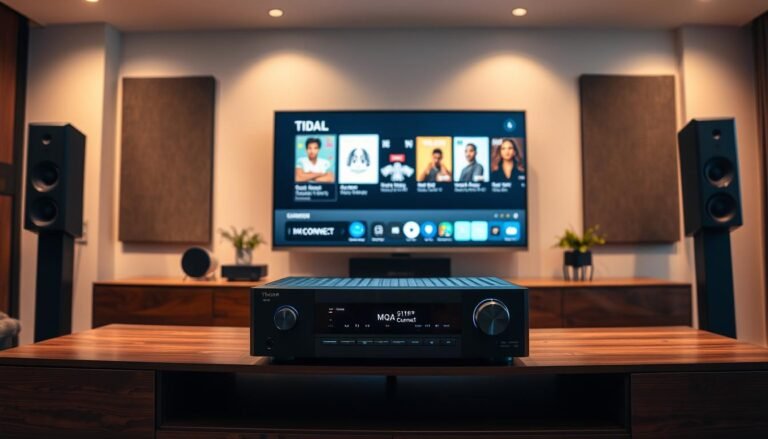
Network and streaming integration should include built-in Wi‑Fi, Bluetooth, Apple AirPlay, Chromecast, and services like Spotify, Tidal, and Deezer. These features keep daily listening simple and extend the life of your home theater.
Room calibration tools—an auto-setup mic or advanced options like Dirac Live—improve timing, level, and frequency response. Many users apply selective EQ to surrounds while preserving main speaker character.
- Multiroom and zones: Zone outputs let you send audio-only or full A/V to another room.
- Power and dynamics: Real-world watt quality and stable current reserves matter for clean, headroom-rich playback.
- Firmware cadence: Regular updates add new features and fixes, extending useful years for your receivers.
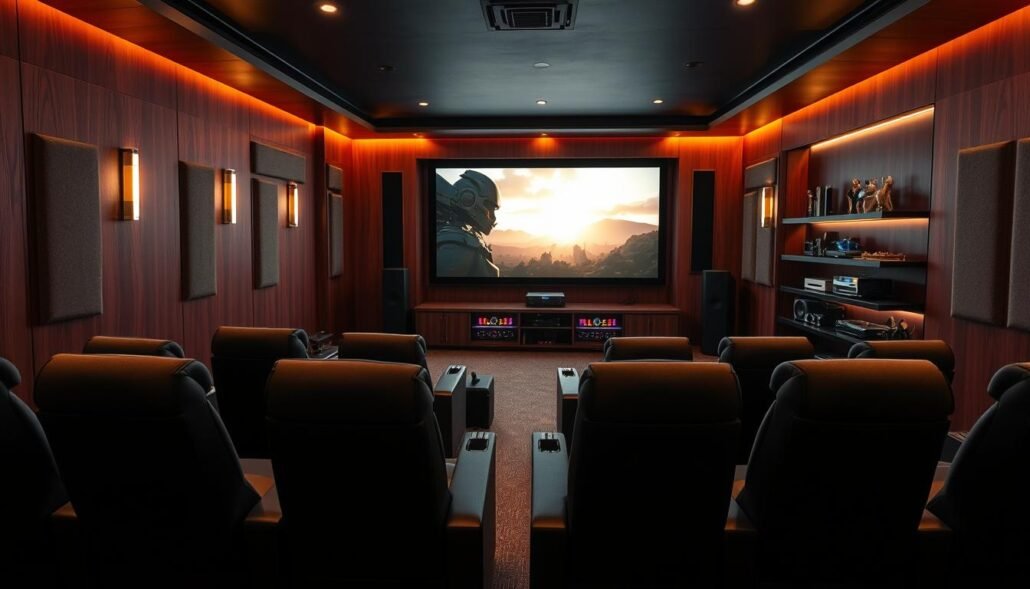
Planning your theater setup for longevity and easy upgrades
Start with a layout that gives you breathing room for future gear and better airflow.
Design choices made today decide how simple upgrades feel years from now.
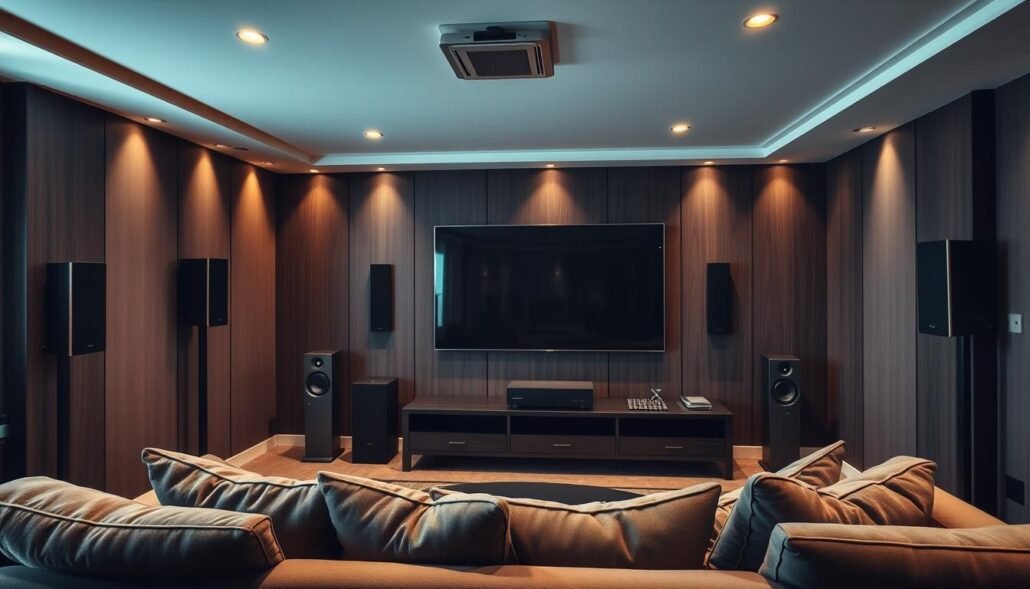
Flexible layouts and wiring
Leave service loops, conduit, and labeled ports so new devices slide in without wall tearing or panel rehabs.
Plan rack depth and ventilation space around the receiver to avoid crowding power cords and signal runs.
Power and amplification
Choose full-height models when you need steady current reserves and robust power delivery for cinematic levels.
Use surge protection and intelligent wiring to guard products against spikes and reduce downtime during swaps.
Speaker strategies and scaling
Begin with a high-quality 5.1 system—front LCR, two surrounds, and a subwoofer—to support Dolby and DTS formats.
Run hardwired connections to second zones for stable multiroom audio or full A/V distribution as budget and space allow.
- Prioritize quality over quantity so components reveal more detail and last through technology shifts.
- Reserve space for a UHD Blu-ray or media server to keep high-bitrate content in your entertainment mix.
- Keep documentation and calibration notes to speed future upgrades and preserve sound character.
How to choose the right model today for a future-proof home theater
Pick a model that matches your room, habits, and upgrade plans for the clearest long-term value.
Slimline vs full-height
Slimline or full-height: fit, heat, and output
Slimline units like the Marantz Cinema 70s pack immersive audio, 8K video, room tuning, and streaming into a small footprint. They fit tight racks and work well in many home setups.
Full-height designs such as the Denon AVC-A110 or McIntosh MHT300 offer stronger continuous power, larger heat capacity, and higher channel counts for big theater spaces. That extra headroom helps during loud movie moments.
Examples of current feature sets
Consider a separates path too: Marantz AV10 acts as an 8K preamp/processor with optional Dirac Live. Yamaha RX-A4A brings MusicCast, Wi‑Fi, AirPlay, and Zone B HDMI for multiroom support.
- Match room size: slimline for small rooms, full-height for large theaters.
- Check standards: HDMI 2.1, Atmos/DTS:X, and robust streaming matter for years of content.
- Think expansion: channels, pre-outs, and clear power ratings let you scale speakers and amps over time.
Focus on documented firmware support, solid connection options, and honest power figures. That way your home theater and entertainment systems keep pace with new features and formats without costly swaps.
Conclusion
Invest in long-lived speakers and strong amplification, and let the central unit evolve with firmware and standards.
Keep devices current with updates to extend lifespan and protect your investment. Design the theater setup with room for vents, labeled wiring, and clear rack space so swaps stay simple.
Prioritize speaker and amp quality while choosing a receiver with HDMI 2.1, immersive formats, solid network support, and regular firmware. Keep streaming for daily listening but keep physical media or high-bitrate downloads for critical listening sessions.
Confirm room EQ tools, multiroom services, and clear HDMI paths before buying. Do this and your home theater will deliver reliable audio and clear paths to adopt new technology and content for years.