Goal: This short guide shows how to wire outdoor speaker pairs back to an indoor amp safely and with clear audio. Start with the power off and unplug the receiver before you touch any terminals.
“Outside speakers” usually mean passive, weather-rated units that run on speaker wire from an indoor receiver or amplifier. Gather tools, speaker wire, and weatherproof connectors before you begin.
Plan the layout, pick the correct wire gauge for distance, and run cable through walls or conduit. Make sure polarity is correct; reversing positive and negative gives hollow, fuzzy sound.
Protect gear by keeping the receiver indoors and using outdoor or in-wall rated cable. Test each pair before final mounting and watch for overloading when adding multiple sets across a patio or yard.
– Power off before wiring.
– Correct polarity and proper gauge prevent poor sound.
– Use weather-rated cable and test before final install.
Plan Your Outdoor Audio System Before You Run Any Wire
A simple yard sketch helps you place speakers, note listening spots, and plan clean cable runs before a single hole is cut.
Pick a protected indoor location
Install the receiver or amplifier in a dry, ventilated place like a media cabinet, garage shelf, or garden room. Keeping equipment indoors extends life by avoiding humidity, rain, and wide temperature swings.
Decide on zones and amplification
Choose a multi-zone receiver when you need different playback inside and outside. For a simple patio, a single-zone setup is often enough.
If you plan many pairs, consider a multi-channel amplifier. Dedicated amps prevent overloading the receiver’s internal amp when multiple speakers are added.
Map speaker placement and wiring routes
Mark primary listening areas, then set left right orientation so stereo coverage feels balanced and the sound is natural.
Plan the cleanest route from the indoor wall exit to each speaker. Avoid running cable parallel to power lines when possible. A tidy path along a wall or structural edge saves time and looks better at installation time.
Quick steps: pick the indoor spot, choose zones or extra amplification, map zones, then plan the way the cable will run.
Gather Materials and Choose the Right Speaker Wire for Outdoor Use
Select speaker wire that resists moisture and keeps signal intact across the yard.
What you’ll need
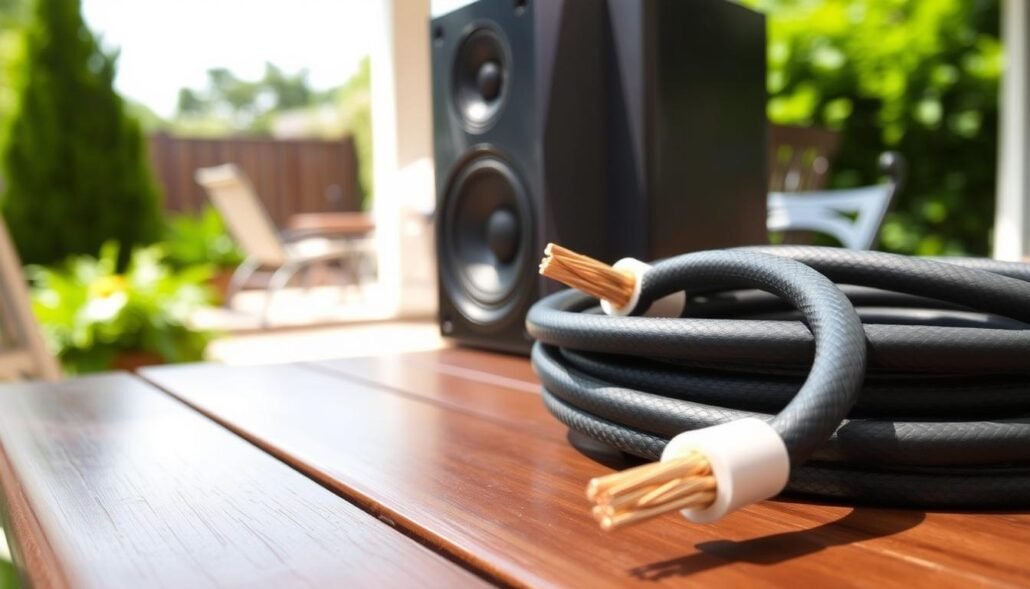
- Core materials: outdoor speakers, receiver or amplifier, appropriately rated speaker wire, wire strippers, drill bits, silicone caulk, and optional banana plugs.
- Protective accessories: conduit, sleeves, and cable clips for neat runs.
Gauge basics and distance tips
Lower AWG means thicker cable. Thicker cable preserves the signal and lowers distortion on long runs.
Use 16 AWG for most runs under about 80 ft. For longer runs or lower-impedance loads, step up to 14 or 12 AWG.
Ratings, jacket type, and metal choice
When routing through walls pick in-wall rated CL2 or CL3 cables for safety and code compliance in the United States.
Choose outdoor or direct-burial jackets for UV, moisture, and temperature resistance rather than indoor-only insulation.
Copper conductors outlast copper-clad aluminum. Copper offers better conductivity and corrosion resistance outdoors.
Buy an extra 10–15% length so wires aren’t tight and you can route cleanly around corners or into conduit.
How to Connect Outside Speakers to a Receiver
Power off first. Unplug the receiver and amplifier from the wall and wait about 30 seconds before handling any speaker wire. This reduces shock risk and protects electronics.
Run the cable through the wall safely
Drill a low exit near the receiver and feed the wire carefully. Avoid sharp edges that can nick insulation and never run wires through window or door jambs where they may be pinched.
Seal the hole with silicone caulk after feeding the speaker wire. This keeps moisture out and preserves home insulation.
Keep polarity correct
Pick one conductor marking (stripe or ridge) and treat it as positive. Keep that marking consistent from the receiver terminal to the end speaker terminal.
Swapped positive negative leads cause thin, hollow bass and a weak stereo image. Verify each connection before powering up.
Adding multiple pairs and checking compatibility
Each added pair alters the load the receiver sees. Use multi-zone outputs, a speaker selector with impedance matching, or an external multi-channel amplifier for many speakers.
Confirm speaker ohms and power handling match the receiver or amplifier ratings to avoid distortion or shutdowns. For more setup tips, see this setup guide.
| Solution | Best for | Benefit |
|---|---|---|
| Multi-zone receiver | Different volume zones | Safe separate outputs without added load |
| Speaker selector (impedance) | Multiple pairs on one amp | Protects amp from low impedance |
| External multi-channel amp | Many speakers or high SPL | Cleaner power and lower distortion |
Make Reliable Connections at the Terminals
A tight, corrosion-free terminal connection keeps outdoor audio reliable across seasons. Small flaws at terminals cause dropouts, hiss, and poor bass as humidity and heat cycle through the year.
Banana plugs offer a repeatable, secure connector when both the receiver and speakers accept them. Strip the wire per the plug’s spec (often about 3/4 inch), insert the copper strands fully, tighten the plug hardware, then seat the banana firmly in the matching terminal.
Binding posts vs spring clips
Binding posts accept banana and bare wire under the cap. Spring clips rely on a spring clamp and work best with stripped, stiff wire ends or compatible flex-style pins.
Prevent shorts and corrosion
Twist copper strands tight and trim stray bits so red and black conductors never touch. Keep exposed conductor length short at each end and use weather-rated connectors where possible.
- Why it matters: good terminal contacts prevent intermittent faults and long-term corrosion.
- Quick process: strip, insert, tighten, match polarity (red = +, black = -).
- Protect: a dab of dielectric grease on exposed metal resists moisture.
For receiver features that aid outdoor setups, check the features you’ll want.
Place and Mount Outdoor Speakers for Better Coverage and Longer Life
Mounting speakers thoughtfully improves coverage, reduces neighbor spill, and extends product life.
Sheltered placement matters. Put speakers under eaves or a patio roof when possible. This reduces UV and rain exposure and improves long-term quality.
For a typical patio, aim for roughly 8–10 feet between units. That spacing keeps stereo separation clear without creating loud hot spots near a wall.
Alternating left and right channels
When you install more than one pair, alternate left right outputs along the perimeter. This preserves the stereo image as people move around the lot and seating areas.
Height and tilt
Mount around 8–10 feet high for good projection. Too high can thin bass and make music feel distant.
Give speakers a slight downward tilt. This improves clarity at ear level, helps drainage away from grilles, and limits sound spill to neighbors.
Mounting surfaces and hardware
Choose solid wood framing or masonry for secure mounts. Avoid weak siding that can sag or vibrate over time.
Use the included weather-rated brackets. Outdoor-rated hardware resists rust and loosening in wind and temperature changes.
Pro tip: more speakers at lower volume often sounds better than fewer speakers turned up. This approach improves coverage, reduces distortion, and lowers neighbor complaints.
| Consideration | Recommendation | Benefit |
|---|---|---|
| Placement | Under eaves or patio roof | Longer life; less weather damage |
| Spacing | 8–10 ft between units | Balanced stereo and even sound |
| Mount height | 8–10 ft, slight downward tilt | Better projection and drainage |
| Surface | Solid wood framing or masonry | Stable mount; less vibration |
| Hardware | Weather-rated brackets | Safer, longer-lasting installation |
Test the System Before You Finalize Cable Management
Run a staged audio test now; it saves rewiring later and protects your equipment.
Before you staple or seal any cables, power the receiver and amplifier with volume low. Play a familiar stereo track and confirm each speaker plays clearly.
Check channels: use a left-right test track so the outside speaker mapping matches the receiver outputs. Walk the listening areas and verify projection and coverage.
- Start low, test each channel one at a time, then raise volume gradually.
- Wiggle the wire gently at both ends while audio plays to spot intermittent cuts.
- Listen for fuzz, harsh distortion, or dropouts — these signal poor connections or overloads.
Troubleshooting checklist: re-check every terminal, confirm positive/negative alignment, tighten posts, and trim stray strands. Crossed bare wires can short and harm the receiver fast.
| Symptom | Likely cause | Action |
|---|---|---|
| Fuzzy or thin sound | Reversed polarity or loose connection | Swap polarity or tighten terminals; test again |
| Harsh distortion / volume drop | Impedance mismatch or overload | Check speaker ohms and reduce pairs or add amp/selector |
| Intermittent cutouts | Frayed wire or poor contact | Re-terminate wire ends and secure connections |
Once performance and physical stability are confirmed, finalize neat cable runs. Secure cables away from pinch points, leave drip loops outdoors, then fasten or bury the wire as planned. This saves time and avoids costly rework at the end.

Conclusion
strong, A final sweep through connections and mounts prevents common outdoor audio failures. Plan a quick checklist: layout confirmed, proper gauge selected, and copper speaker wire installed with in-wall or outdoor-rated insulation.
Seal wall exits with silicone and avoid tight cable runs. Match positive negative at each terminal so stereo imaging and bass remain solid. Use banana plugs or well-secured bare ends in binding posts, and add a dab of dielectric grease for corrosion resistance.
For many pairs, use zone control or an external amplifier rather than overloading the receiver. Secure mounts under eaves, aim slightly downward, then test each speaker and clip point. With careful wiring, clean connections, and smart placement, the system delivers clear music across the lot without extra volume.
FAQ
What gauge speaker wire should I use for long outdoor runs?
Use thicker wire for longer distances. For runs under 50 feet, 16 AWG works fine. For 50–100 feet choose 14 AWG. For runs over 100 feet, 12 AWG gives lower resistance and better bass. Thicker copper preserves signal and protects amplifier load.
Which wire rating is safe for running through walls in the US?
Look for in-wall rated cable labeled CL2 or CL3 for U.S. installations. For outdoor exposure, pick direct-burial or UV-resistant jacketed speaker cable. Combining in-wall rating and outdoor resistance keeps insulation and fire safety compliant.
Can I use copper-clad aluminum (CCA) cable outside?
CCA is cheaper but has higher resistance and can degrade sound over long runs. For outdoor systems, pure copper is preferable. It resists corrosion better and delivers more consistent audio performance.
How much extra length should I buy when ordering cable?
Add 10–20% slack to your measured run. That covers routing around corners, mounting, service loops, and future adjustments. Label each run so you can finish terminations without pulling new cable.
Should I turn off my receiver before connecting speakers?
Always power down and unplug the receiver or amplifier before wiring. This prevents pops that can damage tweeters and reduces the risk of shorting the amp while attaching bare wire or connectors.
How do I seal wall penetrations where wire passes outside?
Use a grommet or cable bushing and seal around the penetration with exterior-grade silicone or polyurethane caulk. Add a small drip loop and use weatherproof conduit where possible to keep water and pests out of insulation.
What happens if I reverse positive and negative speaker wires?
Reversing polarity flips a speaker out of phase. That causes thin bass and poor stereo imaging. Match the receiver’s red (+) and black (–) or the labeled terminals on both speaker and amp for correct phase.
Can I connect multiple speaker pairs to one receiver channel?
Yes, but check the receiver’s impedance rating. Wiring speakers in parallel lowers total impedance and can overload the amp. Use impedance-matching taps, a multi-zone receiver, or a multi-channel amplifier for multiple pairs.
Are banana plugs a good choice for outdoor speaker connections?
Banana plugs provide a secure, corrosion-resistant connection and simplify swapping gear. Choose gold-plated, weather-resistant plugs and cover exposed terminals with heat-shrink or protective caps for outdoor use.
When should I use binding posts versus spring clips?
Binding posts accept bare wire, spade lugs, and banana plugs and offer a tighter, more reliable contact than spring clips. Use binding posts when you need durability and outdoor-ready connections; spring clips are simpler but less robust.
How do I prevent corrosion on exposed wire ends and terminals?
Use marine-grade tinned copper wire or apply dielectric grease to terminals. Cover connections with weatherproof boots, heat-shrink tubing, or silicone-sealed junction boxes to block moisture and salt air.
What spacing gives the best stereo coverage for a patio?
For stereo pairs, aim for speakers forming an equilateral triangle with the listening area: left and right speakers spaced similarly to the listening distance. For larger patios, use multiple pairs spaced evenly and alternate left/right channels for balanced coverage.
How high should I mount outdoor speakers and should they tilt downward?
Mount speakers 6–8 feet high for conversation areas, higher for larger lawns. Tilt them downward slightly toward listening zones to improve projection and minimize water pooling. Ensure brackets are weather-rated and securely fastened.
What mounting surfaces work best for outdoor speaker brackets?
Mount on solid surfaces like treated wood, masonry, or metal posts. Avoid thin siding unless reinforced. Use exterior-grade fasteners and anchors designed for the surface, and confirm bracket load ratings match the speaker weight.
How do I test the system before final cable management?
Power the receiver, play familiar tracks at low volume, and check each speaker for correct polarity and consistent volume. Walk the coverage area, adjust placement, and fix phase or balance issues before sealing channels and burying conduit.